HEPA vs Activated Carbon Filters: What’s the Difference?
Understand the distinct roles of HEPA and activated carbon filters, how they work, and when you need both for truly clean indoor air.
 By Ethan Wright
Updated October 19, 2026
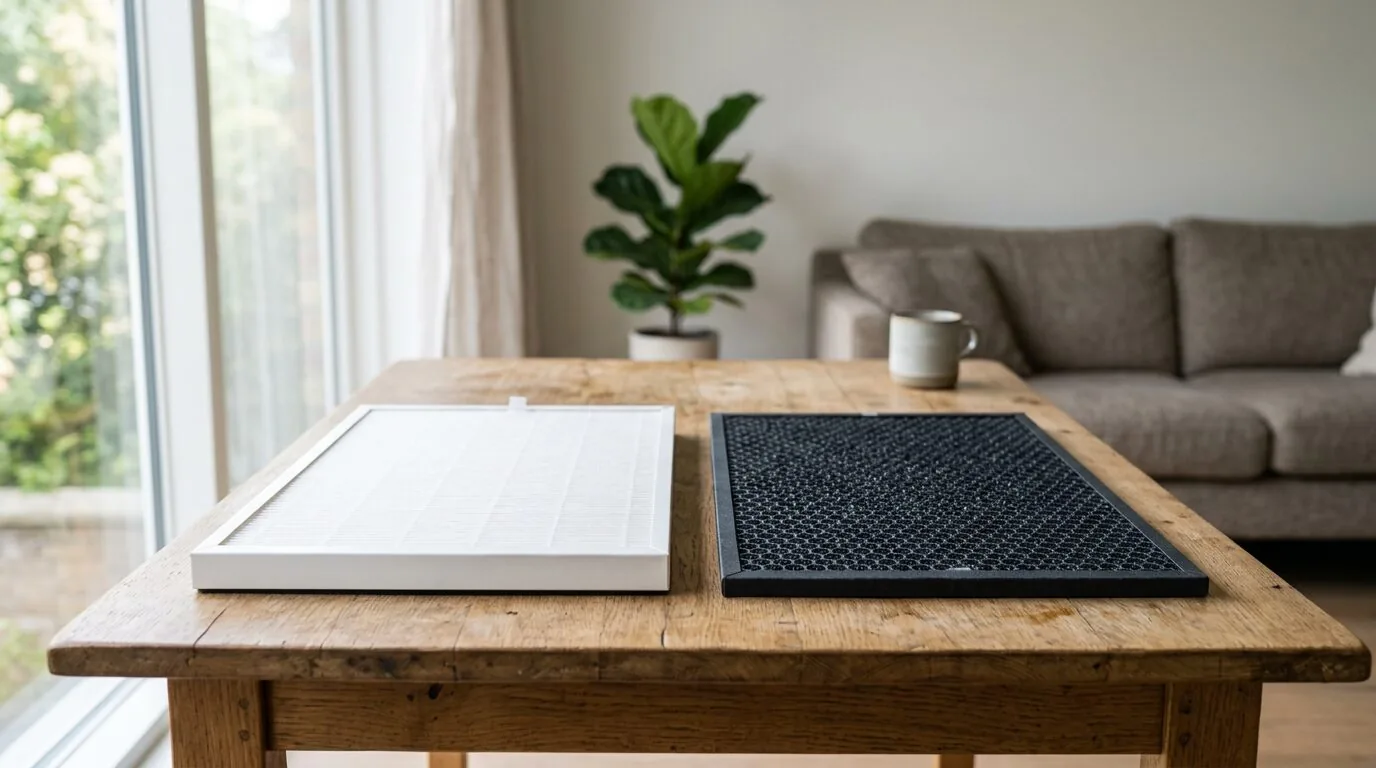
HEPA filters trap solid particles like dust and pollen, while activated carbon filters adsorb gaseous pollutants like odors and VOCs. For comprehensive air cleaning, many purifiers use both technologies together.
Choosing an air purifier can be confusing, especially when faced with technical terms like HEPA and activated carbon. These are the two most common and important filtration technologies, but they perform completely different jobs. Understanding what each one does is the first step to selecting a device that will effectively tackle your specific air quality concerns, whether it’s seasonal allergies, pet odors, or chemical fumes.
This guide will break down the science, applications, and key differences between HEPA and activated carbon filters. By the end, you’ll know exactly which type of filtration you need for your home.
What Is a HEPA Filter and How Does It Work?
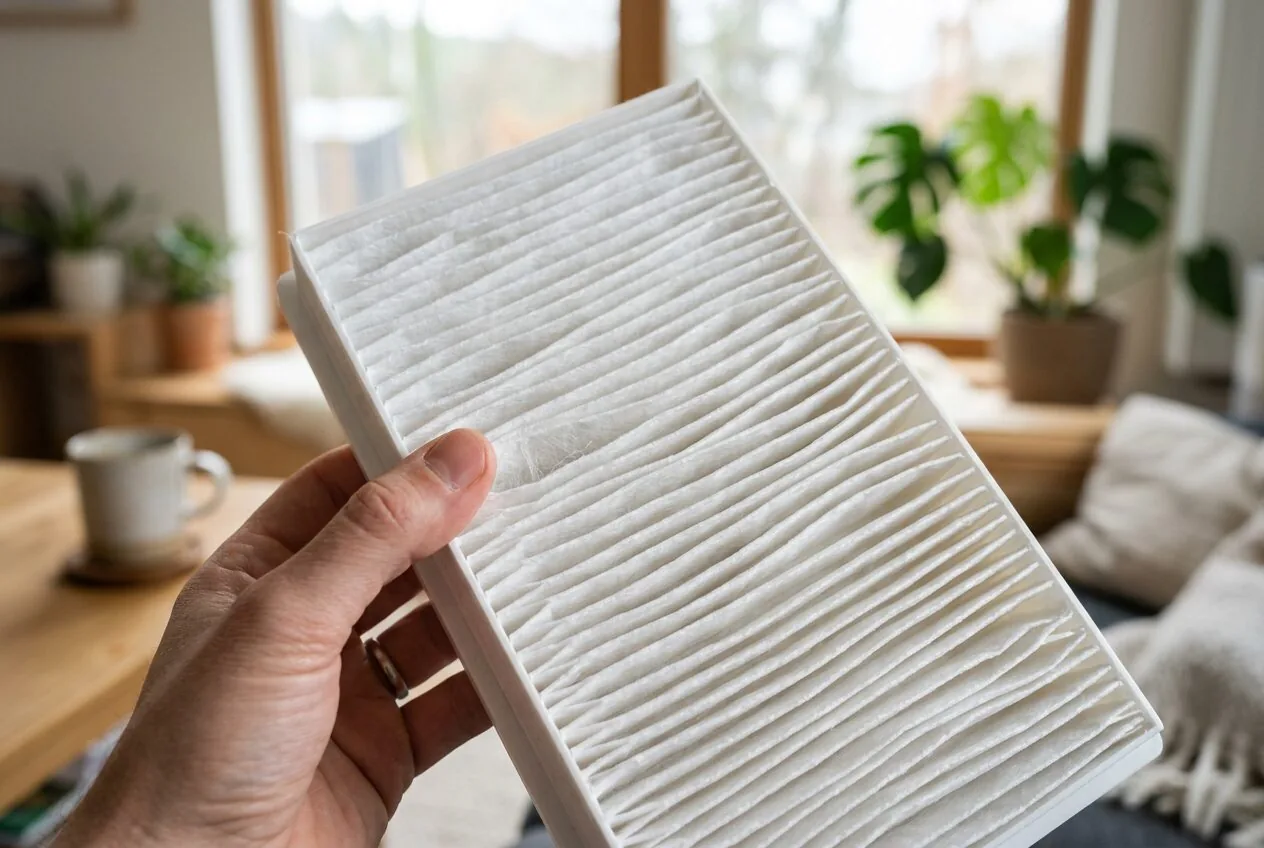
A HEPA (High-Efficiency Particulate Air) filter is a dense, pleated mechanical filter designed to capture solid particles from the air. To be certified as True HEPA, a filter must capture at least 99.97% of particles that are 0.3 microns in size. This size is the “Most Penetrating Particle Size” (MPPS), meaning it’s the hardest particle size to catch.
The filter works through a combination of three mechanisms: interception, impaction, and diffusion. Larger particles crash into and stick to the fibers (impaction). Mid-sized particles are caught as they follow the air stream and touch a fiber (interception). The smallest particles, including viruses, bounce around randomly (Brownian motion) and eventually collide with a fiber (diffusion).
What Does a HEPA Filter Remove?
- Allergens: Pollen, pet dander, dust mite debris, and mold spores.
- Fine Particulate Matter (PM2.5): Microscopic particles from combustion, smoke, and outdoor pollution that can enter the bloodstream.
- Microorganisms: Many bacteria, viruses, and fungal spores.
- General Dust and Lint: Common household dust and airborne fibers.
It’s important to note that HEPA filters do not remove gases, odors, or chemical vapors. They are purely for particulate pollutants. For more on how purifiers handle biological particles, see our article on removing bacteria from the air.
What Is an Activated Carbon Filter and How Does It Work?
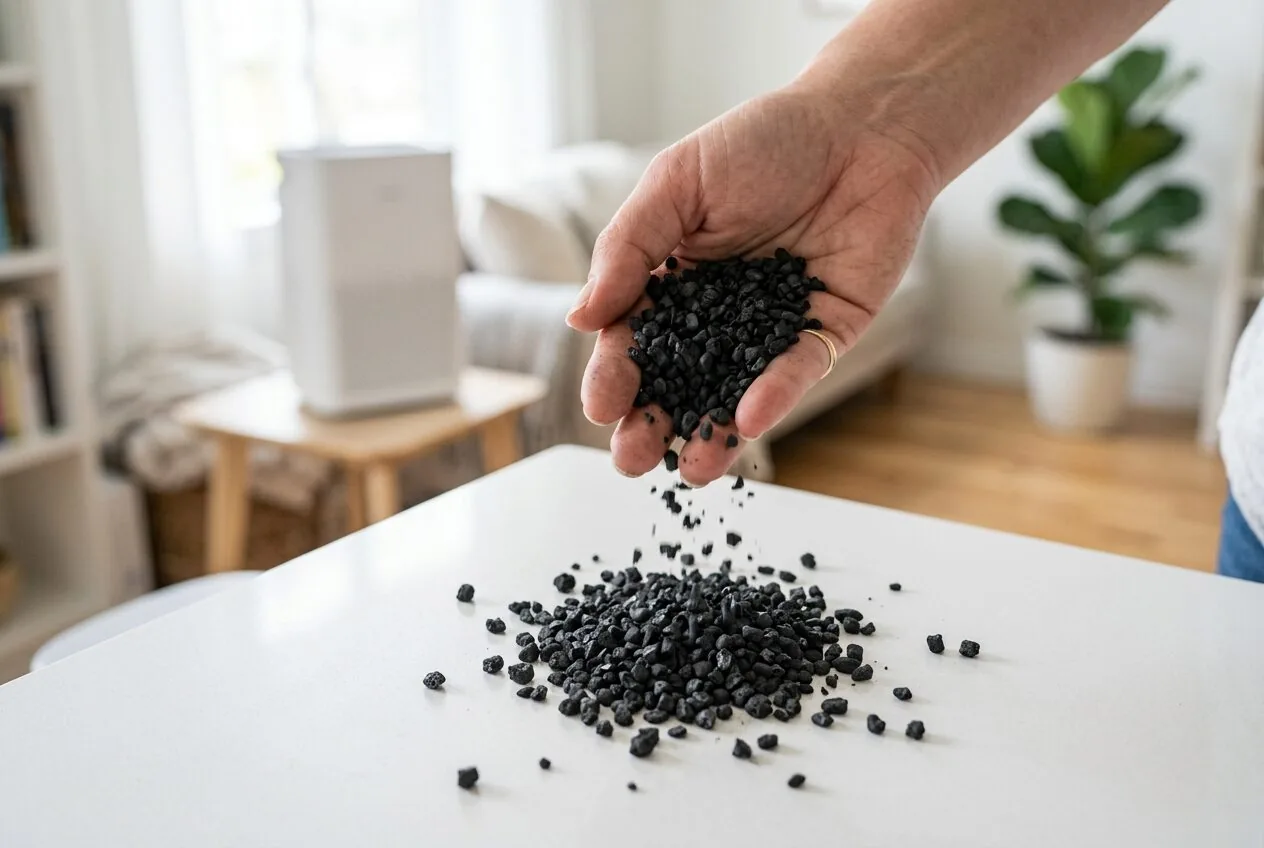
An activated carbon filter uses a bed of charcoal that has been processed to have an extremely porous surface area. This “activation” process creates millions of tiny pores between carbon atoms, vastly increasing the surface area available for adsorption—the process where gas molecules stick to a solid surface.
As polluted air passes through, gaseous molecules get trapped in these microscopic pores through weak chemical bonds (Van der Waals forces). Think of it like a microscopic sponge for smells and chemicals. The effectiveness depends on the amount (weight) and quality of the carbon, as well as the thickness of the filter bed.
What Does an Activated Carbon Filter Remove?
- Volatile Organic Compounds (VOCs): Gases emitted from paints, cleaning supplies, adhesives, and new furniture.
- Odors: Cooking smells, tobacco smoke odor, pet smells, and garbage odors.
- Gaseous Pollutants: Ozone (at ground level), nitrogen dioxide, and some sulfur-based compounds.
- Chemical Fumes: Fumes from household products, off-gassing from plastics, and formaldehyde.
Carbon filters do not capture solid particles like dust or allergens. Their sole job is to tackle the gaseous pollutants that pass right through a HEPA filter. For specific concerns like paint fumes, a robust carbon layer is essential.
Side-by-Side Comparison
| Feature | HEPA Filter | Activated Carbon Filter |
|---|---|---|
| Primary Target | Solid particles (dust, pollen, mold) | Gaseous pollutants & odors (VOCs, smoke, chemicals) |
| Filtration Mechanism | Physical trapping (interception, impaction, diffusion) | Adsorption (molecules stick to porous carbon) |
| Particle Size Removed | 0.3 microns and larger (down to ~0.01 microns) | Gas molecules (much smaller than 0.3 microns) |
| What It Doesn’t Remove | Gases, odors, chemical vapors | Dust, pollen, pet dander, mold spores |
| Maintenance | Replacement every 6-24 months; cannot be washed | Replacement every 3-12 months; carbon gets saturated |
| Ideal For | Allergy & asthma sufferers, general dust reduction | Odor control, chemical sensitivity, new home smells |
As the table shows, these filters are not interchangeable. They are complementary technologies designed for different types of pollutants. This is why indoor air often requires a multi-stage approach to purification.
When Do You Need Both Filters?
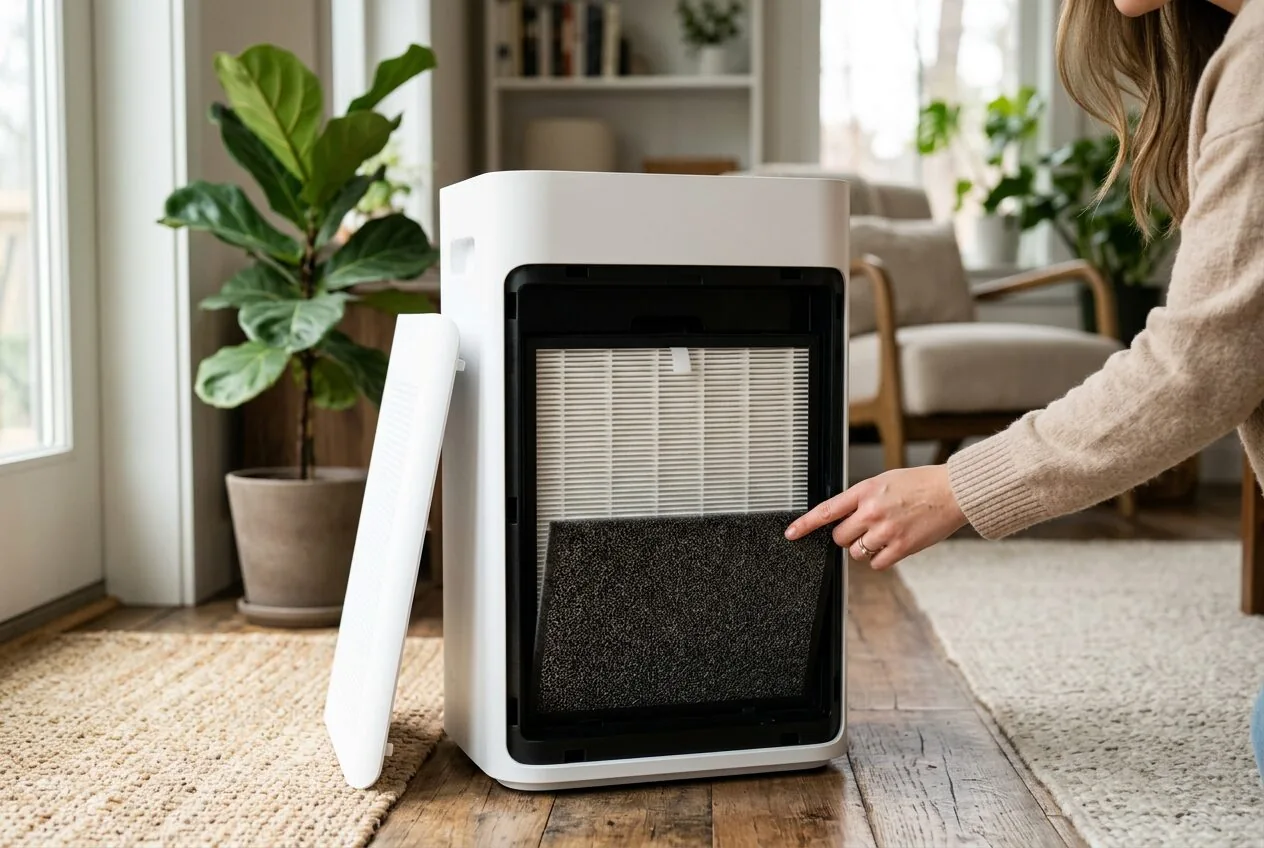
Most modern air purifiers for home use combine a HEPA filter with an activated carbon layer, either in a single composite filter or as separate stages. This combination is the most effective way to handle the complex mix of pollutants found in homes. You likely need both if:
- You have allergies and live with pets, cooking, or smokers.
- Your home has new furniture, carpets, or recent renovations that may off-gas VOCs.
- You want comprehensive protection against both visible particles and invisible gases.
- You are looking for general air quality improvement without a single dominant pollutant.
For those with sensitive lungs, this dual approach is often recommended to reduce a broad spectrum of triggers.
Recommended Products
The following products illustrate the practical application of combined HEPA and carbon filtration, from simple replacements to dedicated systems. These are examples of how these technologies are packaged for real-world use.


As an Amazon Associate we earn from qualifying purchases. Product prices and availability are accurate as of the date/time indicated.
For instance, the Fette Filter – True Hepa Filter Replacement is a classic 2-in-1 design, pairing a True HEPA layer with activated carbon for portable purifiers. Similarly, the Mi Air Purifier HEPA Replacement Filter M8R-FLH uses a triple-layer design with activated carbon for a popular smart purifier model. For more intense odor control scenarios, like in grow tents or workshops, dedicated carbon filtration systems like the Air Filtration Kit 4″, Built-in 14cm Fan Low Nois highlight the use of thick, high-quality carbon beds.
Frequently Asked Questions
Can I wash and reuse a HEPA or carbon filter?
No, you should not wash a True HEPA filter. Water will damage the delicate fibrous structure, ruining its efficiency. Activated carbon filters also cannot be washed or reactivated at home; once the carbon pores are full (saturated), the filter must be replaced. Always follow the manufacturer’s replacement guidelines.
Is a u0026quot;HEPA-typeu0026quot; filter the same as a True HEPA filter?
No, they are not the same. u0022HEPA-type,u0022 u0022HEPA-like,u0022 or u0022HEPA-styleu0022 are marketing terms for filters that may look similar but are not certified to meet the 99.97% efficiency standard at 0.3 microns. For reliable particle removal, look for filters explicitly labeled as u0022True HEPAu0022 or that state they meet the HEPA standard (e.g., ISO, DOE, or EN 1822).
How long does activated carbon last?
The lifespan of an activated carbon filter varies greatly based on the level of pollutants in your air. In a high-odor environment (like a kitchen with heavy cooking), it may last only 3-4 months. In a bedroom with minimal odors, it could last up to a year. You’ll know it needs replacing when odors start to return.
Do I need a carbon filter if I donu0026#039;t smell anything?
Yes, potentially. Many harmful gaseous pollutants, like VOCs and radon, are odorless. If you live in a newer building, have new furnishings, or use standard cleaning products, a carbon filter can help remove these invisible chemicals. It’s not just for smells.
Which filter is more important for allergies?
The HEPA filter is absolutely critical for allergies, as it captures the allergen particles themselves (pollen, dander, dust mite waste). An activated carbon filter can provide secondary relief by removing odors that might irritate some people, but it does not capture the allergenic particles. For u003ca href=u0022https://airpurifierguides.com/indoor-air-quality-tips-for-allergy-sufferers/u0022u003eallergy sufferersu003c/au003e, a True HEPA filter is the non-negotiable core component.
Can an air purifier with both filters remove fine particulate matter (PM2.5)?
Yes, a True HEPA filter is highly effective at removing PM2.5, which are solid particles 2.5 microns or smaller. The carbon filter does not contribute to this task. For a detailed look, see our guide on u003ca href=u0022https://airpurifierguides.com/can-air-purifiers-remove-fine-particulate-matter/u0022u003eremoving fine particulate matteru003c/au003e.
Final Thoughts
The debate between HEPA and activated carbon filters isn’t about which is better; it’s about understanding that they are tools for different jobs. HEPA is your defense against airborne particles that affect allergies and respiratory health. Activated carbon is your defense against gases, chemicals, and unpleasant odors.
For most households seeking to improve overall indoor air quality, a purifier that combines both technologies in a multi-stage system is the most practical and effective choice. Assess your primary concerns—whether it’s sneezing, smells, or a bit of both—and let that guide your selection. Knowing the distinct role each filter plays empowers you to make an informed decision and breathe easier.
About the author
Founder of AirPurifierGuides.com. Ethan has a background in environmental science and started this site after years spent researching, testing, and tearing down air filtration systems to give readers real-world answers about indoor air quality.