Energy Consumption of Air Purifiers: What You Need to Know
Learn how much electricity air purifiers use, how to calculate operating costs, and discover practical tips to run your unit efficiently without breaking the bank.
 By Emily Foster
Updated October 17, 2026
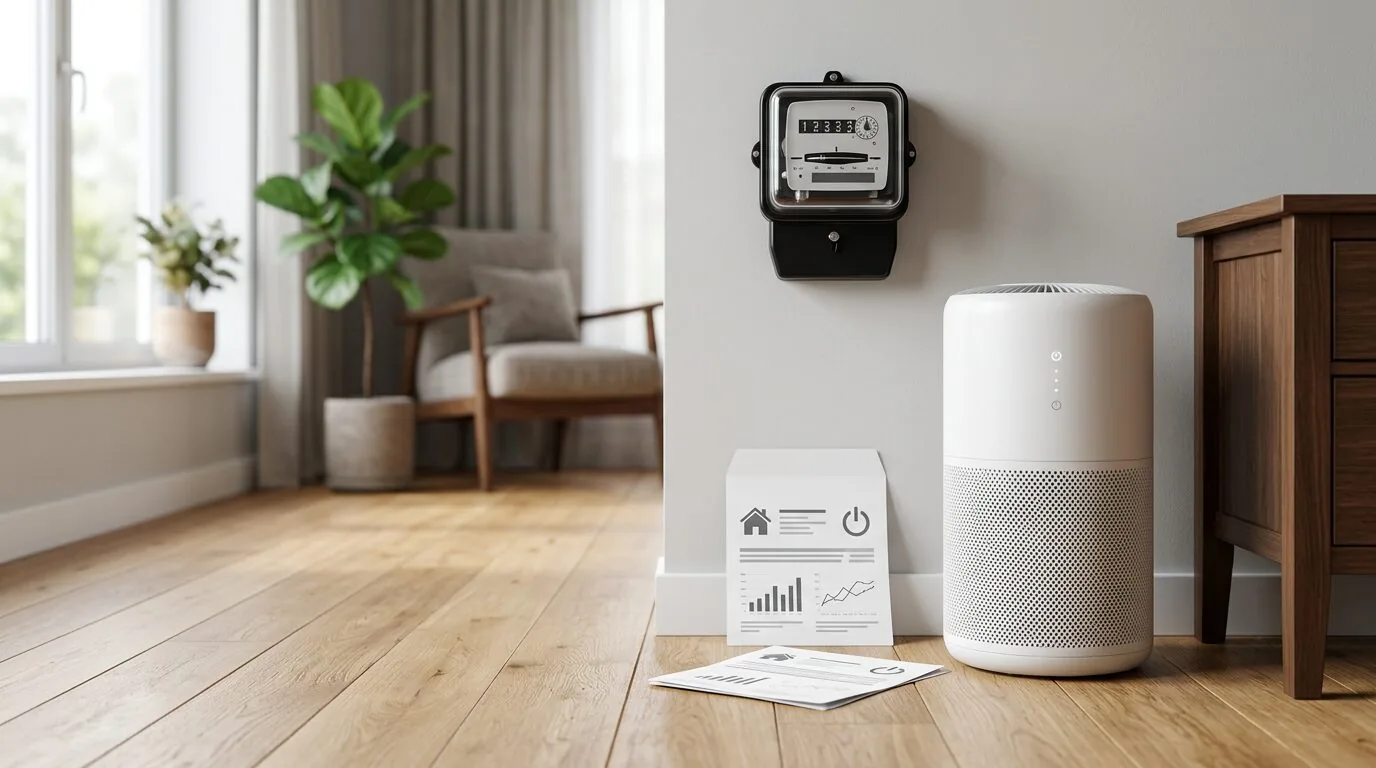
Air purifiers are designed for continuous, long-term use, but many people worry about the impact on their electricity bill. The good news is that most modern air purifiers are surprisingly energy-efficient, often using less power than a standard light bulb. This article breaks down the factors that affect energy consumption, provides real-world cost estimates, and shows you how to choose and use a purifier for optimal efficiency.
Understanding your air purifier’s energy use helps you manage household expenses and make an informed choice that balances air cleaning performance with cost. We’ll explain key terms like wattage and Energy Star ratings, compare different models, and offer actionable advice to keep your air clean and your energy bill low.
How Much Electricity Does an Air Purifier Use?
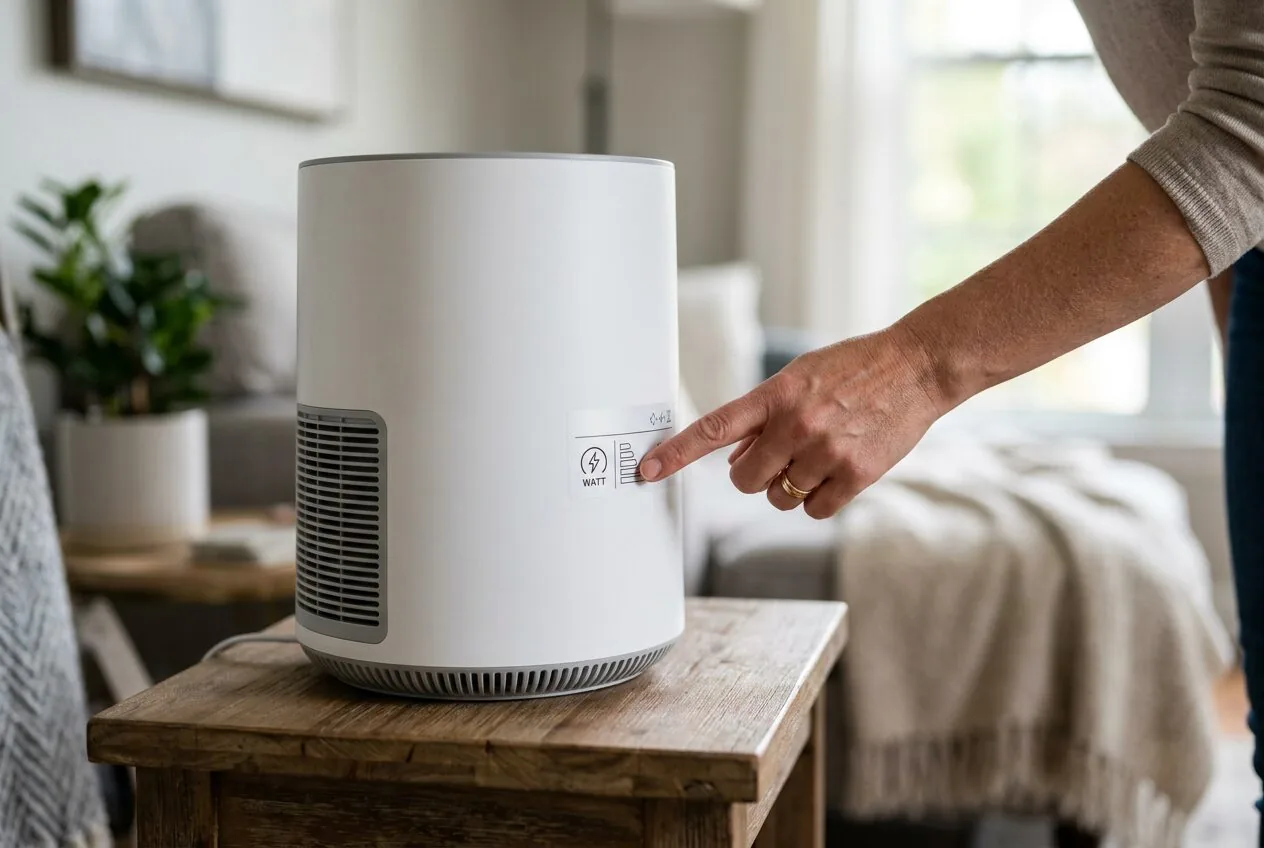
The electricity consumption of an air purifier is primarily determined by its wattage and the speed setting you use. Wattage measures the rate of electrical power used. You can usually find this information on a label on the device or in the user manual. For example, a common mid-sized unit might use around 50 watts on its highest setting.
To put this in perspective, a 50-watt air purifier running 24 hours a day consumes 1.2 kilowatt-hours (kWh) of electricity daily (50 watts x 24 hours / 1000). The national average electricity cost in the United States is about $0.16 per kWh. This means running that purifier constantly would cost roughly $0.19 per day, or about $5.70 per month. Most people don’t run their purifier on high all day, so actual costs are often lower.
Understanding Wattage and Speed Settings
An air purifier’s energy use is not fixed. It varies significantly with the fan speed. High speed moves more air quickly but uses the most power. Low or sleep modes are designed for quiet, efficient operation and use a fraction of the energy. For instance, the Levoit Air Purifier for Home Pets Hair Allergens uses 56 watts on its highest setting but drops to a near-silent 24dB in Sleep Mode, consuming significantly less power. Using these lower settings overnight or when the room is unoccupied is a key strategy for saving energy.
Factors That Influence Energy Consumption
Several key design and usage factors determine how much power your air purifier draws. Being aware of these can help you select an efficient model and use it wisely.
Room Size and Purifier Capacity
Using an undersized purifier for a large room forces it to work harder and longer on high speed to clean the air, leading to higher energy use. Conversely, an oversized purifier for a small room can clean the air quickly and then switch to a low maintenance mode. Matching the purifier’s recommended room coverage (based on its CADR rating) to your actual space is the first step toward efficiency. For more on sizing, see our guide on air purifiers for multi-pet households.
Filter Type and Condition
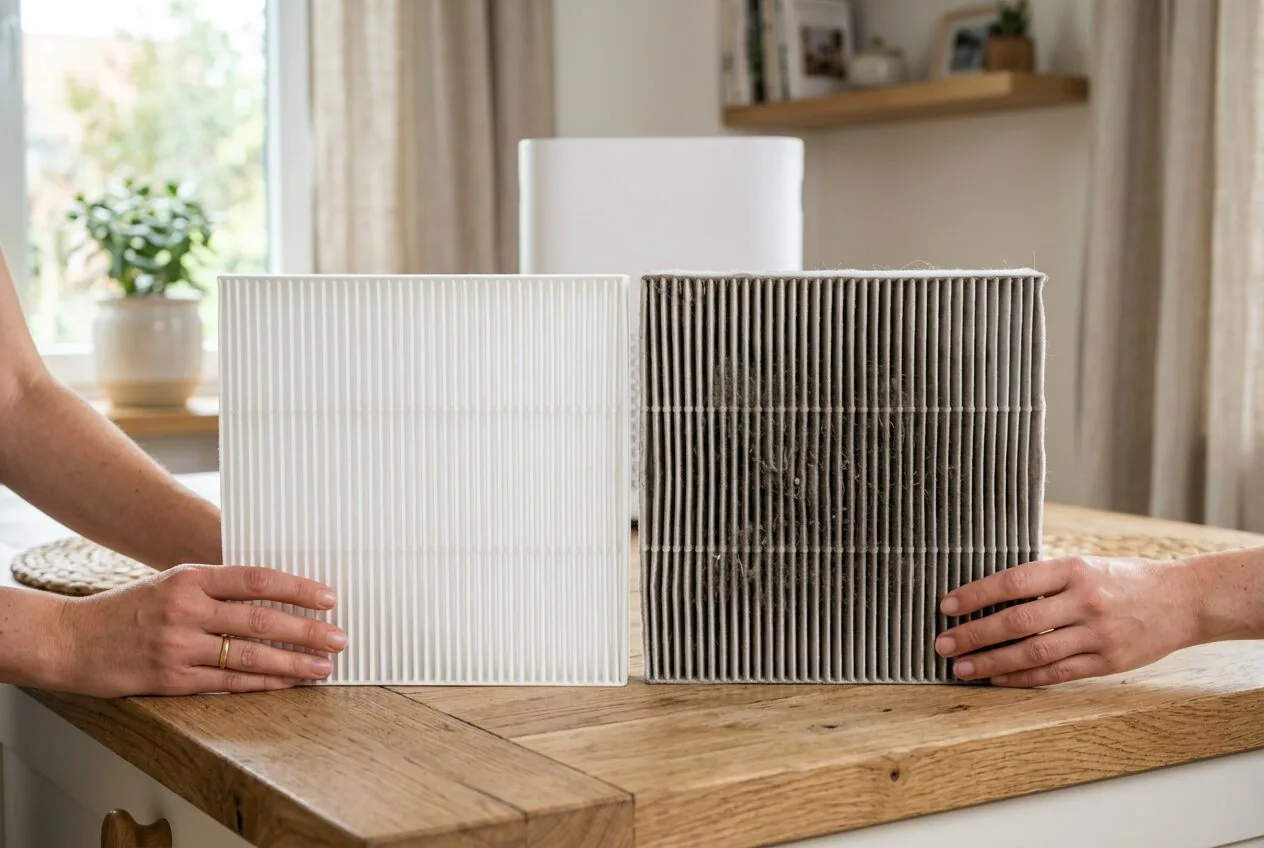
A clean, unobstructed filter allows air to flow freely. A clogged, dirty filter makes the fan motor work harder to pull air through, increasing energy consumption. Regularly replacing filters, like the Clorox Large Room Air Purifier True HEPA filter every 6-12 months, is not just good for air quality—it’s also good for your electricity bill. Using compatible, high-quality replacement filters ensures optimal performance and efficiency.
Smart Features and Automation
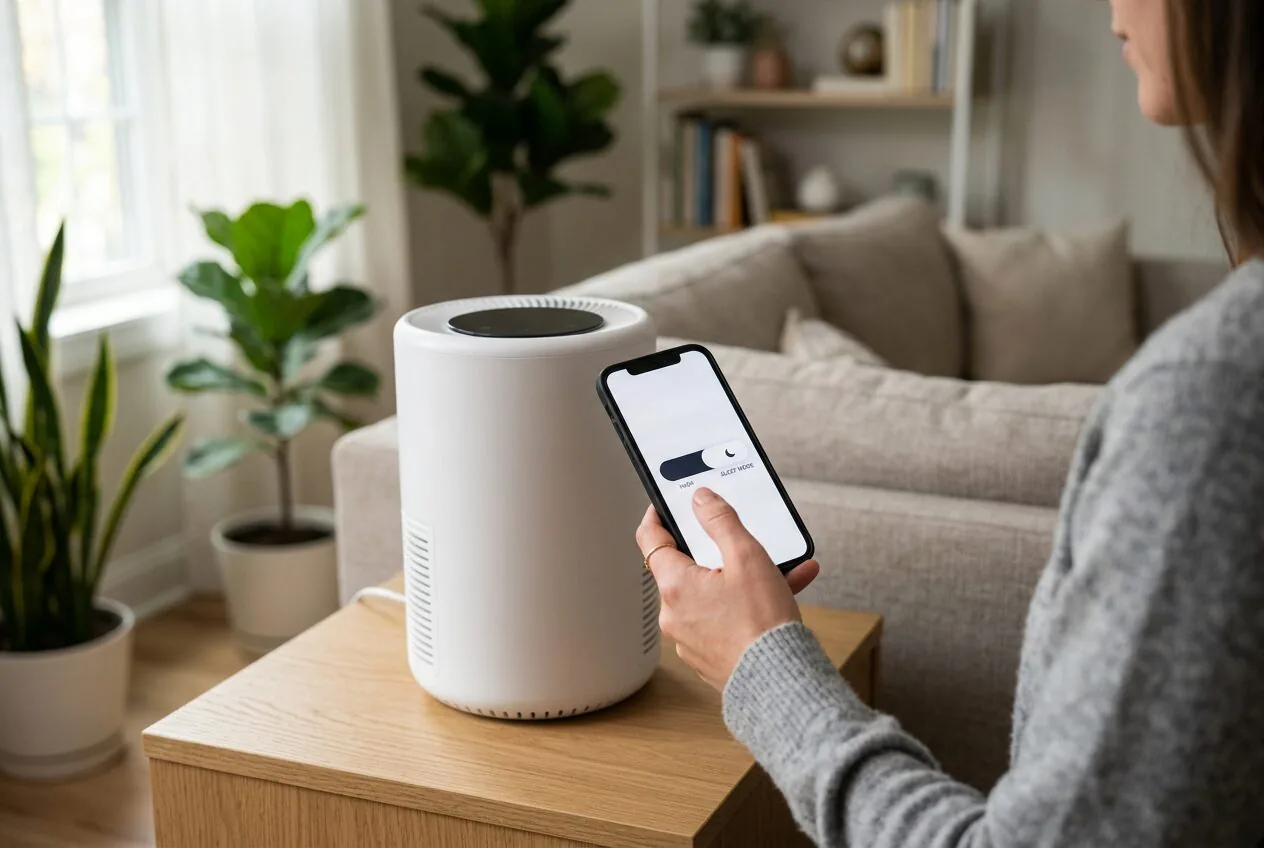
Modern smart purifiers can actually save energy through automation. Models with air quality sensors, like the GoveeLife Smart Air Purifier for Home Large Rooms, can automatically adjust fan speed based on real-time pollution levels. They ramp up when cooking smoke or dust is detected and dial down to an energy-sipping low speed when the air is clean. This avoids unnecessary high-speed operation. Timers and scheduling features also let you turn the unit off automatically when you leave home.
How to Calculate Your Air Purifier’s Operating Cost
You can easily estimate how much it costs to run your specific air purifier with a simple formula. First, identify the wattage your purifier uses at your typical speed setting. Let’s assume you run a 40-watt unit on medium for 12 hours a day.
- Find Daily Energy Use (kWh): (Wattage × Hours Used Per Day) ÷ 1000. (40 watts × 12 hours) ÷ 1000 = 0.48 kWh per day.
- Find Monthly Energy Use: Daily kWh × 30 days. 0.48 kWh × 30 = 14.4 kWh per month.
- Calculate Monthly Cost: Monthly kWh × Your Electricity Rate ($/kWh). Using the U.S. average of $0.16/kWh: 14.4 kWh × $0.16 = $2.30 per month.
This shows that for most households, a single air purifier is a minor appliance in terms of energy cost, often comparable to a laptop or a few LED light bulbs. For a deeper dive into electricity use, our article do air purifiers use a lot of electricity provides more detailed examples.
Tips for Reducing Air Purifier Energy Use
You can maximize air cleaning benefits while minimizing energy costs with a few simple habits.
- Use Lower Fan Speeds: Run the purifier on low or medium for general maintenance. Reserve high speed for brief periods after specific events like cooking, cleaning, or when allergy symptoms are high.
- Leverage Auto Mode: If your purifier has an auto mode with a sensor, use it. It ensures the unit only works as hard as necessary.
- Keep Doors and Windows Closed: Running an air purifier in a sealed room is far more efficient than trying to clean air that is constantly being replaced from outside.
- Maintain Your Filters: Follow the manufacturer’s replacement schedule. A clean filter is an efficient filter.
- Place It Strategically: Keep the purifier away from walls and furniture to ensure good air intake and outflow, reducing strain on the motor.
Recommended Products
When looking for an energy-efficient air purifier, models with Energy Star certification, adjustable fan speeds, and smart sensors are excellent choices. The following products are known for their effective performance with consideration for power usage.


As an Amazon Associate we earn from qualifying purchases. Product prices and availability are accurate as of the date/time indicated.
Frequently Asked Questions
Is it cheaper to run an air purifier all the time or just when needed?
For maintaining consistent air quality, especially for allergy sufferers, it is generally more effective and often more energy-efficient to run the purifier continuously on a low setting. The motor uses less power to maintain a low speed than it does to repeatedly start up and run on high to clean a room from scratch. The cost difference is usually minimal due to the low wattage on quiet modes.
Do air purifiers with ionizers or UV lights use more electricity?
Yes, additional features like ionizers or ultraviolet-C (UVC) lights add to the total wattage draw, though the increase is typically small (often 5-15 watts). However, the primary energy consumer is always the fan motor. It’s worth noting that some air purifier technologies, like certain ionizers, can produce ozone, which is a lung irritant, so their use should be considered carefully beyond just energy use.
What does the Energy Star label mean for an air purifier?
An Energy Star certification means the air purifier meets strict energy efficiency guidelines set by the U.S. Environmental Protection Agency. Certified models are, on average, about 40% more energy-efficient than standard models. They use less electricity to deliver the same level of air cleaning performance, saving you money over the life of the appliance.
Can an air purifier make my room hotter?
Air purifiers do not generate significant heat. The fan motor produces a negligible amount of warmth, much less than appliances like space heaters, computers, or even incandescent light bulbs. You will not notice a temperature increase in your room from an air purifier’s operation.
How does an air purifieru0026#039;s energy use compare to other household appliances?
Air purifiers are among the least energy-intensive home appliances. A typical unit uses 20-100 watts, comparable to a standard light bulb. In contrast, a hair dryer uses 1500+ watts, a portable heater uses 1500 watts, and a central air conditioner can use 3000-5000 watts. Running an air purifier is a very low-cost way to improve your indoor environment.
Final Thoughts
Concerns about the energy consumption of air purifiers are largely unfounded for most modern, well-chosen models. By understanding wattage, utilizing features like sleep mode and auto sensors, and performing regular filter maintenance, you can enjoy clean indoor air with a minimal impact on your electricity bill. The health and comfort benefits of breathing cleaner air typically far outweigh the modest operational cost, which is often just a few dollars per month.
When shopping, look for units with a good balance of Clean Air Delivery Rate (CADR) for your room size and energy-efficient features. For more guidance on choosing the right model, explore our buying guides. With a little knowledge, you can make a choice that keeps both your air and your energy spending in a healthy state.
About the author
Editor at AirPurifierGuides.com. Emily has a background in professional communication and has worked with several health and technology publications. She edits our content for accuracy and answers reader questions about air quality.