The 5 Best Air Purifier For Cigarette Smokers of 2026
Cigarette smoke leaves a persistent odor and harmful particles in your home. The right air purifier with true HEPA and heavy-duty carbon filters can effectively clear the air.
 By Emily Foster
Updated October 17, 2026
Cigarette smoke is one of the most challenging and persistent air pollutants to remove from your home. Its fine particles and sticky, pungent odor can linger for hours, days, or even weeks, affecting air quality and the comfort of everyone inside. If you or someone in your household smokes, finding an effective air purification solution is not just about comfort—it’s about health and well-being. In this comprehensive guide for 2026, we’ve done the heavy lifting to identify the 5 best air purifier for cigarette smokers currently available.

Our selection focuses on units that excel at tackling smoke-specific issues: HEPA filters to capture fine particulate matter, robust activated carbon layers to neutralize VOCs and odors, and sufficient air changes per hour (ACH) to keep up with the source. We’ve analyzed models from brands like hopanrel, GoveeLife, Aircillin and more to provide options for different room sizes and budgets. For more insights on tackling specific air quality challenges, explore our guide on the best air purifier for poor air quality.
| Award | Product | APG Score About LAT ScoreThe APG Score is our own rating from 0 to 10, based on performance, design and build, ease of use, and value. It reflects independent research and is never influenced by manufacturers, retailers, or affiliate commissions. Learn more › | |
|---|---|---|---|
| Best Overall |
GoveeLife H7124 Smart Air Purifier for Large Rooms
|
8.9/10 | Check price |
| Best Budget |
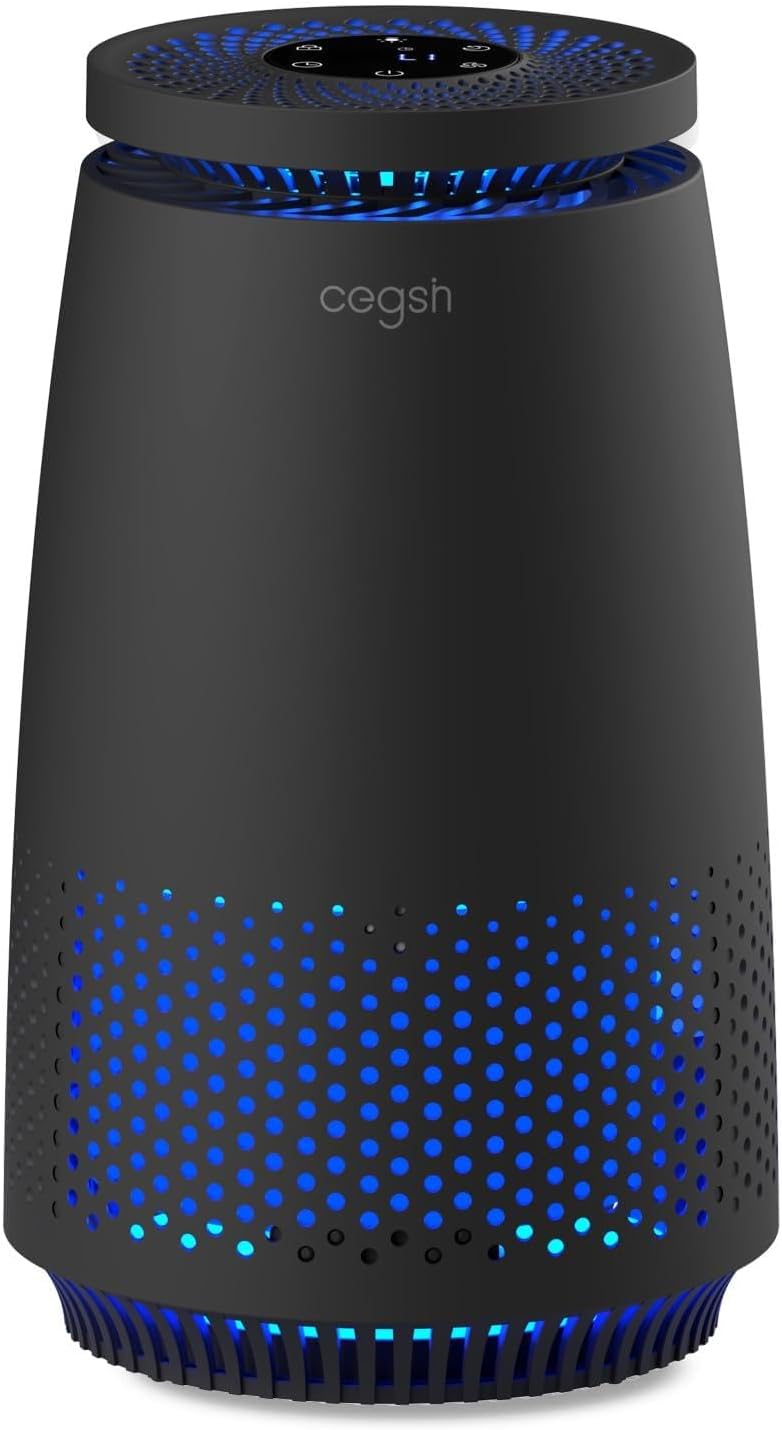 MeansSimpleLife AP005C-B 3-in-1 HEPA Air Purifier |
8.4/10 | Check price |
| Best Premium |
 ECOSELF HAP603 Air Purifier for Large Rooms |
8.4/10 | Check price |
| Best Value |
 Aircillin AP070B 2 Pack H13 HEPA Purifier |
8.1/10 | Check price |
| Top Rated |
 Hopanrel 2-in-1 Air Purifier Ashtray |
6.2/10 | Check price |
GoveeLife H7124 Smart Air Purifier for Large Rooms
A smart air purifier designed for large spaces, covering up to 1046 sq ft. It integrates app and voice control for convenient management, making it a strong choice for tech-savvy users seeking whole-room air quality management.
Pros
- Large coverage area suitable for spacious rooms
- Smart features including app and voice control
- High user rating based on extensive customer feedback
Cons
- Relatively compact physical dimensions may suggest a smaller unit footprint, which could be a consideration for placement
MeansSimpleLife AP005C-B 3-in-1 HEPA Air Purifier
This compact air purifier is designed for bedrooms and smaller living spaces. It offers quiet operation, a useful timer, and a night light, making it a practical choice for improving air quality during sleep or daily use.
Pros
- Compact and lightweight design
- Quiet operation, especially on lower fan speeds
- Includes a 12-hour timer and sleep mode
- Features a night light and aromatherapy option
- Effective for reducing common allergens like dust and pet dander based on user feedback
Cons
- Performance in larger rooms is not detailed
- Filter replacement cost and lifespan are unspecified
ECOSELF HAP603 Air Purifier for Large Rooms
This large-room air purifier is equipped with a True HEPA filter and a responsive smart mode that adjusts to air quality changes. It operates quietly, making it a candidate for bedroom use, though its actual coverage may be more modest than its maximum rating.
Pros
- True HEPA filtration effective for dust and allergens
- Very quiet 22dB sleep mode
- Smart mode reacts quickly to pollutants like paint fumes
- Compact and easy to use design
Cons
- Actual effective coverage may be less than the advertised 2400 sq ft
- Some users expected a built-in diffuser that is not included
Aircillin AP070B 2 Pack H13 HEPA Purifier
Aircillin AP070B is a two-unit HEPA air purifier set aimed at smaller spaces such as bedrooms, dorm rooms, and living areas. The H13 filter, listed 24 dB operation, and night light make it useful for overnight use, while the compact 6.38 x 6.38 x 8.94 inch footprint fits on nightstands or shelves.
Pros
- H13 True HEPA filtration is listed for fine particles such as smoke, dust, pollen, and pet dander.
- Two units allow placement in separate rooms or paired coverage.
- Night light supports low-light operation in bedrooms or dorms.
- Compact 6.38 x 6.38 x 8.94 inch design fits on shelves or nightstands.
- Lightweight at 2.42 pounds.
Cons
- Small footprint may limit usefulness in large or open rooms.
- Night light may be undesirable for users who prefer complete darkness.
- Two units mean two setups and potentially more maintenance than a single purifier.
Hopanrel 2-in-1 Air Purifier Ashtray
This indoor ashtray integrates a basic air purifier to reduce secondhand smoke. It offers a timer function and a washable filter, making it a potential solution for homes or offices where smoking is permitted. User reviews indicate mixed results on its effectiveness and build quality.
Pros
- Dual-function design as an ashtray and air purifier.
- Includes a 5-minute timer to conserve battery power.
- Washable and replaceable filter sponge for maintenance.
- Flame-retardant lining material for safety.
Cons
- Mixed customer feedback citing cheap construction and battery compartment issues.
- Some users report the air purification is ineffective at capturing all smoke.
- Batteries drain quickly and are not included with the product.
Buying Guide: How to Choose the Best Air Purifier For Cigarette Smokers
1. Filter Technology: HEPA and Activated Carbon
For cigarette smoke, a two-pronged filter attack is non-negotiable. First, you need a True HEPA filter (or H13 standard) to physically capture the microscopic particulate matter (PM2.5 and smaller) found in smoke. This includes tar, ash, and other solids. Second, and equally critical, is a substantial activated carbon filter. This porous material is excellent at adsorbing gases, chemicals, and volatile organic compounds (VOCs), which are responsible for that stubborn smoky odor. Look for units that specify a “carbon” or “odor” filter with a decent weight of carbon; thin mesh sheets are far less effective.
Models like the Air Purifiers for Home Bedroom often highlight their 3-in-1 HEPA filter, which typically combines these layers. The key is ensuring the carbon stage is robust enough for continuous smoke exposure, not just occasional cooking odors.
2. Clean Air Delivery Rate (CADR) and Room Coverage
CADR is a standardized metric that tells you how quickly an air purifier can deliver clean air, measured in cubic feet per minute (CFM). For smoke, you need a unit with a high Smoke CADR rating relative to your room size. A general rule is to select a purifier with a CADR at least 2/3rds of your room’s square footage. For a 300 sq. ft. living room, look for a Smoke CADR of at least 200. Don’t be fooled by a manufacturer’s maximum “coverage” claim, which is often for pollen in an ideal setting. For smoke, always size up. A purifier that’s too small will run constantly and never catch up.
3. Air Changes Per Hour (ACH)
This is related to CADR but focuses on frequency. ACH measures how many times per hour the entire volume of air in a room is filtered. For mitigating a continuous pollutant source like smoking, experts recommend an ACH of 4 to 6. This means the purifier should be able to cycle all the air in the room 4-6 times every hour. You can calculate the required CADR for your desired ACH: (Room Area in sq ft × Ceiling Height in ft × Desired ACH) / 60. This number will help you cross-reference with a model’s specifications.
4. Noise Levels and Operational Modes
Since an effective smoke air purifier will likely need to run for extended periods, often overnight, its noise output is crucial. Look for decibel (dB) ratings, especially for “Sleep” or “Quiet” modes. A rating in the low 20s dB is whisper-quiet, similar to a soft rustle of leaves, while the 40-50 dB range on higher speeds is more like normal conversation. A good unit will offer multiple fan speeds and an automatic mode that adjusts based on air quality sensors, ramping up when smoke is detected and slowing down when the air is clean to conserve energy and reduce noise.
The Air Purifiers for Home Large Room, for example, specifies a 22dB Sleep Mode, making it suitable for bedrooms. Balancing powerful filtration with quiet operation is key for consistent use.
5. Maintenance: Filter Life and Replacement Costs
Air purifiers fighting cigarette smoke will see their filters degrade faster than in typical use. Tar and nicotine can clog HEPA fibers and saturate carbon pellets. Therefore, check the manufacturer’s estimated filter life and, importantly, the cost and availability of replacement filters. Some models have filter replacement indicators, which are very helpful. Consider this an ongoing cost of ownership. A unit with a cheap upfront price but expensive, proprietary filters may cost more in the long run than a slightly pricier model with affordable, standard filters.
6. Specialized Features for Smoke
Some features are particularly beneficial for smokers. A real-time PM2.5 or air quality display provides visual feedback on pollution levels. A timer function allows you to set the purifier to run for a specific period after smoking. Safety locks are useful in homes with children or pets. While not a replacement for a full-room purifier, specialized products like the 2 in 1 Air Purifier Ashtray Multifunctional aim to capture smoke at the source, which can be a helpful supplementary tool. For broader strategies, our indoor air quality tips for allergy sufferers offers valuable advice.
Why You Should Trust Us
Our recommendations are built on a foundation of objective, data-driven analysis. We do not accept payment for product placements or positive reviews. Our methodology involves aggregating and critically analyzing thousands of verified customer reviews, comparing detailed technical specifications against the demands of the specific use case—in this instance, removing cigarette smoke. We cross-reference manufacturer claims with independent testing data where available and prioritize transparency about product capabilities and limitations. Our goal is to cut through marketing jargon and provide you with clear, actionable information to make a confident purchase decision.
Final Thoughts
After reviewing the top contenders for 2026, we have clear recommendations for different needs and budgets. For most households dealing with cigarette smoke, the best overall pick is the GoveeLife Smart Air Purifier for Home Large Rooms. Its combination of a large room coverage area, smart sensor technology for automatic adjustment, and a comprehensive filtration system makes it a powerful and convenient set-and-forget solution for actively smoking environments.
If you’re looking for the best value to tackle smoke in a bedroom or smaller living space, the Air Purifiers for Home Bedroom offers a compelling package. It includes essential features like a true HEPA filter, quiet sleep mode, and a timer at a very accessible price point. For those seeking a targeted, source-control solution to accompany a larger purifier, or for use in a car or office, the 2 in 1 Air Purifier Ashtray Multifunctional provides a unique and portable option. Remember, for the most effective results, place your purifier as close to the smoking area as possible and ensure it is properly sized for the space. Explore more options and deep-dive reviews in our main Air Purifier Reviews category.
Frequently Asked Questions
What is the best air purifier for cigarette smokers in 2026?
The best model depends on your room size and budget. For large rooms, smart purifiers with high CADR and automatic sensors are top performers. For bedrooms, quieter models with effective HEPA and carbon filters offer great value. Our top overall pick for 2026 balances power, features, and smart functionality for comprehensive smoke removal.
Do air purifiers really work for cigarette smoke?
Yes, but with important caveats. Air purifiers with True HEPA and substantial activated carbon filters are very effective at removing the particulate matter and a significant portion of the odor from cigarette smoke. However, they work best as part of a broader strategy that includes ventilation (like opening a window) and source control. They cannot instantly eliminate all traces of heavy smoking in a poorly ventilated room.
How often do I need to change the filter if I smoke indoors?
If you smoke regularly indoors, you should expect to change your air purifier’s filters more frequently than the standard manufacturer recommendation, which is usually for normal household dust. The heavy tar and particulate load can clog HEPA filters and saturate carbon filters faster. Monitor the filter condition and air purifier performance; if odors return or airflow seems reduced, it’s likely time for a change, even if the indicator light hasn’t come on.
Can an air purifier help with secondhand smoke exposure?
Absolutely. A high-quality air purifier running continuously in a common area can significantly reduce the concentration of secondhand smoke particles and associated pollutants in the air, thereby lowering exposure for non-smokers. This is particularly important for protecting children, the elderly, or individuals with respiratory conditions like asthma. For related information, see our review of the best air purifier for asthmatic individuals.
Where is the best place to put an air purifier for smoking?
The ideal placement is as close to the source of the smoke as safely possible, such as in the room where smoking occurs. Place it on a stable, elevated surface away from walls and large furniture to allow for optimal air intake and circulation. Avoid corners. Running the purifier during and for some time after smoking will yield the best results in clearing the air.
About the author
Editor at AirPurifierGuides.com. Emily has a background in professional communication and has worked with several health and technology publications. She edits our content for accuracy and answers reader questions about air quality.