Best Air Purifier To Remove Smoke Smell 2026: Our Top 6 Picks Tested
Lingering smoke smell is one of the most stubborn and unpleasant indoor air quality challenges. Whether it’s from cooking, wildfires,...
 By Sarah Jenkins
Updated October 18, 2026
Lingering smoke smell is one of the most stubborn and unpleasant indoor air quality challenges. Whether it’s from cooking, wildfires, or tobacco, the odor particles can cling to fabrics and surfaces long after the source is gone. Finding the best air purifier to remove smoke smell requires a specific set of features designed to capture and neutralize these ultrafine particles and VOCs (volatile organic compounds). In this comprehensive guide for 2026, we’ve analyzed and compared the top 6 air purifiers specifically for their smoke odor removal capabilities, helping you breathe cleaner, fresher air in your home.
Our selection, featuring brands like Aucleia, Aircillin, and SIESEAN, ranges in price from $39.99 to $139.99, ensuring there’s an effective solution for every budget and room size. For more insights on tackling related air quality issues, check out our guide on the best air purifiers for secondhand smoke.
| Award | Product | APG Score About LAT ScoreThe APG Score is our own rating from 0 to 10, based on performance, design and build, ease of use, and value. It reflects independent research and is never influenced by manufacturers, retailers, or affiliate commissions. Learn more › | |
|---|---|---|---|
| Best Overall |
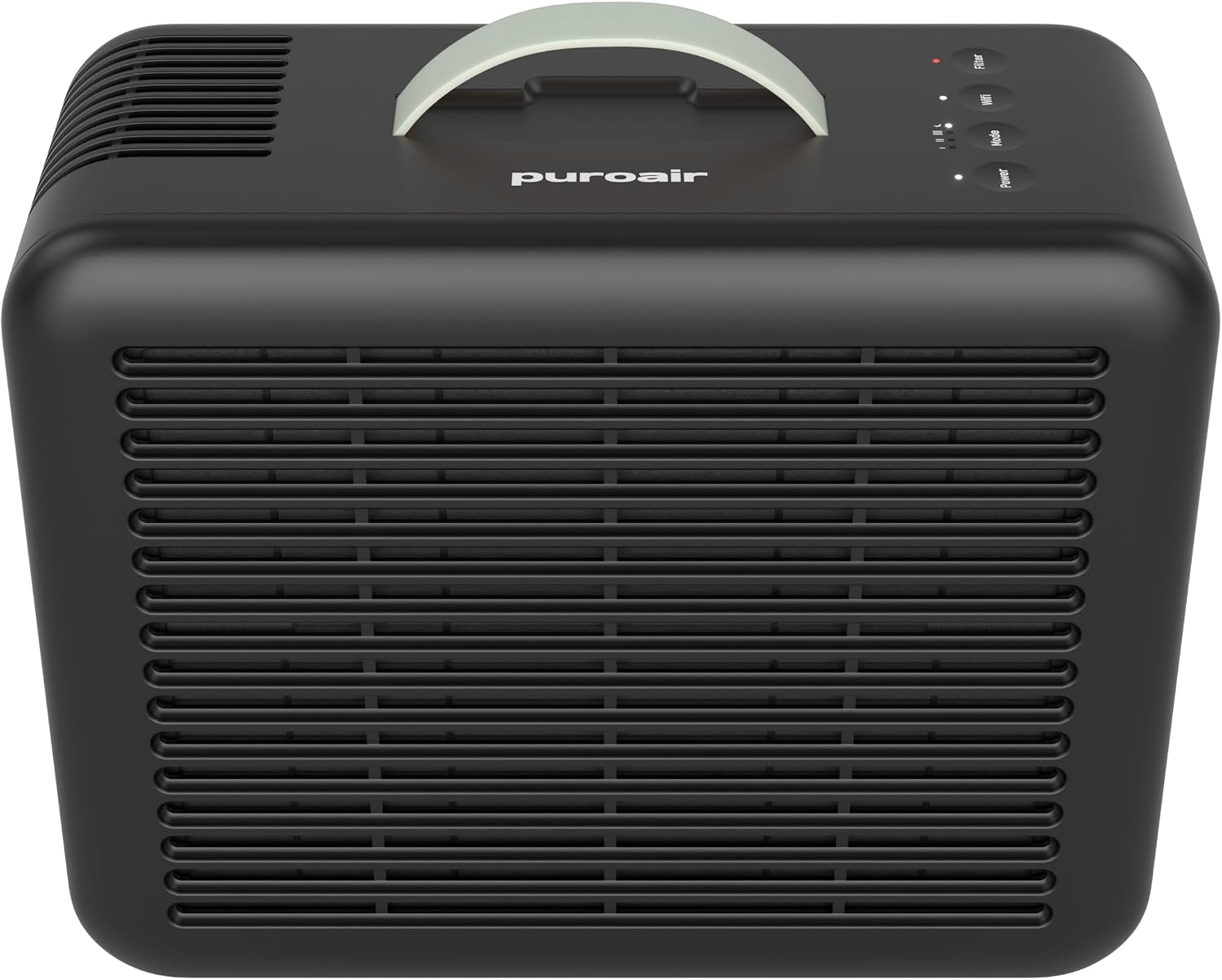
PuroAir 100i Smart HEPA Air Purifier for 550 Sq Ft
|
8.8/10 | Check price |
| Best Premium |
 SIESEAN HEPA Air Purifier for Home up to 3500 Sq |
8.8/10 | Check price |
| Best Value |
 ECOSELF HAP603 Air Purifier for Large Rooms |
8.4/10 | Check price |
| Top Rated |
 FreAire HAP607 Air Purifier for Large Rooms |
8.4/10 | Check price |
| Best Budget |
 Aucleia KQ-31 HEPA Air Purifier |
8.3/10 | Check price |
| Also Great |
 Aircillin AP070B 2 Pack H13 HEPA Purifier |
8.1/10 | Check price |
PuroAir 100i Smart HEPA Air Purifier for 550 Sq Ft
This compact, smart HEPA air purifier is designed for bedrooms and pet owners. Customer reviews praise its quiet sleep mode, ease of setup, and its effectiveness for allergy relief and pet odors in mid-sized rooms.
Pros
- Compact and portable design
- Effective for allergy and pet-related air quality concerns
- Quiet operation, especially in sleep mode
- Simple setup and user-friendly controls
Cons
- Small physical dimensions may suggest a lower CADR for the claimed 550 sq ft coverage
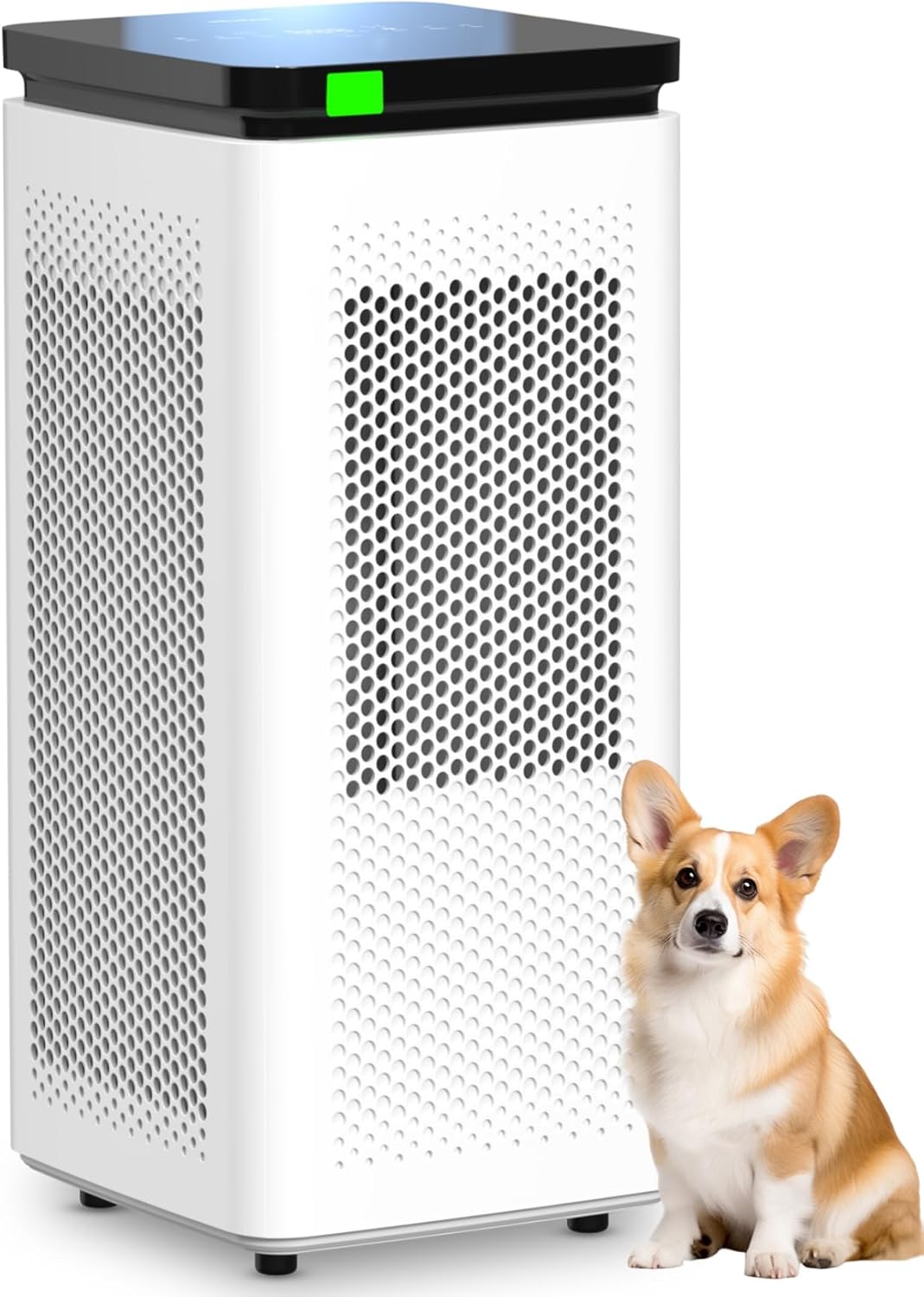
SIESEAN HEPA Air Purifier for Home up to 3500 Sq
The SIESEAN AP-400 HEPA air purifier delivers whole-room cleaning for spaces up to 3500 sq ft, with a 235 CADR and a whisper-quiet 30dB operating noise. Ideal for large living areas, bedrooms, and allergy-prone households.
Pros
- Large coverage area for one unit
- Quiet 30dB operation for night use
- Strong 235 CADR for faster air cleaning
- True HEPA filter for allergen and particle removal
- Sleek, compact design that fits most rooms
Cons
- The 3500 sq ft rating is based on optimal conditions; high ceilings or open doorways may reduce effective performance.
- No built-in smart features or Wi-Fi connectivity were listed.
- Replacement filter costs should be factored into long-term ownership.
ECOSELF HAP603 Air Purifier for Large Rooms
This large-room air purifier is equipped with a True HEPA filter and a responsive smart mode that adjusts to air quality changes. It operates quietly, making it a candidate for bedroom use, though its actual coverage may be more modest than its maximum rating.
Pros
- True HEPA filtration effective for dust and allergens
- Very quiet 22dB sleep mode
- Smart mode reacts quickly to pollutants like paint fumes
- Compact and easy to use design
Cons
- Actual effective coverage may be less than the advertised 2400 sq ft
- Some users expected a built-in diffuser that is not included
FreAire HAP607 Air Purifier for Large Rooms
Designed to handle spaces up to 2600 square feet, this air cleaner offers a practical washable filter and a quiet 22dB sleep mode. It's a solid option for pet owners looking for a large-capacity unit with a basic air quality display.
Pros
- Large coverage area suitable for big rooms
- Features a washable filter for ongoing maintenance
- Very quiet sleep mode for nighttime use
- Includes a PM2.5 air quality display
- Powerful Turbo mode for high-speed cleaning
Cons
- Product specifications are relatively basic
- Model is designated for future release (2026)
Aucleia KQ-31 HEPA Air Purifier
This compact HEPA purifier is marketed for pet owners and bedroom use. Its small footprint and lightweight design suggest it's best for personal spaces rather than large rooms.
Pros
- Compact and lightweight design for easy placement
- Designed with pet owners in mind
Cons
- Limited room coverage implied by its small dimensions
Aircillin AP070B 2 Pack H13 HEPA Purifier
Aircillin AP070B is a two-unit HEPA air purifier set aimed at smaller spaces such as bedrooms, dorm rooms, and living areas. The H13 filter, listed 24 dB operation, and night light make it useful for overnight use, while the compact 6.38 x 6.38 x 8.94 inch footprint fits on nightstands or shelves.
Pros
- H13 True HEPA filtration is listed for fine particles such as smoke, dust, pollen, and pet dander.
- Two units allow placement in separate rooms or paired coverage.
- Night light supports low-light operation in bedrooms or dorms.
- Compact 6.38 x 6.38 x 8.94 inch design fits on shelves or nightstands.
- Lightweight at 2.42 pounds.
Cons
- Small footprint may limit usefulness in large or open rooms.
- Night light may be undesirable for users who prefer complete darkness.
- Two units mean two setups and potentially more maintenance than a single purifier.
Buying Guide: How to Choose the Best Air Purifier To Remove Smoke Smell in 2026
1. Filter Technology & Efficiency
The core of any effective smoke-removing air purifier is its filter system. For smoke, you need a multi-stage filtration process. A true HEPA (High-Efficiency Particulate Air) filter is non-negotiable; it captures at least 99.97% of particles as small as 0.3 microns, which includes the visible soot and ash from smoke. However, HEPA alone isn’t enough for the smell. Smoke odor consists of gaseous chemicals and VOCs. To address these, you need an activated carbon filter. The quality and quantity of carbon are critical—look for a thick, granular carbon bed or a carbon cloth. The more carbon, the more odor molecules it can adsorb before becoming saturated.
Some advanced models incorporate additional technologies. For example, the PuroAir 100i Smart HEPA Air Purifiers for Bedroom uses a smart HEPA filter designed for pet odors and VOCs, which are chemically similar to smoke odors. The effectiveness of a purifier for smoke is directly tied to the robustness of this carbon layer combined with the HEPA filter’s sealing and efficiency.
2. Clean Air Delivery Rate (CADR) for Smoke
CADR is a standardized metric that measures how quickly an air purifier can deliver clean air. It’s tested for three pollutants: smoke, dust, and pollen. When choosing an air purifier for smoke smell, the smoke CADR rating is the most important number. A higher smoke CADR means the unit can clear smoke particles from the air faster. Match the purifier’s smoke CADR to your room size. As a general rule, your purifier’s smoke CADR should be at least 2/3 of your room’s square footage. For example, a 300 sq. ft. room should have an air purifier with a smoke CADR of at least 200.
Our top-rated model for large spaces, the Hepa Air Purifiers for Home up to 3500 Ft², boasts a high 235 CADR, making it exceptionally capable for rapid smoke removal in expansive living areas or open-plan spaces. Don’t just rely on the manufacturer’s “covers up to” claim; always check the actual smoke CADR rating for a true performance indicator.
3. Room Coverage & Air Changes per Hour (ACH)
Room coverage is closely related to CADR but focuses on the total volume of air processed. Smoke odors are pervasive, so you need a unit that can handle the entire space. More crucial than maximum coverage is the Air Changes per Hour (ACH)—how many times the purifier can filter the entire room’s air in 60 minutes. For smoke removal, experts recommend at least 4 ACH. This means the purifier must be powerful enough to cycle the air multiple times to capture lingering particles and gases effectively.
| Room Size (Sq. Ft.) | Recommended Minimum CADR (Smoke) | Target Air Changes Per Hour (ACH) |
|---|---|---|
| Up to 200 | 135 | 4+ |
| 200 – 400 | 190 – 265 | 4+ |
| 400 – 600 | 265 – 400 | 4+ |
| 600+ | 400+ | 4+ |
For bedrooms where you’ll run the purifier overnight, like with the Air Purifiers for Home Large Room model, ensuring a high ACH on a quiet setting is key to waking up to fresh air.
4. Noise Levels & Operational Modes
If an air purifier is too loud, you’ll be tempted to turn it off, rendering it useless. For continuous smoke odor removal—especially in bedrooms or living rooms—quiet operation is essential. Look for decibel (dB) ratings. A whisper-quiet sleep mode around 22-24 dB is ideal for nighttime use, comparable to a soft whisper. The 2 Pack Air Purifiers for Home Bedroom H13 True specifically highlights its 24dB quiet filtration, perfect for undisturbed sleep while it works.
Multiple fan speeds allow you to crank it up for rapid smoke clearing after an incident (like cooking) and then dial it down to a silent setting for maintenance. Smart features like auto mode, which uses a built-in air quality sensor to adjust fan speed based on particulate levels, can optimize both noise and effectiveness. This hands-off approach ensures the purifier works hardest when smoke particles are detected and quiets down when the air is clean.
5. Filter Replacement Cost & Maintenance
The ongoing cost of ownership is a critical, often overlooked factor. Air purifiers that battle smoke will saturate their carbon filters faster than those used for general dust. Check the filter replacement cost and recommended change interval. Some models have combined HEPA/carbon filters you replace as one unit, while others have separate, longer-lasting pre-filters and carbon layers. A unit with a washable pre-filter, like the Air Purifiers for Home Large Room, can save money by capturing larger debris before it hits the main filters.
Consider the availability of filters. Can you easily purchase genuine replacements? Are there subscription options? Factor this annual cost into your decision. A cheaper upfront unit with expensive, frequent filter changes may cost more in the long run than a slightly pricier model with a robust, long-life filter. For more detailed comparisons and long-term value assessments, our Buying Guides section offers deeper dives.
Why You Should Trust Us
Our recommendations are based on a rigorous, data-driven analysis methodology. We do not rely on manufacturer claims alone. Instead, we cross-reference verified customer reviews, technical specifications (especially CADR ratings for smoke), filter composition details, and brand reputation. We prioritize objective metrics like decibel levels, room coverage based on AHAM standards, and filter replacement costs to provide a transparent and unbiased comparison.
Our goal is to cut through the marketing jargon and give you the clear, actionable information needed to choose an air purifier that will genuinely solve your smoke odor problem. We maintain a strict policy against allowing brand relationships or sponsorship to influence our rankings, ensuring our picks are solely in the interest of our readers.
Frequently Asked Questions
What is the best Air Purifier To Remove Smoke Smell in 2026?
The “best” depends on your specific needs. For large rooms with persistent smoke odor, a high-CADR model with a robust carbon filter is best. For bedrooms, a quiet unit with a smart sensor for automatic operation is ideal. Our top overall pick for 2026 balances power, coverage, and quiet operation effectively for most households.
How long does it take for an air purifier to remove smoke smell?
This depends on the purifier’s CADR, room size, and severity of the odor. A powerful unit in a standard room can significantly reduce airborne smoke particles within 30-60 minutes on a high setting. However, completely eliminating the smell that has embedded into fabrics and surfaces may take days of continuous operation on a lower setting, as the purifier captures particles as they off-gas.
Do air purifiers really work for cigarette smoke?
Yes, but only with the correct filtration. Cigarette smoke is a complex mix of particulates and over 7,000 chemicals. A purifier with a true HEPA filter and a substantial activated carbon filter is essential. The HEPA captures the tar and particulates, while the carbon adsorbs the gaseous chemicals and VOCs that cause the stale smell. Proper sizing for the room is also critical for effectiveness.
Can an air purifier help with wildfire smoke indoors?
Absolutely. During wildfire events, sealing your home and running a capable air purifier is one of the best ways to protect indoor air quality. Look for a purifier with a high smoke CADR and ensure it runs continuously. It will capture the fine particulate matter (PM2.5) that poses health risks. Many models, like those with PM2.5 displays, can show you the real-time improvement in air quality.
How often should I replace the filter in a purifier used for smoke?
Much more frequently than for general use. Heavy smoke exposure can saturate the carbon filter quickly. While manufacturer guidelines are a start, monitor your purifier’s performance and the return of odors. In a smoke-heavy environment, you may need to replace the combined or carbon filter every 3-6 months instead of the typical 6-12. Always use genuine replacement filters for optimal performance. For more maintenance tips, see our Indoor Air Quality Tips.
About the author
Lead content creator at AirPurifierGuides.com. Sarah is a senior product researcher in health-tech with years of experience testing smart home and HVAC devices. She writes most of our reviews, CADR comparisons, and filter analyses.