The 3 Best Inline Air Purifier of 2026
Finding the right inline air purifier is crucial for managing odors, dust, and airborne particles in specialized environments like grow...
 By Marcus Thorne
Updated October 18, 2026
Finding the right inline air purifier is crucial for managing odors, dust, and airborne particles in specialized environments like grow rooms, workshops, and home ventilation systems. As we move through October 2026, the demand for efficient, targeted air cleaning solutions continues to grow. Whether you’re a serious indoor gardener, a hobbyist with a workshop, or someone looking to improve air circulation in a specific area, selecting the correct unit requires understanding airflow, filtration, and installation. This guide cuts through the confusion by analyzing 3 top-performing models, helping you make an informed decision that fits your specific needs and budget.
We’ve evaluated each contender based on critical factors like cubic feet per minute (CFM), filter type, noise levels, and ease of integration into existing ducting. For more general advice on improving your indoor environment, check out our guide on indoor air quality tips for allergy sufferers. Now, let’s dive into the detailed comparison of the top Best Inline Air Purifier available right now.
| Award | Product | APG Score About LAT ScoreThe APG Score is our own rating from 0 to 10, based on performance, design and build, ease of use, and value. It reflects independent research and is never influenced by manufacturers, retailers, or affiliate commissions. Learn more › | |
|---|---|---|---|
| Best Overall |
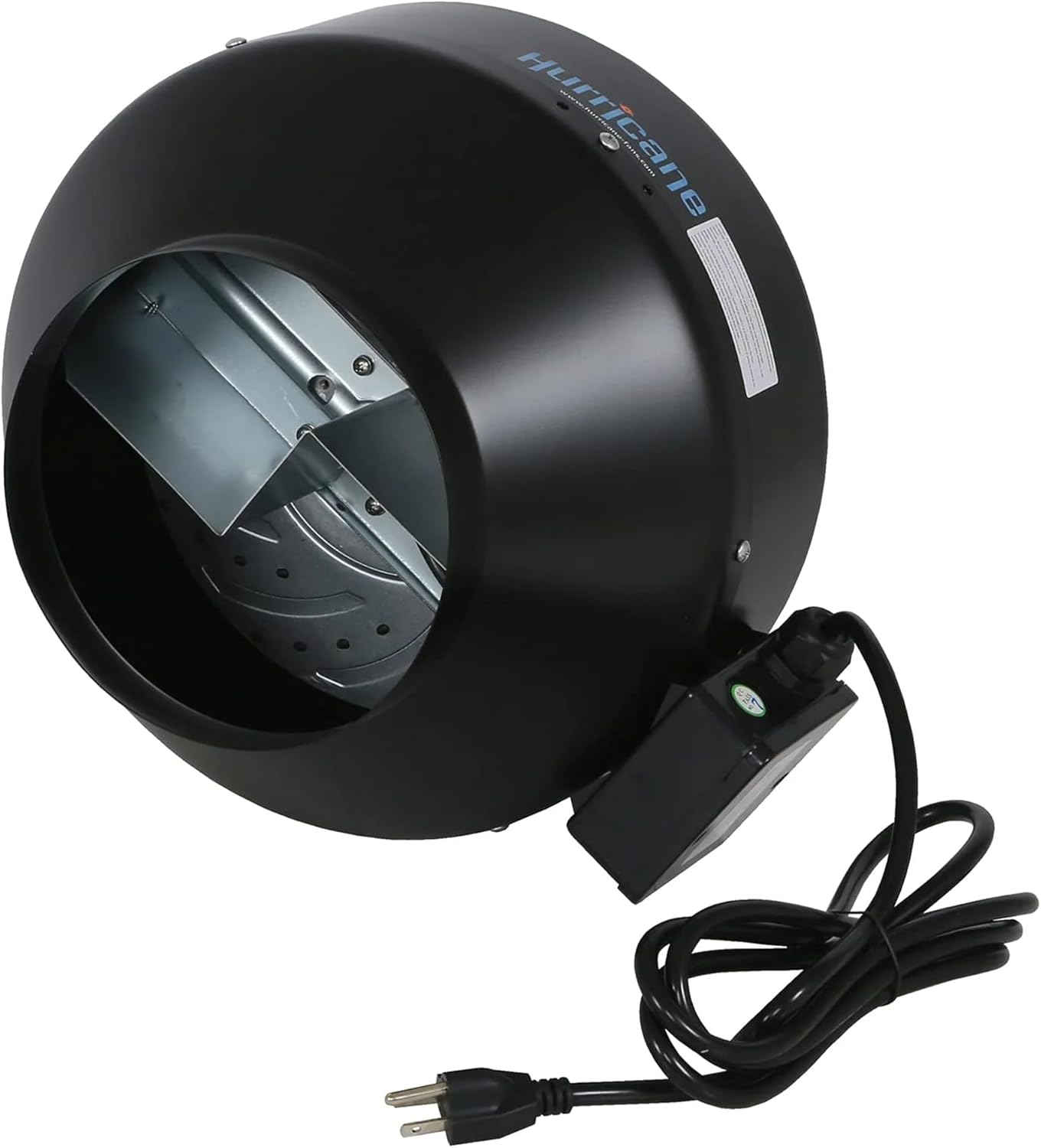
Hurricane Commercial Inline Fan 8-Inch
|
8.4/10 | Check price |
| Best Budget |
 MELONFARM 101 4-Inch Air Carbon Filter & Fan Kit |
8.3/10 | Check price |
| Top Rated |
 LabCharge Ionic1611K Small Ionic Air Purifier |
7.2/10 | Check price |
Hurricane Commercial Inline Fan 8-Inch
This Hurricane inline fan is a commercial-grade ventilation unit built for heavy-duty air extraction. Its 745 CFM airflow is designed to work with large carbon filters, making it suitable for serious exhaust needs in grow rooms or industrial spaces. The steel construction and quiet 45 dB operation point to a focus on durability and less disruptive performance.
Pros
- High-performance 745 CFM airflow
- Robust steel housing with powder-coated finish for durability
- Relatively quiet operation at 45 dB
- Includes mounting bracket for straightforward installation
- Backed by a 5-year manufacturer's warranty
Cons
- Single speed offers no airflow adjustment
- Heavy and large size may complicate placement in tight spaces
MELONFARM 101 4-Inch Air Carbon Filter & Fan Kit
This all-in-one ventilation kit combines a high-absorption carbon filter with a powerful, low-noise inline fan. It's designed for growers and homeowners needing robust odor control and air circulation in spaces like tents, basements, or kitchens. The 12-speed controller offers flexible airflow adjustment.
Pros
- Powerful built-in fan rated for 265 CFM with low 30 dB noise
- Uses premium Australian virgin charcoal for effective odor control
- Includes a removable pre-filter to trap particles and extend life
- 12-speed controller allows precise airflow adjustment
- Versatile for use as an intake or exhaust in various indoor settings
Cons
- The 4-inch size and specific flange may not be compatible with all existing ductwork
- At nearly 4 kg, the unit is relatively heavy for ceiling mounting
LabCharge Ionic1611K Small Ionic Air Purifier
This compact five pack of ionic air purifiers offers a basic, multi-unit solution for small spaces up to 250 square feet. It's a simple choice for those seeking silent operation and a minimalist black design to handle common airborne irritants like dust and pet dander.
Pros
- Extremely compact and lightweight design
- Operates silently
- Sold as a convenient five pack for multi-room use
- Covers small areas suitable for bedrooms or personal spaces
Cons
- Relies on ionic technology rather than a traditional HEPA filter for particle capture
- Very small individual unit size may limit effectiveness for the stated coverage area
Best Inline Air Purifier Buying Guide for 2026
Choosing the right inline air purifier involves more than just picking the most powerful fan. You need a system that matches your space’s size, addresses your specific air quality concerns (like odor or dust), and fits within your noise tolerance and budget. This buying guide breaks down the Best Inline Air Purifier essentials to consider before you make your purchase.
Airflow Capacity (CFM)
Cubic Feet per Minute (CFM) is the most critical specification for any inline fan or purifier. It measures the volume of air the unit can move, directly determining how quickly it can exchange the air in your space. For effective air purification, you generally want to achieve a complete air exchange at least once every three to five minutes. To calculate the minimum CFM you need, first determine the volume of your room (length x width x height in feet). Then, divide that number by the desired minutes per air exchange. For a grow tent that’s 4’x4’x8′ (128 cubic feet), aiming for one exchange every 3 minutes requires a minimum of about 43 CFM (128 / 3).
It’s wise to choose a unit with a CFM rating 20-30% higher than your calculated minimum to account for resistance from ducting, filters, and bends in the ventilation path. A model like the Hurricane Commercial Inline Fan for Phresh & Black, with its robust 745 CFM, is designed for large-scale commercial ventilation where moving high volumes of air is non-negotiable. Always match the CFM to your space’s size; an undersized unit will be ineffective, while an oversized one may be unnecessarily loud and expensive.
Filtration Type and Efficiency
The filtration method defines what contaminants your Best Inline Air Purifier will remove. The two primary types you’ll encounter are activated carbon filters and HEPA (or ionic) filters, each targeting different pollutants. Activated carbon is exceptionally effective at adsorbing odors, volatile organic compounds (VOCs), and gases. It’s the go-to choice for grow tents, kitchens, or workshops where smell control is paramount. The quality of the charcoal and its internal surface area (measured in IAV) determine its effectiveness and lifespan.
HEPA filters, on the other hand, are designed to capture particulate matter like dust, pollen, pet dander, and mold spores. True HEPA filters trap 99.97% of particles as small as 0.3 microns. Some compact units, like certain models designed for bedrooms, combine HEPA filtration with an ionic function to further reduce airborne particles. Your choice should be driven by your primary concern: choose carbon for odors and gases, and HEPA for allergens and dust. For a deeper look at HEPA technology, explore our reviews of the best HEPA filter room air purifiers.
Duct Size and Installation Compatibility
Inline air purifiers and fans are designed to integrate into ductwork, so ensuring compatibility is essential for a leak-free, efficient system. The standard duct sizes are 4 inches, 6 inches, and 8 inches in diameter. You must match the flange size of your chosen unit to the diameter of your existing or planned ducting. Using mismatched sizes requires reducers or adapters, which can create turbulence, reduce airflow, and increase noise. The installation process itself varies; some kits come with everything needed, including ducting, clamps, and mounting brackets, while others are just the fan or filter unit.
Consider where and how you will mount the unit. Inline fans are often hung with straps or mounted on a wall or ceiling joist. Ensure the product includes the necessary hardware or that you have a plan for secure mounting, as vibration can lead to noise and wear. A well-sealed connection at both the intake and exhaust is crucial to prevent unfiltered air from bypassing the system and to maintain optimal negative or positive air pressure, depending on your setup.
Noise Level and Operational Sound
Noise is a significant factor, especially if the unit will be operating in a living space, bedroom, or an environment where quiet is valued. Inline systems generate noise from the fan motor and from air moving through the ducting. Manufacturers may list a decibel (dB) rating, but this can be measured under ideal conditions. Look for mentions of “quiet operation,” “low-noise motors,” or “insulated housings” in the product features. Units with variable speed controllers are invaluable, as they allow you to run the fan at a lower, quieter speed when maximum airflow isn’t required, such as during the night.
The design of the impeller and the housing’s construction also influence sound. Sealed ball bearings typically last longer and run quieter than sleeve bearings. Remember that any obstruction in the ducting, like a sharp bend or a clogged filter, will force the fan to work harder and likely become louder. If noise is a top priority, consider allocating part of your budget for insulated ducting, which can dramatically reduce operational sound.
Why You Should Trust Us
Our recommendations are built on a foundation of transparent, data-driven analysis. We do not accept payment for reviews or favorable placements. Our evaluation process for Best Inline Air Purifier involves a meticulous examination of manufacturer specifications, verified customer reviews, and expert insights into HVAC and air quality principles. We cross-reference key performance metrics like CFM, filter specifications, and noise claims against industry standards and real-world user experiences to identify strengths and potential weaknesses.
We prioritize objectivity by structuring our comparisons around measurable criteria that matter most to consumers. Our goal is to provide you with clear, comparative information so you can choose the product that best aligns with your specific requirements, whether that’s maximum odor control for a grow tent or quiet particulate filtration for a small room. You can explore our full library of impartial reviews in our Air Purifier Reviews category.
Final Thoughts
After a thorough review of the top contenders in October 2026, we have clear recommendations for different needs and budgets. Each of these 3 Best Inline Air Purifier excels in a specific area, making the final choice dependent on your primary application.
For the Best Overall & Most Powerful option, our top pick is the Hurricane Commercial Inline Fan for Phresh & Black. This unit stands out with its professional-grade 745 CFM airflow and durable steel construction, making it the undisputed choice for large-scale ventilation projects, commercial grow operations, or any application where moving a high volume of air reliably is the top priority. Its compatibility with standard carbon filters and quiet operation for its power class solidify its position.
If you’re looking for the Best Value & Complete Kit, the Air Filtration Kit 4″, Built-in 14cm Fan Low Nois is an excellent choice. This all-in-one package includes a fan, a carbon filter with high-quality charcoal, a pre-filter, and a speed controller. It offers a great balance of effective odor control (265 CFM), low noise, and convenience, perfect for hobbyist gardeners or ventilating smaller workshops and rooms. For those dealing with allergens in living spaces, our guide to the best air purifiers for allergy sufferers offers dedicated solutions.
Finally, for a Compact Solution for Bedrooms & Small Spaces, consider the LabCharge Small Ionic Air Purifier for Home. This unit takes a different approach, functioning as a stand-alone purifier with HEPA and ionic technology designed to clean the air in rooms up to 250 square feet. It’s the pick for users who need to reduce dust, pet dander, and other particulates in a bedroom or office without installing ductwork.
Frequently Asked Questions
What is the best Inline Air Purifier in 2026?
The “best” inline air purifier depends entirely on your specific needs. For raw power and large-space ventilation, a high-CFM inline fan like the Hurricane model is best. For odor control in a grow tent or workshop, a kit with a quality carbon filter is ideal. For allergen reduction in a bedroom, a compact HEPA/ionic purifier is the right choice. Review our product comparisons and buying guide to match a unit’s strengths to your requirements.
Can I use an inline air purifier in my home’s existing HVAC ductwork?
Typically, no. The inline air purifiers and fans discussed here are designed for standalone, localized ventilation systems, such as those in grow tents, dedicated exhausts for bathrooms or kitchens, or workshop dust collection. They are not usually rated or safe for integration into a home’s central forced-air HVAC system, which requires specialized, professionally installed electronic air cleaners or media filters.
How often do I need to replace the filters in an inline carbon filter?
The lifespan of an activated carbon filter depends on the concentration of odors/VOCs it’s exposed to and the quality and thickness of the carbon bed. Under continuous use in a high-odor environment like a grow tent, a good quality filter may last 12 to 24 months. A removable and washable pre-filter (which catches large particles before they hit the carbon) should be cleaned every 1-3 months to extend the main filter’s life. You’ll know it’s time to replace the carbon filter when odors start to break through.
What’s the difference between an inline fan and an air purifier in this context?
In the realm of Best Inline Air Purifier, an “inline fan” is a component that moves air through ducting. It becomes part of an “air purification” system when paired with a filter (like a carbon filter). Some products are sold as just the fan, requiring you to add a filter, while others, like the MELONFARM kit, are sold as a complete filtration unit with a built-in fan. Stand-alone “air purifiers” (like the LabCharge model) are typically all-in-one appliances that recirculate and clean the air in a single room without ducting.
Are these units energy-efficient to run continuously?
Most inline fans and small purifiers are relatively energy-efficient. Power consumption is directly related to the motor’s wattage and the speed at which it’s run. A fan drawing 50-150 watts running 24/7 will add to your electricity bill, but the cost is often modest compared to larger appliances. Using a variable speed controller to lower the fan speed when full power isn’t needed can significantly reduce energy use over time. Always check the product specifications for wattage to estimate operating costs.
About the author
Co-founder of AirPurifierGuides.com. Marcus runs a retail chain of home appliances and works directly with brands like Dyson, Coway, Levoit, and Blueair, giving him firsthand insight into current air purifier lineups and buying trends.