The 5 Best Home Ionic Air Purifier of 2026
In the quest for cleaner indoor air, ionic air purifiers have carved out a significant niche, offering a unique approach...
 By Sarah Jenkins
Updated October 18, 2026
In the quest for cleaner indoor air, ionic air purifiers have carved out a significant niche, offering a unique approach to trapping airborne particles. Unlike traditional HEPA filter units, these devices use charged ions to attract pollutants like dust, smoke, and pet dander, often resulting in quieter operation and lower maintenance. As we navigate 2026, understanding the nuances of these technologies is more important than ever for creating a healthy home environment. Whether you’re dealing with allergies, pet odors, or general air quality concerns, this guide is designed to help you make an informed decision. For a broader look at air purification options, explore our comprehensive Air Purifier Reviews.

Our team has analyzed 5 leading home ionic air purifiers available this October 2026, focusing on performance, design, and value. We’ve distilled our findings into a clear comparison and a detailed buying guide to simplify your search. The goal is to cut through the marketing claims and provide you with the practical information needed to select a purifier that fits your space, budget, and specific air quality needs, from compact bedrooms to larger living areas.
| Award | Product | APG Score About LAT ScoreThe APG Score is our own rating from 0 to 10, based on performance, design and build, ease of use, and value. It reflects independent research and is never influenced by manufacturers, retailers, or affiliate commissions. Learn more › | |
|---|---|---|---|
| Best Overall |
 TRPYD AIR 1 Air Ionizer 4-Pack |
7.6/10 | Check price |
| Best Budget |
Lab Charge Ionic1611K Small Ionic Air Purifier
|
7.5/10 | Check price |
| Best Value |
 LabCharge Ionic1611K Compact Ionic Air Purifier |
7.5/10 | Check price |
| Best Premium |
 LabCharge Ionic1611K Small Ionic Air Purifier |
7.5/10 | Check price |
| Top Rated |
 LabCharge Ionic1611K Small Ionic Air Purifier |
7.2/10 | Check price |
TRPYD AIR 1 Air Ionizer 4-Pack
This set of four compact air ionizers offers a simple, portable solution for improving air quality in multiple small rooms. They require no filters and run on included batteries, making them easy to place anywhere. Our assessment suggests they are suitable for those seeking basic odor and particle reduction in bedrooms or offices.
Pros
- Includes four units for multi-room coverage
- Compact and portable design
- Batteries are included for immediate use
- No replacement filters required
Cons
- Requires battery power, which is less convenient than a plug-in model
- Small size may limit its effectiveness in larger spaces
Lab Charge Ionic1611K Small Ionic Air Purifier
This compact ionic purifier is designed for small spaces like bedrooms, covering up to 250 square feet. Its silent HEPA filter targets common irritants such as pet dander and dust. Its small size makes it a discreet option for targeted air cleaning.
Pros
- Very compact and lightweight design.
- Intended for silent operation.
- Targets a variety of airborne particles including pet hair and smoke.
Cons
- Some units produce a noticeable humming or loud noise.
- Effectiveness in purifying air can be difficult for users to perceive.
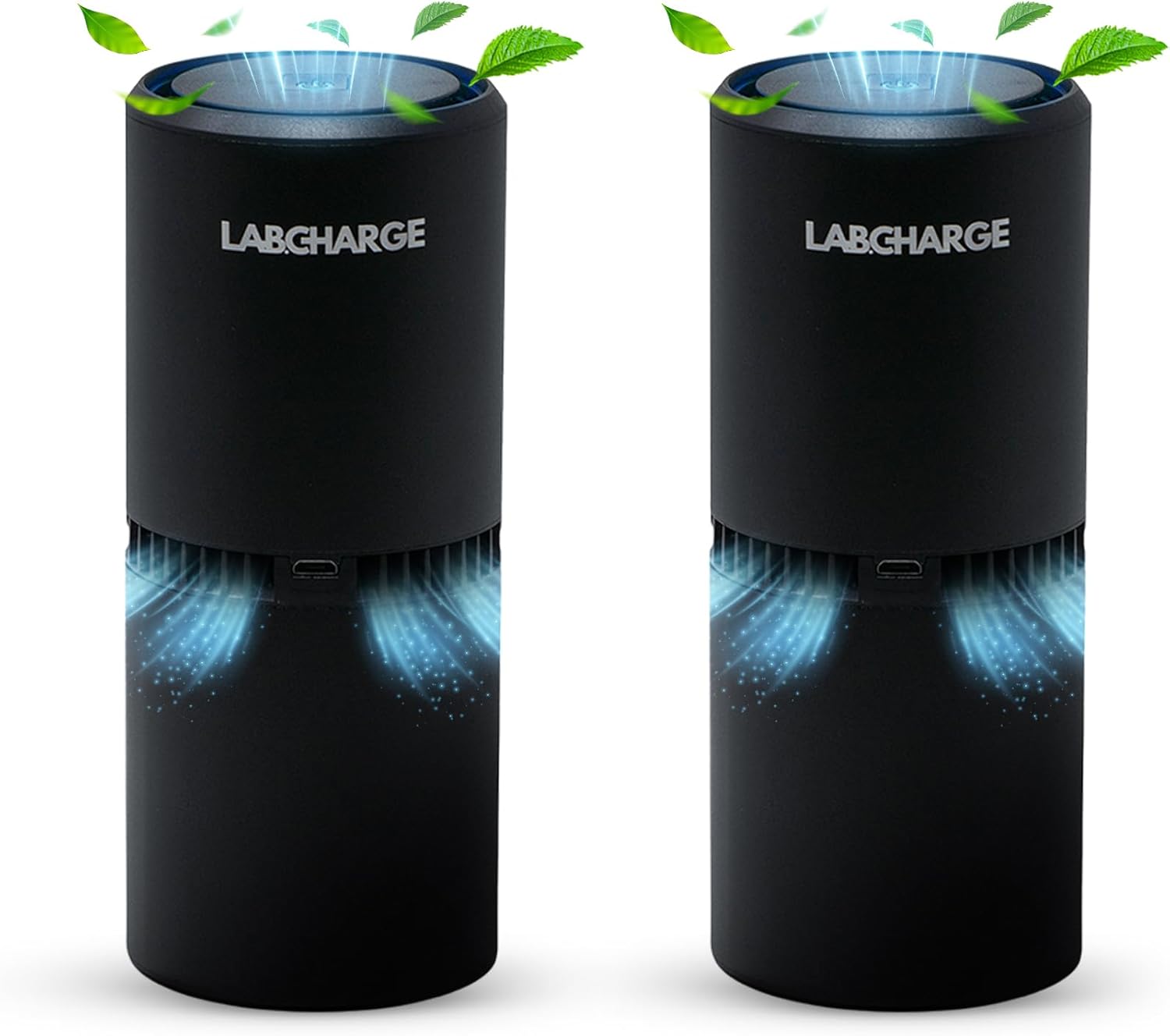
LabCharge Ionic1611K Compact Ionic Air Purifier
This two-pack of compact ionic air purifiers is designed for targeted use in small rooms or around pets. It promises silent, filter-free operation to address airborne particles like dander and dust in spaces up to 250 square feet.
Pros
- Ultra-compact and lightweight design for discrete placement.
- Operates silently without a mechanical filter.
- Sold as a two-pack for multi-room or focused coverage.
- Aims to capture pet dander, hair, and odors.
Cons
- Ionizer technology may produce trace amounts of ozone.
- Small coverage area limits it to very compact rooms.
- Lacks a traditional HEPA filter for particle capture.
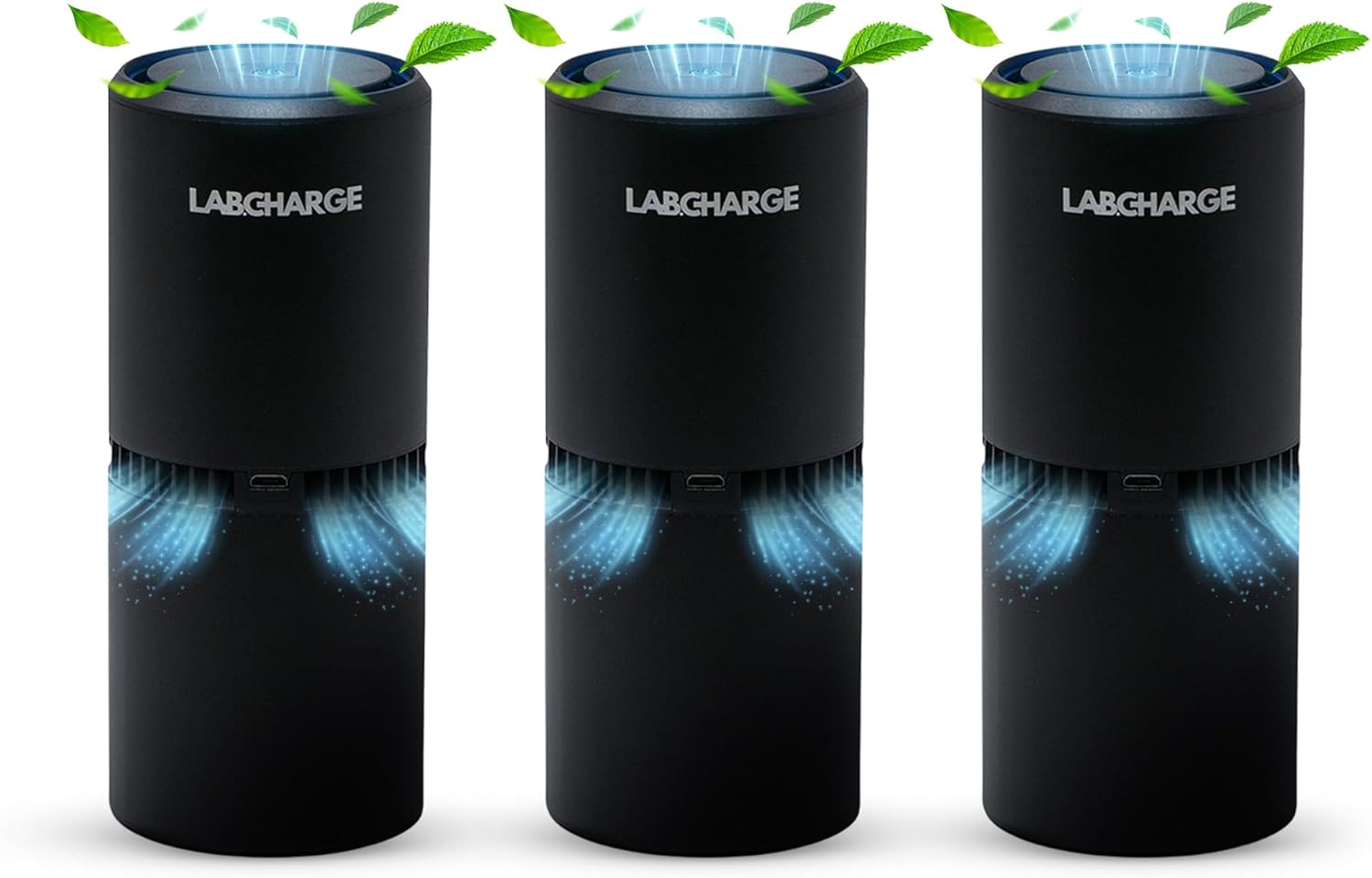
LabCharge Ionic1611K Small Ionic Air Purifier
This compact, three-pack of ionic air purifiers from LabCharge is designed for personal spaces like a nightstand or office, covering areas up to 250 square feet each. It offers a silent, filter-free operation aimed at reducing airborne particles like pet dander and dust.
Pros
- Extremely compact and lightweight design
- Operates silently with no filter replacements needed
- Sold as a pack of three for multi-room use
Cons
- Uses ionic technology, which can produce trace amounts of ozone
- Lower customer rating suggests mixed performance feedback
- Limited coverage area per unit makes it best for small, personal spaces
LabCharge Ionic1611K Small Ionic Air Purifier
This compact five pack of ionic air purifiers offers a basic, multi-unit solution for small spaces up to 250 square feet. It's a simple choice for those seeking silent operation and a minimalist black design to handle common airborne irritants like dust and pet dander.
Pros
- Extremely compact and lightweight design
- Operates silently
- Sold as a convenient five pack for multi-room use
- Covers small areas suitable for bedrooms or personal spaces
Cons
- Relies on ionic technology rather than a traditional HEPA filter for particle capture
- Very small individual unit size may limit effectiveness for the stated coverage area
Best Home Ionic Air Purifier Buying Guide for 2026
Choosing the right ionic air purifier involves more than just picking the first model you see. Several key factors directly impact effectiveness, convenience, and long-term satisfaction. This buying guide breaks down the most critical criteria to consider before making your purchase.
Room Coverage and CADR
The Clean Air Delivery Rate (CADR) is a standardized metric that measures how quickly a purifier can filter the air in a room of a specific size. For ionic purifiers, this often relates to the strength of the ion emission and the fan’s ability to circulate air. A unit rated for 250 square feet, like several in our list, is suitable for most bedrooms and home offices. It’s crucial to match the purifier’s coverage to the room where it will be used most; an undersized unit will struggle to clean the air effectively, while an oversized one may be unnecessarily loud or expensive.
Consider the layout of your space, including high ceilings or an open floor plan, which can effectively increase the volume of air that needs processing. For whole-home air quality strategies, our guide on indoor air quality tips for allergy sufferers offers valuable complementary advice.
Filtration Technology and Maintenance
While the core technology is ionic, many modern units incorporate a hybrid approach. Some models pair ion generation with a pre-filter to catch larger particles like hair and dust, or even a HEPA filter for enhanced particle capture. The Lab Charge Small Ionic Air Purifier for Home is a prime example of this hybrid design, combining ionic action with a silent HEPA filter. This combination can be highly effective, but it also introduces a maintenance element—the filter will need periodic replacement.
Purely ionic models, like the Air Ionizers 4 Pack, Negative Ion Filtration, typically have lower maintenance, as there are no physical filters to replace. Instead, they rely on collection plates or surfaces that need occasional wiping to remove accumulated particles. Understanding the maintenance commitment—whether it’s buying replacement filters or cleaning plates—is essential for long-term usability and cost.
Noise Level and Operational Modes
Since air purifiers often run for extended periods, especially in bedrooms, noise output is a major consideration. Ionic purifiers generally have an advantage here, as they can operate with minimal or no fan noise on their lowest settings. Look for models that advertise “silent” or “sleep” modes. A quiet unit allows for continuous air cleaning without disrupting sleep, work, or relaxation. It’s worth checking user reviews for real-world feedback on noise, as decibel ratings alone don’t always capture the nature of the sound (e.g., a low hum vs. a high-pitched whine).
Additional operational modes can enhance convenience. Some purifiers offer variable fan speeds, timer functions, or automatic modes that adjust ion output based on sensed air quality. These features provide greater control over both performance and energy consumption, allowing you to tailor the device’s operation to your daily routine.
Design, Portability, and Value Packs
The physical design impacts both aesthetics and functionality. A compact, discreet black or white unit can blend into room decor more easily than a bulky appliance. Portability is another factor—a lighter purifier with a carry handle makes it simple to move between rooms, such as from a home office to a bedroom at night. This is particularly useful if you’re starting with a single purifier and want to maximize its use across different spaces.
Many manufacturers offer value packs containing multiple units. Purchasing a two-pack, three-pack, or even a five-pack, as seen with the Lab Charge Small Ionic Air Purifier for Home in a pack of 3, can be a cost-effective way to purify air in several rooms simultaneously. This approach is often more economical than buying individual units separately and ensures consistent air quality throughout your home.
Targeted Pollutants and Safety
Identify the specific pollutants you need to address. Most ionic purifiers are effective against common particulate matter like dust, pollen, and pet dander. Many also target odors from smoke, cooking, or pets by causing odor-causing molecules to cluster and fall out of the air. If you have specific concerns, such as wildfire smoke or severe allergies, ensure the model’s specifications or customer reviews confirm effectiveness against those issues.
It’s also important to consider safety. Some ionic purifiers produce trace amounts of ozone as a byproduct. While modern units are designed to keep ozone emissions well within safe limits, if you are particularly sensitive or concerned, look for models that are certified as ozone-free or CARB-compliant. Always follow the manufacturer’s instructions regarding placement and operation to ensure safe and effective use.
Why You Should Trust Us
Our recommendations are built on a foundation of transparent, data-driven analysis. We do not rely on manufacturer claims alone. Instead, we systematically compare specifications, analyze aggregated user reviews and ratings from major retail platforms, and evaluate features against stated performance goals. Our methodology prioritizes objectivity, focusing on how each product’s attributes—such as coverage area, filtration type, noise levels, and design—translate into real-world benefits for the user.
We maintain strict editorial independence. Our goal is to provide clear, actionable information to help you find the best product for your needs, not to promote any specific brand. By synthesizing technical data with practical user experiences, we aim to create a balanced and trustworthy resource you can rely on for your purchasing decisions.
Final Thoughts
After reviewing 5 of the top contenders, a few models stand out for their specific strengths. Your ideal choice will depend on whether you prioritize maximum coverage, the lowest maintenance, or the best value for multiple rooms.
For the best overall blend of features, we recommend the Lab Charge Small Ionic Air Purifier for Home. Its hybrid ionic/HEPA design offers robust filtration for spaces up to 250 sq ft, and its noted silent operation makes it ideal for bedrooms. It strikes an excellent balance between effective air cleaning and user-friendly features. For those seeking a best value option with minimal upkeep, the Air Ionizers 4 Pack, Negative Ion Filtration is compelling. Providing four individual units without replaceable filters, it’s a practical and economical solution for placing in several small rooms like offices, kitchens, or bathrooms simultaneously.
Finally, for users needing to purify multiple larger rooms or an entire apartment, the best for whole-home coverage is opting for a value pack. The LabCharge Small Ionic Air Purifier for Home in a pack of 5 offers the most comprehensive solution, though the two-pack and three-pack variants also provide significant coverage at lower price points. For more insights on selecting filters, our aroeve MK04LX review delves into replacement filter considerations.
Frequently Asked Questions
What is the best Home Ionic Air Purifier in 2026?
The “best” model depends on your specific needs. For a versatile single-room unit with a HEPA filter, the Lab Charge Small Ionic Air Purifier for Home is a top performer. If you need to cover several small areas without filter replacements, the Air Ionizers 4 Pack offers exceptional value and convenience.
How does an ionic air purifier work?
Ionic air purifiers (or ionizers) work by emitting negatively charged ions into the air. These ions attach to positively charged airborne particles like dust, pollen, and mold spores. The combined particles become too heavy to remain airborne, causing them to fall onto surfaces like floors or furniture, or to be attracted to a charged collection plate inside the purifier, where they can be wiped clean.
Are ionic air purifiers safe?
Modern ionic air purifiers from reputable brands are generally considered safe for home use. Some models may produce negligible amounts of ozone, but they are designed to comply with strict safety standards. If you have respiratory sensitivities, look for units explicitly certified as ozone-free and ensure the room is well-ventilated.
Do ionic air purifiers remove odors?
Yes, many ionic air purifiers can help reduce odors. The ionization process can cause odor-causing molecules to cluster and settle, removing them from the air you breathe. They can be effective against common household odors from pets, cooking, and smoke. For persistent or severe odor issues, a unit with an additional activated carbon filter may be more effective.
What maintenance do ionic air purifiers require?
Maintenance varies by design. Pure ionizers with collection plates require periodic wiping of the plates with a damp cloth to remove accumulated particles. Models that include a pre-filter or HEPA filter will require those filters to be vacuumed or replaced according to the manufacturer’s schedule, typically every 6 to 12 months. Always refer to the user manual for specific maintenance instructions to ensure optimal performance. For more on air purifier upkeep, visit our Blog.
About the author
Lead content creator at AirPurifierGuides.com. Sarah is a senior product researcher in health-tech with years of experience testing smart home and HVAC devices. She writes most of our reviews, CADR comparisons, and filter analyses.