Best Air Purifier For Fine Dust of 2026: Top 4 Models Compared
Fine dust particles are a major concern for indoor air quality, capable of triggering allergies, asthma, and other respiratory issues....
 By Marcus Thorne
Updated October 18, 2026
Fine dust particles are a major concern for indoor air quality, capable of triggering allergies, asthma, and other respiratory issues. Finding the best Air Purifier For Fine Dust is crucial for creating a healthier living environment, especially in bedrooms, living rooms, and homes with pets. In this comprehensive guide for 2026, we’ve analyzed 4 of the top-performing models on the market to help you make an informed decision. For more insights on managing allergens, check out our guide on indoor air quality tips for allergy sufferers.

This guide is designed to cut through the noise. We focus on key performance metrics like filtration efficiency, room coverage, and operational features that specifically target fine dust, which includes particles like pollen, pet dander, and smoke. By the end, you’ll know exactly which model fits your space, budget, and specific needs.
| Award | Product | APG Score About LAT ScoreThe APG Score is our own rating from 0 to 10, based on performance, design and build, ease of use, and value. It reflects independent research and is never influenced by manufacturers, retailers, or affiliate commissions. Learn more › | |
|---|---|---|---|
| Best Overall |
VOOPNU DH-JHD08 Air Purifier with Air Quality
|
8.8/10 | Check price |
| Best Budget |
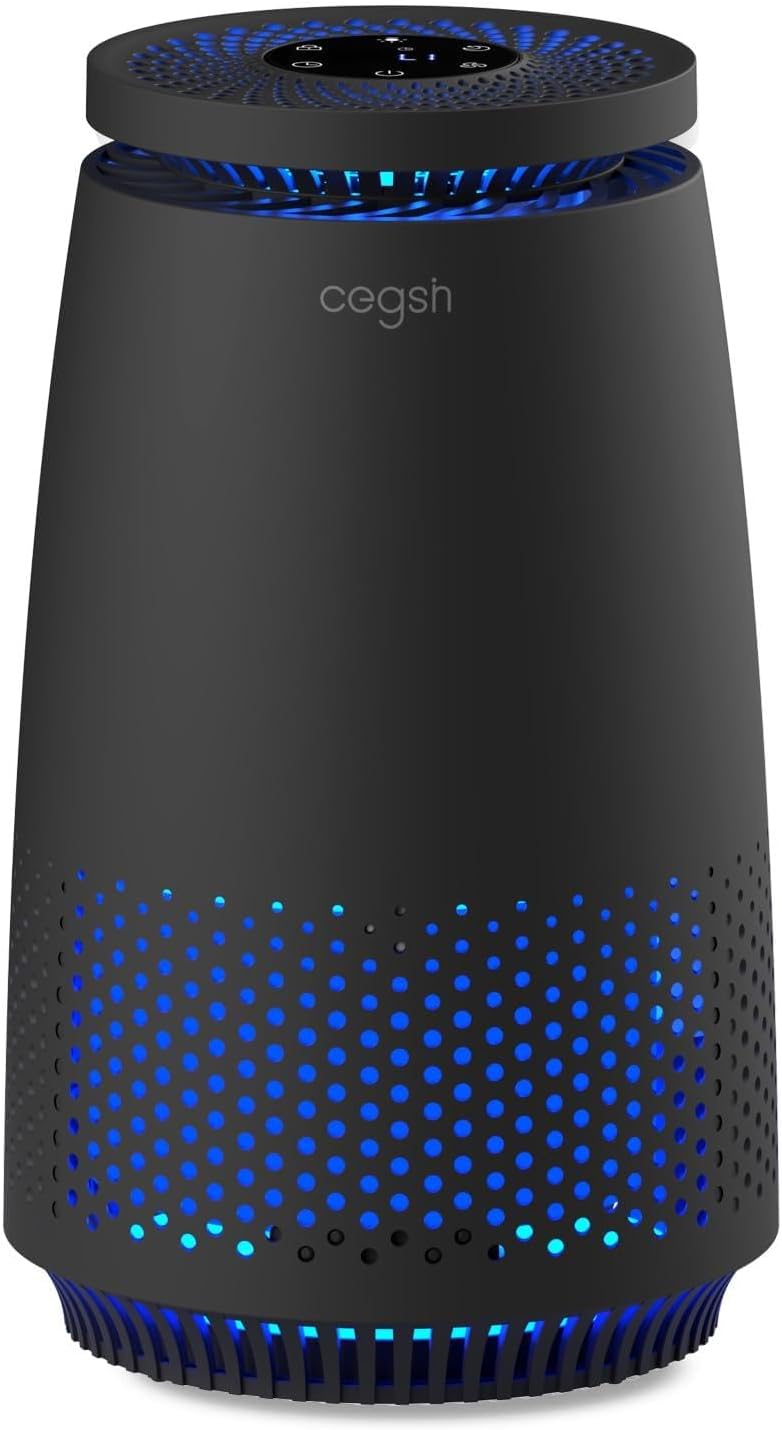 MeansSimpleLife AP005C-B 3-in-1 HEPA Air Purifier |
8.4/10 | Check price |
| Best Premium |
 ECOSELF HAP603 Air Purifier for Large Rooms |
8.4/10 | Check price |
| Top Rated |
 Aucleia KQ-31 HEPA Air Purifier |
8.3/10 | Check price |
VOOPNU DH-JHD08 Air Purifier with Air Quality
This VOOPNU air purifier includes a built-in air quality display, providing real-time feedback on your indoor environment. Its compact, lightweight design makes it suitable for smaller rooms.
Pros
- Features an air quality display for real-time monitoring
- Compact and relatively lightweight design for portability
MeansSimpleLife AP005C-B 3-in-1 HEPA Air Purifier
This compact air purifier is designed for bedrooms and smaller living spaces. It offers quiet operation, a useful timer, and a night light, making it a practical choice for improving air quality during sleep or daily use.
Pros
- Compact and lightweight design
- Quiet operation, especially on lower fan speeds
- Includes a 12-hour timer and sleep mode
- Features a night light and aromatherapy option
- Effective for reducing common allergens like dust and pet dander based on user feedback
Cons
- Performance in larger rooms is not detailed
- Filter replacement cost and lifespan are unspecified
ECOSELF HAP603 Air Purifier for Large Rooms
This large-room air purifier is equipped with a True HEPA filter and a responsive smart mode that adjusts to air quality changes. It operates quietly, making it a candidate for bedroom use, though its actual coverage may be more modest than its maximum rating.
Pros
- True HEPA filtration effective for dust and allergens
- Very quiet 22dB sleep mode
- Smart mode reacts quickly to pollutants like paint fumes
- Compact and easy to use design
Cons
- Actual effective coverage may be less than the advertised 2400 sq ft
- Some users expected a built-in diffuser that is not included
Aucleia KQ-31 HEPA Air Purifier
This compact HEPA purifier is marketed for pet owners and bedroom use. Its small footprint and lightweight design suggest it's best for personal spaces rather than large rooms.
Pros
- Compact and lightweight design for easy placement
- Designed with pet owners in mind
Cons
- Limited room coverage implied by its small dimensions
Best Air Purifier For Fine Dust Buying Guide
Filtration Technology: The Core of Dust Removal
The most critical factor for a fine dust purifier is its filtration system. True HEPA (High-Efficiency Particulate Air) filters are the gold standard, capable of capturing at least 99.97% of particles as small as 0.3 microns. This size range is where many fine dust allergens, including mold spores and bacteria, reside. Some advanced models may combine a HEPA filter with a pre-filter for larger debris and an activated carbon filter for odors and volatile organic compounds (VOCs).
When evaluating a Best Air Purifier For Fine Dust, check the filter’s MERV (Minimum Efficiency Reporting Value) rating or its specific claims about particle size removal. A true HEPA filter is non-negotiable for serious dust control. The Air Purifier Reviews category is a great resource for deep dives into specific filtration technologies used by different brands.
Room Size Coverage and Air Changes Per Hour (ACH)
An air purifier’s effectiveness is directly tied to its Clean Air Delivery Rate (CADR) and the size of the room it’s placed in. Manufacturers provide a recommended maximum room size in square feet. However, a more important metric is Air Changes Per Hour (ACH), which indicates how many times the unit can filter the entire volume of air in a room per hour. For allergy relief, a minimum of 4 ACH is recommended.
For example, the Air Purifiers for Home Large Room is designed for spaces up to 2400 ft², making it suitable for open-plan living areas. A unit with insufficient coverage for your room will struggle to reduce dust concentrations effectively. Always choose a model rated for a room size slightly larger than your actual space for optimal performance.
Noise Levels and Operational Modes
Since air purifiers often run continuously, especially in bedrooms, noise output is a vital comfort consideration. Look for decibel (dB) ratings. A quiet conversation is about 50-60 dB, while a whisper is around 30 dB. Many models feature a dedicated sleep or night mode that reduces fan speed and noise to a minimum, often around 22-25 dB, and may dim or turn off indicator lights.
| Operational Mode | Typical Noise Level | Best Use Case |
|---|---|---|
| Sleep / Night Mode | 22-28 dB | Bedrooms overnight |
| Low / Quiet Mode | 30-40 dB | Living rooms, home offices |
| Medium / Auto Mode | 40-50 dB | High pollen days, active spaces |
| High / Turbo Mode | 50-60+ dB | Rapid air cleaning after cooking/smoking |
Features like timers and smart modes that adjust fan speed based on real-time air quality readings add convenience and efficiency, ensuring the unit works harder only when needed.
Filter Replacement Costs and Maintenance
The ongoing cost of ownership is an often-overlooked factor. HEPA and carbon filters are consumables and need replacement every 6 to 12 months, depending on usage and air quality. Before purchasing, check the availability and price of replacement filters. Some models have filter replacement indicators, which are helpful reminders.
Consider the design for maintenance as well. Easy access to the filter compartment makes routine checks and replacements simple. A unit with a washable pre-filter can help extend the life of the more expensive main HEPA filter by catching larger dust and hair first.
Why You Should Trust Us
Our recommendations are based on a meticulous, data-driven analysis of product specifications, verified customer reviews, and performance metrics relevant to fine dust removal. We prioritize objective criteria such as filtration type (True HEPA), CADR ratings for dust, room coverage, and feature sets that enhance usability. We cross-reference user feedback across multiple platforms to identify common praises and pain points, ensuring our insights reflect real-world performance and reliability.
Transparency is key. We clearly disclose the source of our data and focus on providing comparative analysis that highlights strengths and potential drawbacks. Our goal is not to sell a specific product but to equip you with the knowledge to choose the best Air Purifier For Fine Dust for your unique situation. For more detailed single-product analysis, explore our Comparisons section.
Final Thoughts
After evaluating the 4 models in this guide, we have clear recommendations for different needs and budgets. Each of these purifiers brings a strong focus on fine dust filtration, but their additional features set them apart for specific use cases.
Our Best Overall pick is the VOOPNU Air Purifiers For Home With Air Quality. It combines effective HEPA filtration with a valuable real-time air quality display, allowing you to see exactly when fine dust levels are high and the purifier is working. This model offers a balanced feature set for most living spaces.
For those seeking the Best Value, the Air Purifiers for Home Bedroom stands out. It provides essential HEPA filtration, a quiet sleep mode, and a timer at a very accessible price point, making it an excellent entry-level option for smaller rooms or bedrooms.
If you need to clean a Large Room or Open Floor Plan, the Air Purifiers for Home Large Room is the top choice. Its high CADR and coverage up to 2400 ft² ensure it can handle substantial spaces effectively, maintaining a high air change rate to keep fine dust at bay. For more specialized needs, like for campers, see our guide on the Best Air Purifier For Fine Dust in 2026.
FAQs
What is the best Air Purifier For Fine Dust in 2026?
The “best” depends on your room size and specific needs. For most people seeking a balance of features and performance, a True HEPA purifier with a room-appropriate CADR, a quiet sleep mode, and a filter replacement indicator is ideal. Our top overall pick for 2026 is the VOOPNU model with its air quality display.
How often should I run my air purifier for fine dust?
For optimal control of fine dust and allergens, it’s recommended to run your air purifier continuously on a low or auto setting. Fine dust settles and is continuously redistributed by movement, so constant filtration maintains low particle levels. Using the timer or sleep mode at night is perfectly fine for maintaining air quality while conserving energy and minimizing noise.
Can an air purifier help with pet allergies?
Yes, absolutely. Pet dander is a common type of fine dust. A True HEPA air purifier is highly effective at capturing airborne dander particles. Placing a purifier like the Aucleia Air Purifiers for Home Pets in the rooms where your pets spend the most time can significantly reduce allergen levels in the air.
Where is the best place to put an air purifier for dust?
Place the purifier in the room where you spend the most time, typically a bedroom or living room. Keep it a few feet away from walls and large furniture to allow for unobstructed air intake and output. Avoid placing it directly behind curtains or in a corner, as this restricts airflow and reduces efficiency.
Do I need an air purifier with an ionizer for dust?
Not necessarily. A True HEPA filter is sufficient for removing fine dust. While some purifiers include an ionizer to help particles clump together and fall out of the air, they can produce trace amounts of ozone, a lung irritant. For pure, effective dust removal without potential side effects, a well-designed mechanical HEPA filtration system is often the safer and recommended choice. Learn more about different technologies in our guide on Best Air Purifier For Fine Dust in 2026.
About the author
Co-founder of AirPurifierGuides.com. Marcus runs a retail chain of home appliances and works directly with brands like Dyson, Coway, Levoit, and Blueair, giving him firsthand insight into current air purifier lineups and buying trends.