Can Air Purifiers Remove Bacteria From The Air? A Scientific Explanation
Yes, certain air purifiers can capture and kill airborne bacteria, but effectiveness depends entirely on the filtration technology used.
 By Ethan Wright
Updated October 19, 2026
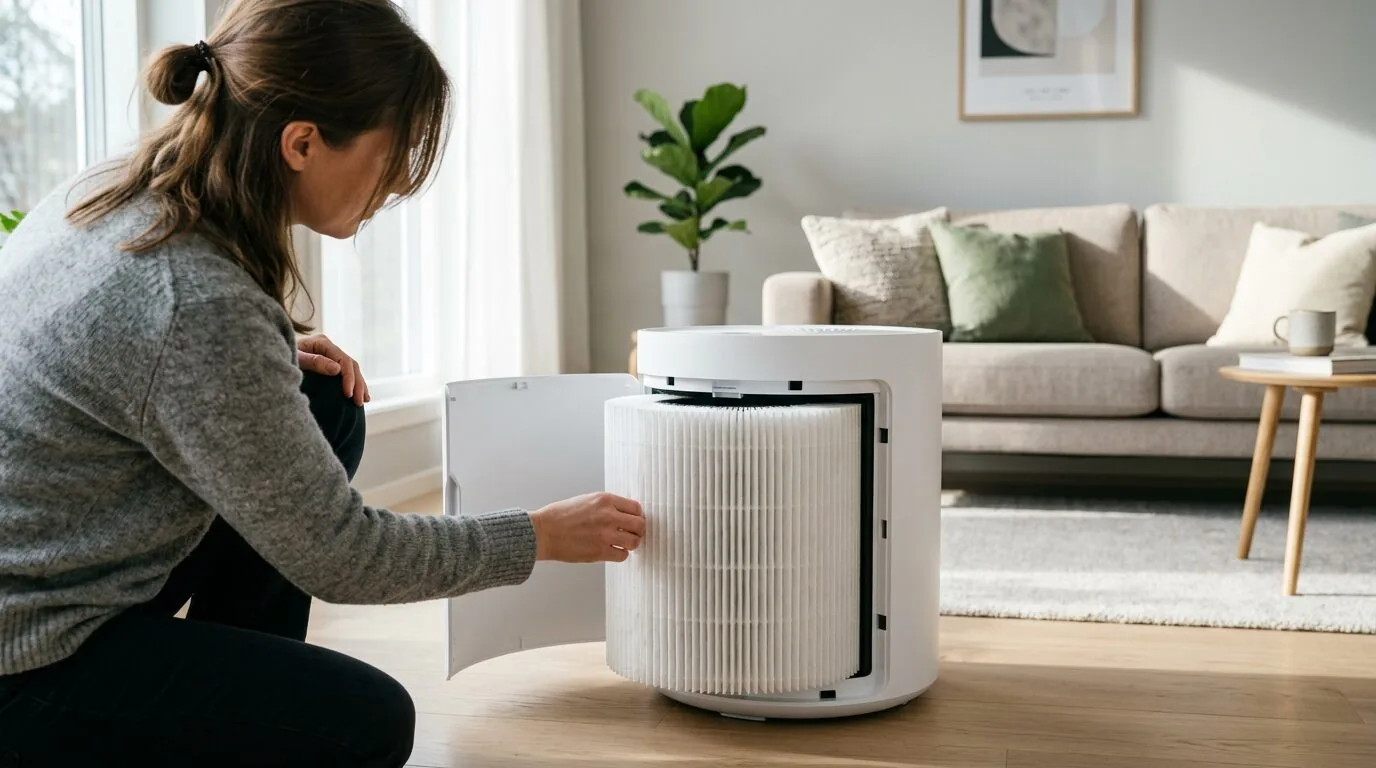
Yes, certain types of air purifiers are highly effective at removing bacteria from the air. High-efficiency particulate air (HEPA) filters can capture bacteria-sized particles, while some advanced technologies like PECO or ultraviolet (UV) light can actively destroy them.
The presence of bacteria in indoor air can affect health, especially for those with weakened immune systems or respiratory conditions. While not all air purifiers are designed for this task, understanding how different technologies work will help you choose a unit that can improve your indoor air hygiene.
How Air Purifiers Capture and Kill Bacteria
Bacteria are microscopic, single-celled organisms that can become airborne through activities like coughing, sneezing, or even just stirring up dust. They range in size from about 0.2 to 10 microns. An air purifier’s ability to deal with them depends on its mechanism of action: physical capture or active destruction.
HEPA Filtration: The Physical Trap
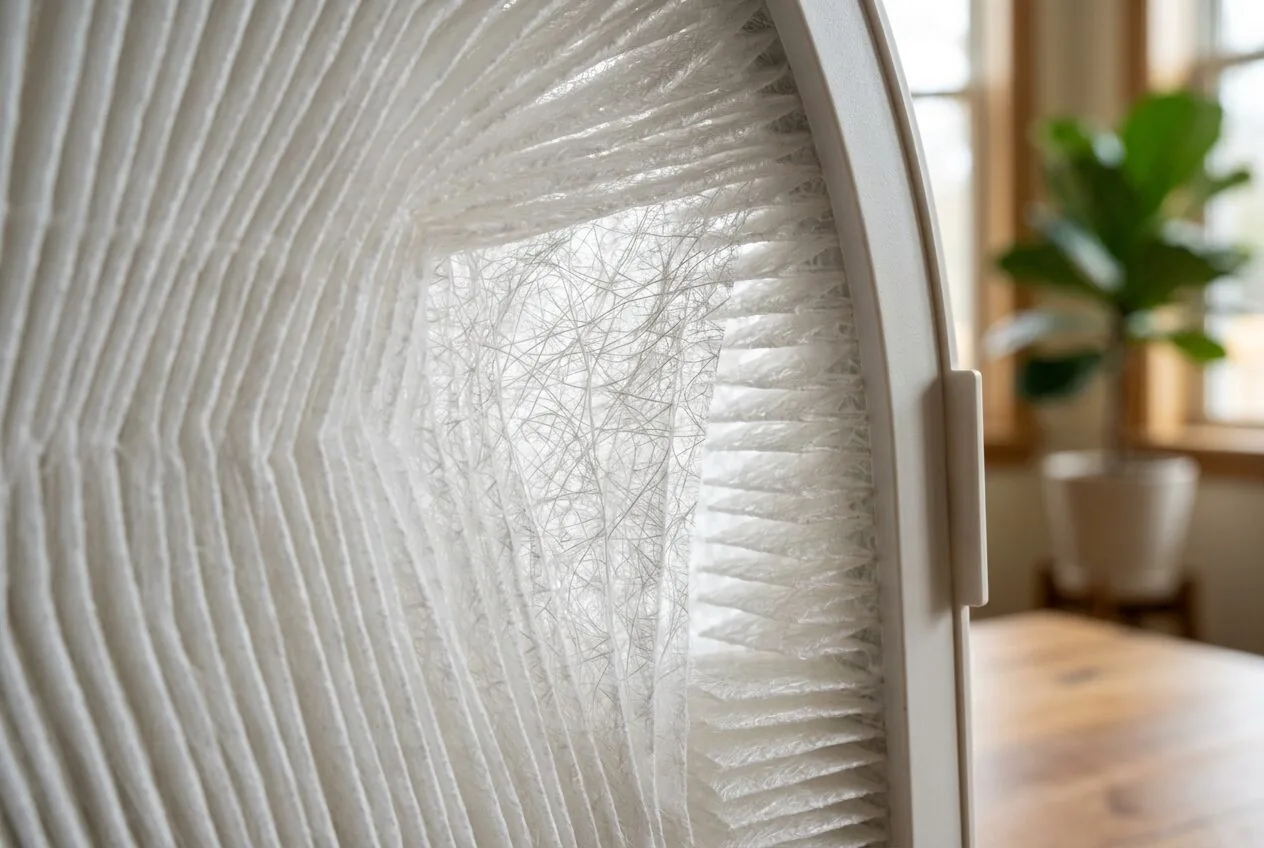
True HEPA filters are the gold standard for physically removing particles from the air. To be certified as HEPA, a filter must capture 99.97% of particles that are 0.3 microns in size. Since most bacteria are larger than this benchmark, a HEPA filter is very effective at trapping them as air passes through its dense, pleated material.
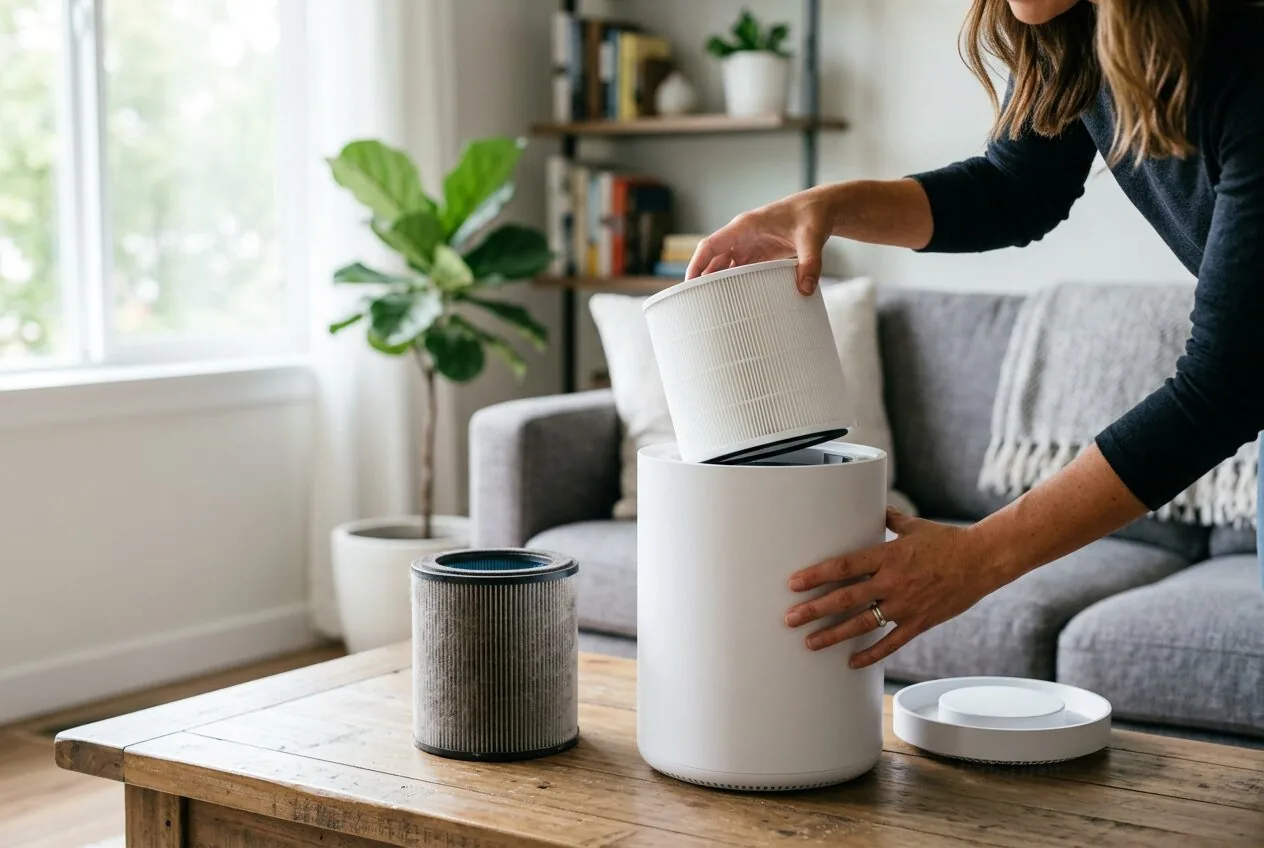
The key point is that HEPA filters capture bacteria but do not necessarily kill them. The bacteria remain alive on the filter media. This means it’s crucial to replace HEPA filters according to the manufacturer’s schedule to prevent mold growth or other issues on the trapped organic matter. For a deeper look at other particles HEPA filters tackle, see our guide on fine particulate matter.
UV-C Light: The Disruptor
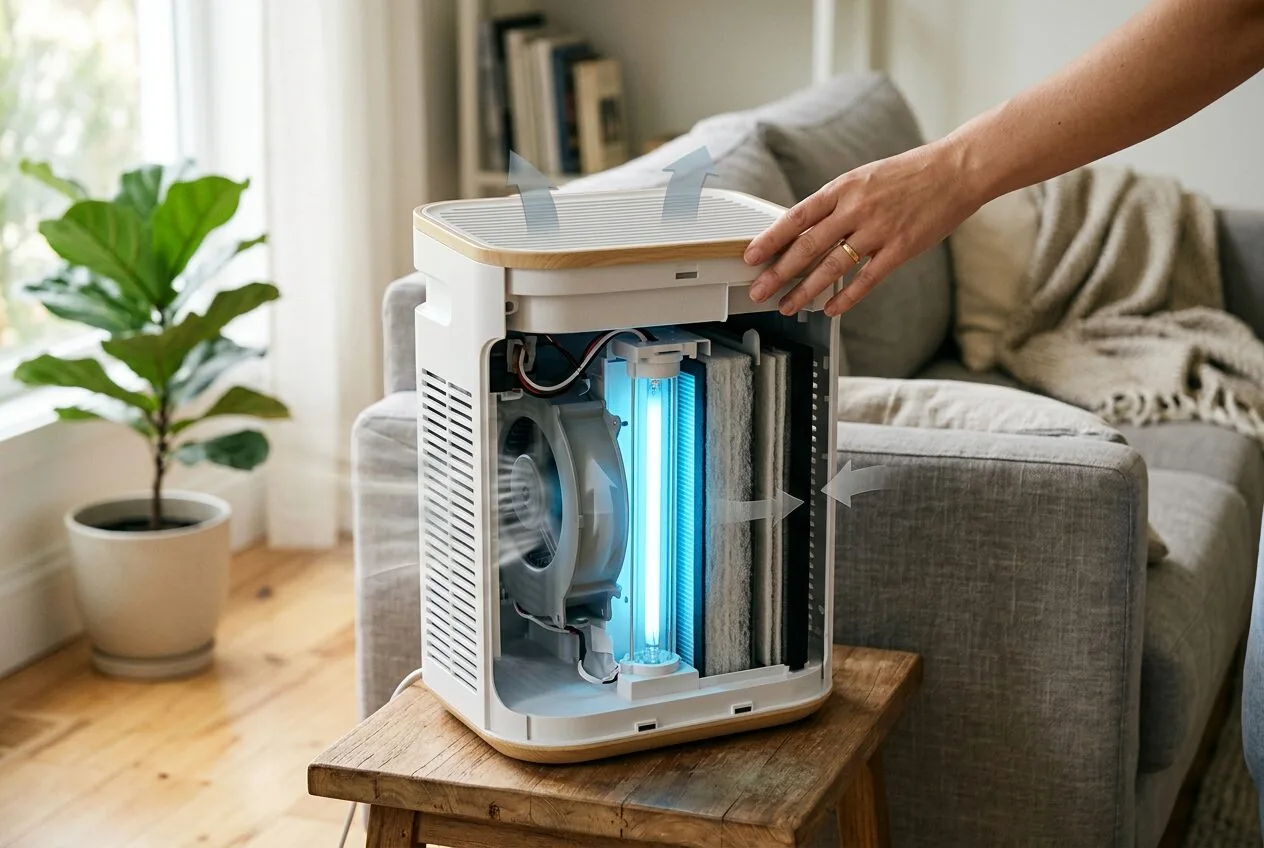
Some air purifiers incorporate ultraviolet-C (UV-C) lamps. This short-wavelength light damages the DNA and RNA of microorganisms like bacteria and viruses, rendering them unable to reproduce and effectively neutralizing them. For UV light to be effective, the air (and the bacteria within it) must be exposed to a sufficient dose of UV-C as it passes through the purifier.
It’s important to note that UV-C is most effective when the exposure time is adequate and the light directly hits the organism. Some units position the UV light inside the unit to treat the filter surface, while others have it in the air path. Properly shielded UV-C lamps in home appliances pose no safety risk, as the light is contained within the unit.
PECO Technology: Oxidation and Destruction
Photoelectrochemical oxidation (PECO) is a more advanced technology found in brands like Molekule. It uses a light-activated catalyst to generate oxidizers that break down pollutants, including bacteria, at a molecular level. Unlike a filter that traps, PECO aims to destroy contaminants completely.
This technology, such as that used in the Molekule Air Mini & Air Mini+ PECO Filter, is designed to handle a wide range of ultra-fine pollutants. While independent research on its real-world efficacy against bacteria is evolving, it represents a different approach from passive filtration.
What to Look for in a Bacteria-Removing Air Purifier
If reducing airborne bacteria is your goal, you should prioritize specific features and certifications. Don’t just rely on marketing claims; look for evidence of performance.
- True HEPA Filter: This is the non-negotiable baseline. Ensure the product specifies “True HEPA” or “HEPA-type” may not meet the same standard.
- Supplemental Technology: A unit combining a HEPA filter with a UV-C light or other germicidal technology offers a two-pronged approach: capture and kill.
- Adequate Air Changes per Hour (ACH): The purifier must move enough air for the room size. For germ control, a higher ACH (like 4-6x per hour) is better. A powerful unit like the AIRTHEREAL Pet Air Purifier H13 HEPA Up to 2000 is rated for large spaces, ensuring frequent air turnover.
- Third-Party Testing: Look for verification from organizations like AHAM (Association of Home Appliance Manufacturers). AHAM verifies the Clean Air Delivery Rate (CADR), which indicates how quickly a purifier removes dust, pollen, and smoke particles—a proxy for overall performance.
Remember, an air purifier is one part of an overall strategy for improving indoor air quality. Source control (like cleaning and ventilation) is equally important.
The Limits and Realistic Expectations
While effective, air purifiers have limitations in the context of bacteria removal. They work on airborne bacteria. They will not sanitize surfaces, eliminate bacteria embedded in fabrics, or stop person-to-person transmission through direct contact or large droplets.
Their role is to reduce the overall concentration of airborne bacteria, thereby lowering the risk of inhalation. They are excellent for maintaining general air hygiene in homes, especially when combined with other measures like using a high-quality replacement filter, such as the BLUEAIR DustMagnet 5400 Series ComboFilter, which is independently tested for particle and odor removal.
Recommended Products
The following selection includes purifiers and replacement filters that utilize technologies relevant for addressing airborne bacteria, from HEPA filtration to advanced oxidation.


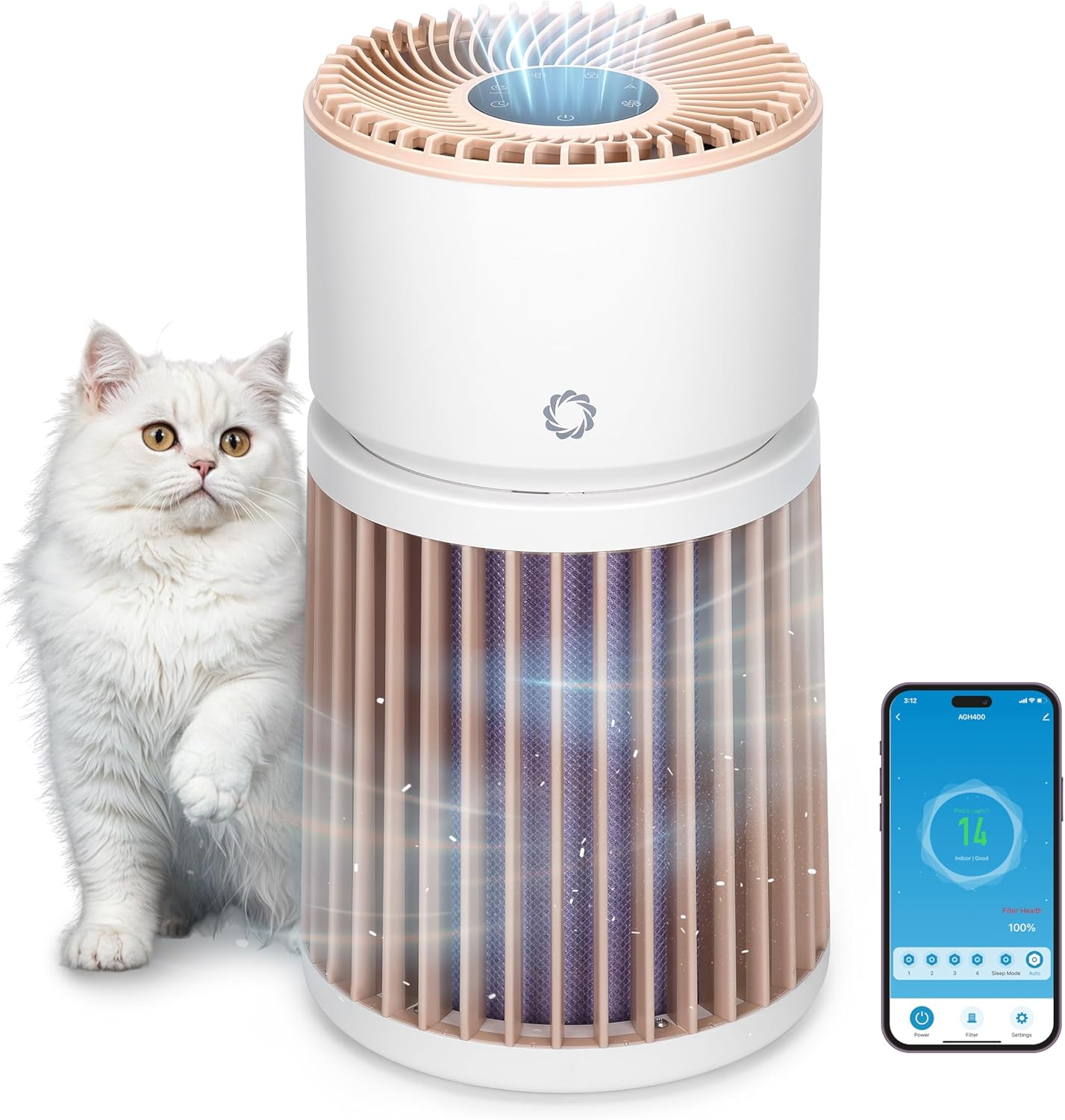

As an Amazon Associate we earn from qualifying purchases. Product prices and availability are accurate as of the date/time indicated.
Frequently Asked Questions
Can an air purifier prevent the spread of illness at home?
An air purifier with a HEPA filter can reduce the concentration of airborne bacteria and viruses, potentially lowering the risk of airborne transmission. However, it cannot prevent all spread, especially from direct contact or large respiratory droplets. It should be used alongside other hygiene practices.
Do I need a UV light in my air purifier to kill bacteria?
No, a UV light is not strictly necessary, but it can provide an extra layer of protection. A HEPA filter alone will capture bacteria. A UV-C light may help inactivate them on the filter’s surface, potentially reducing the viability of any organisms trapped there.
How often should I run my air purifier to control bacteria?
For continuous air hygiene, it’s best to run your air purifier on a low setting 24/7. This maintains consistent air filtration and prevents pollutant levels from building up. Many modern units, like the u003ca href=u0022https://airpurifierguides.com/teraaire-pr3-review/u0022u003eAir Purifiers for Home, HEPA Air Purifier with PMu003c/au003e, have auto modes and low noise levels for this purpose.
Can air purifiers make bacteria problems worse?
A poorly maintained air purifier can become a problem. If a HEPA filter is left unchanged for too long, trapped moisture and organic matter (like bacteria) can lead to mold growth on the filter itself. Always follow the manufacturer’s replacement guidelines.
Do ionizers or ozone generators kill bacteria?
Some ionizers may cause particles to clump together and fall out of the air, but they are not reliable for bacteria removal. Ozone generators are marketed as germicidal but are not recommended for occupied spaces. Ozone is a lung irritant and its use for air cleaning is controversial and potentially harmful. Always choose a purifier that is CARB certified for zero ozone emissions.
Are purifiers with u0026quot;antibacterial filtersu0026quot; better?
Some filters are treated with antimicrobial agents. This coating is intended to inhibit microbial growth on the filter itself, which can be beneficial for filter longevity and hygiene. It does not significantly enhance the initial capture of bacteria from the air; that is still the job of the filter’s physical structure.
Final Thoughts
Air purifiers, particularly those equipped with True HEPA filters, are a scientifically sound tool for reducing airborne bacteria in your home. By physically capturing these microorganisms, they lower the overall bioburden in the air you breathe. For added assurance, models that combine HEPA filtration with UV-C light or other germicidal technologies offer a multi-stage defense.
Ultimately, selecting an air purifier for bacteria removal comes down to choosing verified technology (HEPA), ensuring proper sizing for your room, and committing to regular maintenance. When used correctly, it’s a valuable component of a comprehensive approach to cleaner, healthier indoor air.
About the author
Founder of AirPurifierGuides.com. Ethan has a background in environmental science and started this site after years spent researching, testing, and tearing down air filtration systems to give readers real-world answers about indoor air quality.