Air Purifier Filter Types and Functions: Which Do You Need?
Learn what each air purifier filter type does, what it catches, and how to choose the right one for dust, smoke, odors, and allergens.
 By Marcus Thorne
Updated October 16, 2026
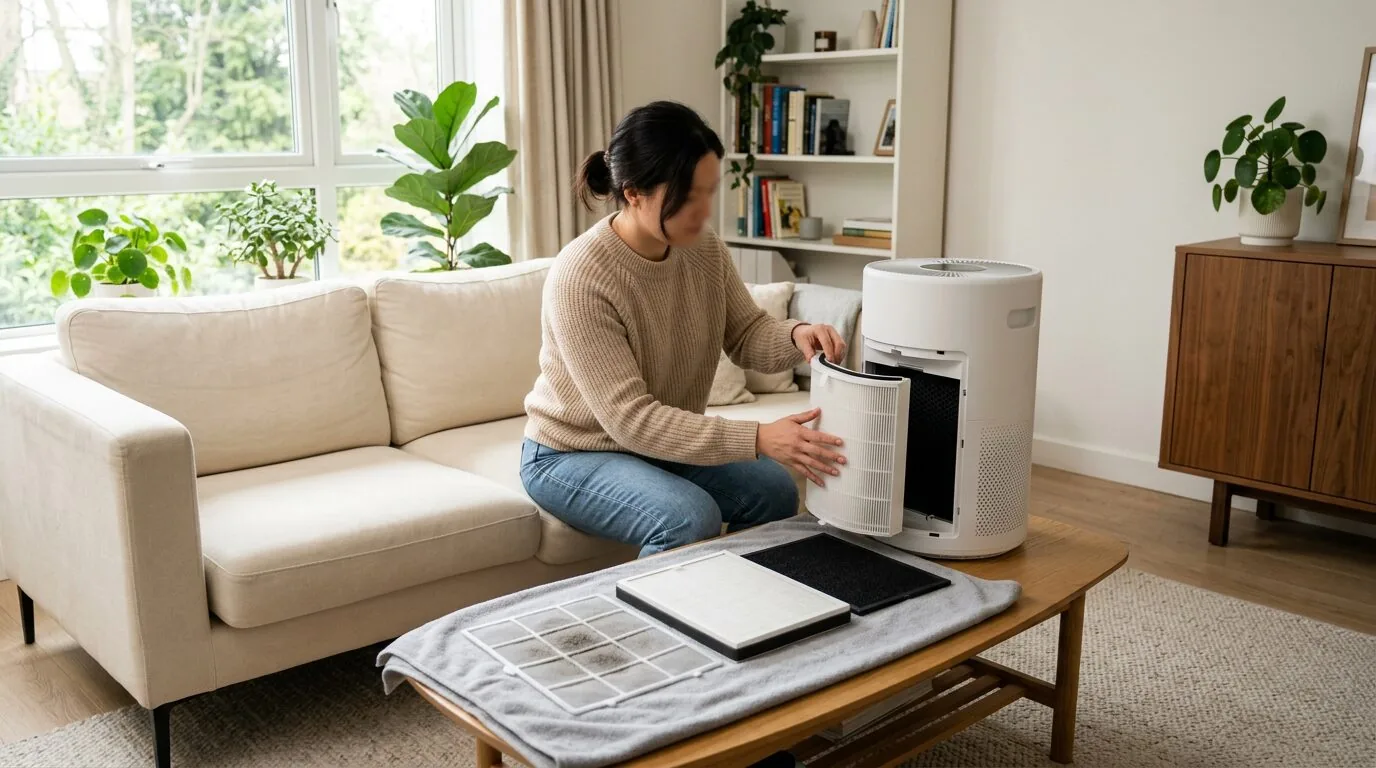
Air purifier filter types and functions are easiest to understand when you match the filter to the problem you want to solve. HEPA filters capture fine particles like dust, pollen, and pet dander, activated carbon helps reduce odors and gases, and pre-filters catch larger debris so the main filter lasts longer.
The right filter can make a big difference in how well a purifier works in your room. If you know what each filter is designed to do, you can avoid paying for features you do not need and focus on the pollutants that matter most in your home.
What Each Air Purifier Filter Does
Most air purifiers use one or more of the same basic filter types. Some are designed to trap particles, while others target smells, gases, or larger debris. Many units combine several stages so the air passes through more than one layer of filtration.
Pre-filter
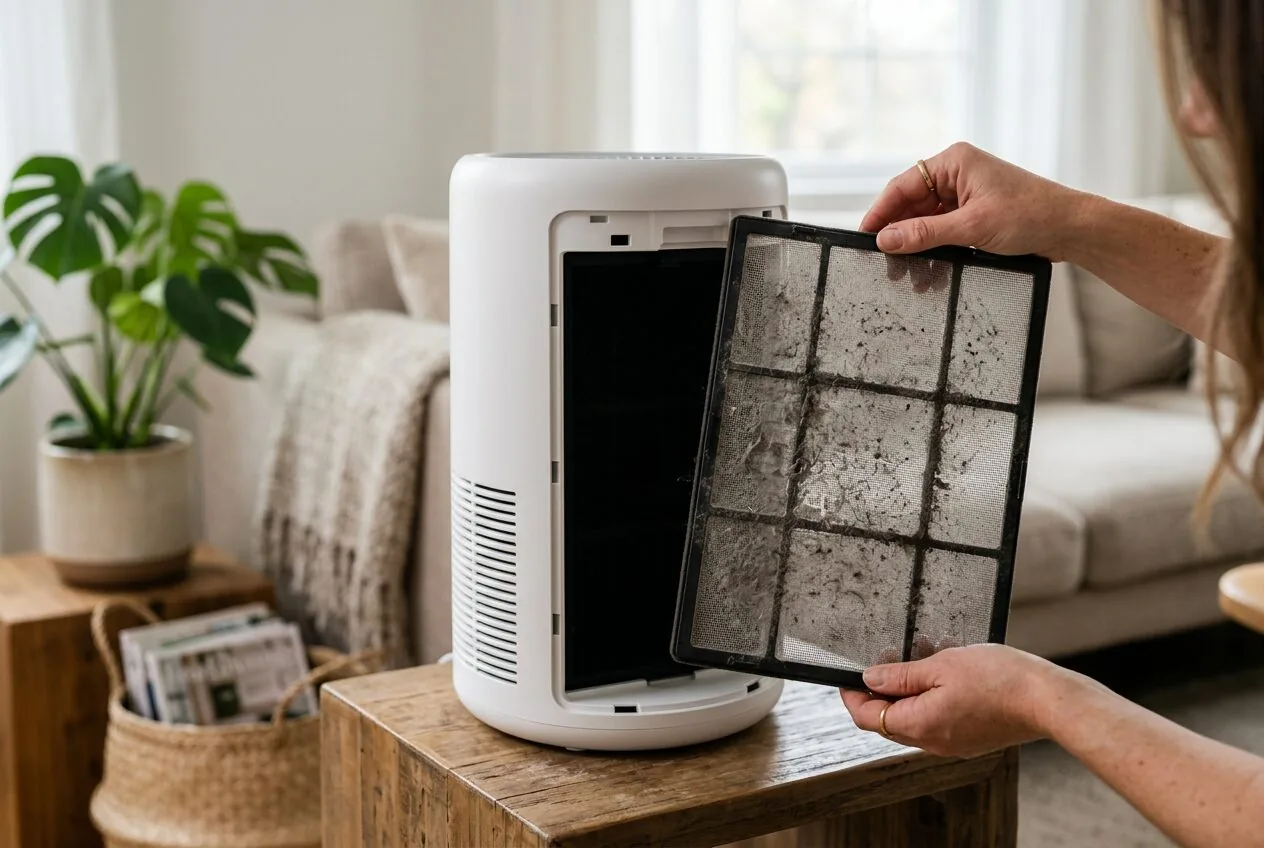
A pre-filter is the first layer and usually catches the biggest particles. It helps trap dust clumps, lint, hair, and pet fur before they reach the main filter.
This filter often extends the life of the HEPA or main filter. Many pre-filters can be vacuumed or wiped clean, but you should always check the manual before washing one.
HEPA Filter
HEPA filters are designed to capture tiny airborne particles, including pollen, dust mites, pet dander, and fine smoke particles. For many people, this is the most important filter type for allergy and dust control.
True HEPA filters are typically rated to capture 99.97% of particles as small as 0.3 microns under test conditions. That does not mean every purifier performs the same way in a real room, so airflow and room size still matter.
Activated Carbon Filter
Activated carbon filters are used for odors, smoke smells, cooking fumes, and some gases. The porous carbon surface adsorbs certain chemicals and helps reduce lingering indoor smells.
This filter is especially useful if your main complaint is smell rather than dust. It is not a replacement for particle filtration, so it works best when paired with a HEPA or other particle filter.
Electrostatic Filter or Ionizing Stage
Some purifiers use an electrostatic stage to charge particles so they stick to a collection plate or filter. These systems can help with airborne particles, but performance varies widely by design.
If a purifier uses ionization, make sure it meets safety expectations and does not create unwanted ozone. For most shoppers, a solid HEPA and carbon setup is easier to evaluate.
How Filter Types Work Together
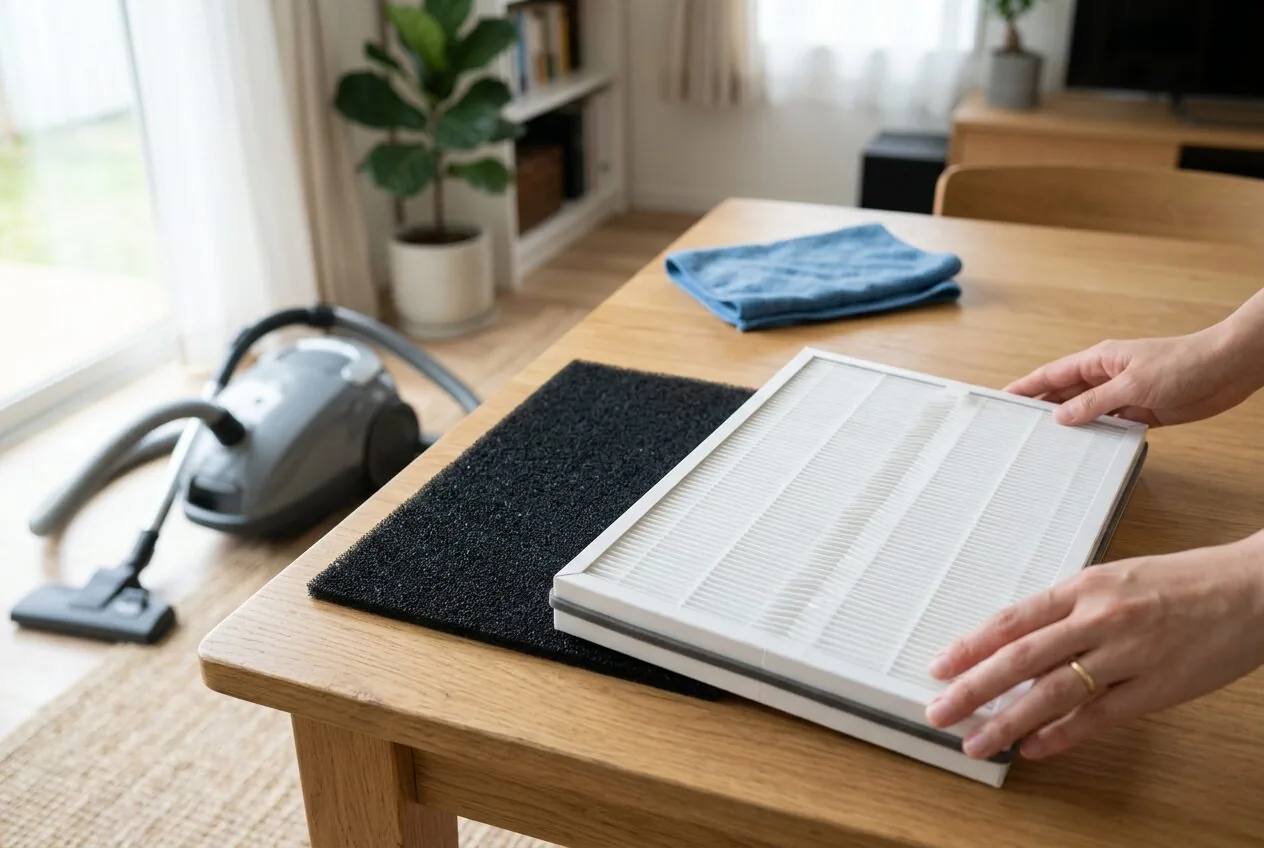
The most effective purifiers usually use multiple stages in sequence. A pre-filter catches the larger debris, the HEPA filter traps fine particles, and the carbon layer targets odors or gases.
This layered setup is why two purifiers with the same filter label can still perform differently. Airflow, fan speed, CADR, and filter surface area all affect how much air gets cleaned in a real room.
| Filter type | Main function | Best for |
|---|---|---|
| Pre-filter | Catches larger particles | Hair, lint, pet fur, visible dust |
| HEPA | Captures fine particles | Allergies, dust, pollen, dander, smoke particles |
| Activated carbon | Reduces odors and some gases | Cooking smells, VOCs, smoke odors |
| Electrostatic or ionizing | Charges particles for collection | Some particle control in specific designs |
Which Filter Type Do You Need?
The right choice depends on the pollutant you want to reduce. If your main concern is allergy relief, prioritize a true HEPA filter. If smells are the bigger issue, look for a strong activated carbon stage. If you have pets, a washable pre-filter helps keep the main filter from clogging too quickly.
- For allergies: choose a purifier with true HEPA filtration.
- For odors: choose a model with substantial activated carbon.
- For pet homes: look for a washable or easy-to-clean pre-filter.
- For smoke: HEPA plus carbon usually works better than either one alone.
- For low maintenance: check how often each filter needs replacement.
What to Check Before You Buy
Filter labels are only part of the story. You should also check room coverage, CADR, replacement cost, and how easy it is to change the filters without exposing yourself to trapped dust.
If you are comparing different purifier styles, our guide to air purifier filter types and functions goes deeper into the pros and cons of each filter category. For more specialized needs, you may also find our guide to a weed smoke air purifier useful when smoke and odor are the main concern.
For shoppers comparing broader appliance styles, related guides like the Dyson air purifier fan guide and the Dyson hot and cool guide can help explain when a fan-purifier combo makes sense and when a dedicated purifier is the better fit.
Recommended Products
If you want a purifier-style solution that combines airflow and filtration, these product examples can help you compare features. We included them because they illustrate different approaches to cleaning and moving indoor air, not because one design fits every room.


As an Amazon Associate we earn from qualifying purchases. Product prices and availability are accurate as of the date/time indicated.
For a straightforward high-end purifier, the AIRDOCTOR AD3500 Air Purifier is a useful reference point when you want to compare multi-stage filtration and room coverage. If you are more interested in airflow plus filtration, a combo unit such as the ULTTY Bladeless Tower Fan and Air Purifier Combo shows how a washable or replaceable filter can be built into a fan body.
Frequently Asked Questions
Is a HEPA filter enough by itself?
A HEPA filter is excellent for particles, but it does not do much for odors or gases. If smells are a concern, pair HEPA with activated carbon. For many homes, that combination covers the most common indoor air problems.
What filter works best for pet allergies?
For pet allergies, a true HEPA filter is the most important feature because it captures dander and fine particles. A pre-filter is also helpful because it catches fur before it reaches the main filter. Carbon can help reduce pet odors, but it will not replace particle filtration.
Do carbon filters remove smoke?
Activated carbon helps reduce smoke odors and some gases, but it does not capture all smoke particles on its own. For wildfire smoke or indoor smoking, a purifier should also have HEPA filtration. The combined setup is usually much more effective than carbon alone.
Can I wash a HEPA filter?
Most true HEPA filters are not washable. Washing can damage the filter media and reduce performance. If the manufacturer says the filter is washable or permanent, follow that guidance exactly and let it dry fully before reinstalling it.
How often should I replace air purifier filters?
Replacement timing depends on filter type, usage, and how dirty your air is. Pre-filters may need frequent cleaning, while HEPA and carbon filters often need replacement every few months to a year. Always follow the manufacturer’s schedule, and replace earlier if airflow drops or odors return.
Final Thoughts
Understanding air purifier filter types and functions makes it much easier to buy the right machine and keep it working well. Start with the problem you want to solve, then match that need to the right filtration stage.
For particles, HEPA is the key filter. For odors and gases, activated carbon matters most. For long-term performance, do not ignore the pre-filter, replacement schedule, and room size recommendations in the manual.
About the author
Co-founder of AirPurifierGuides.com. Marcus runs a retail chain of home appliances and works directly with brands like Dyson, Coway, Levoit, and Blueair, giving him firsthand insight into current air purifier lineups and buying trends.