The 5 Best Loud Air Purifier of 2026
When you need to clear the air in a large space quickly and effectively, a powerful, loud air purifier can...
 By Marcus Thorne
Updated October 18, 2026
When you need to clear the air in a large space quickly and effectively, a powerful, loud air purifier can be your best ally. While many seek whisper-quiet operation for bedrooms, there are scenarios where raw cleaning power and high airflow take precedence over noise levels, such as in workshops, large living areas during the day, or rooms with significant pollutant sources. In this comprehensive guide for 2026, we delve into the world of high-performance air purifiers designed to move substantial volumes of air, helping you understand when a louder model is the right choice and which ones deliver the best performance for the decibels. We’ve sifted through 5 leading models to bring you a focused analysis on the best options available this October.

For a deeper look at specialized purifiers, consider reading our guide on the Best Loud Air Purifier in 2026 for tackling persistent odors and smoke particles.
| Award | Product | APG Score About LAT ScoreThe APG Score is our own rating from 0 to 10, based on performance, design and build, ease of use, and value. It reflects independent research and is never influenced by manufacturers, retailers, or affiliate commissions. Learn more › | |
|---|---|---|---|
| Best Overall |
Lunino K2 HEPA Air Purifier for Large Rooms
|
8.8/10 | Check price |
| Best Premium |
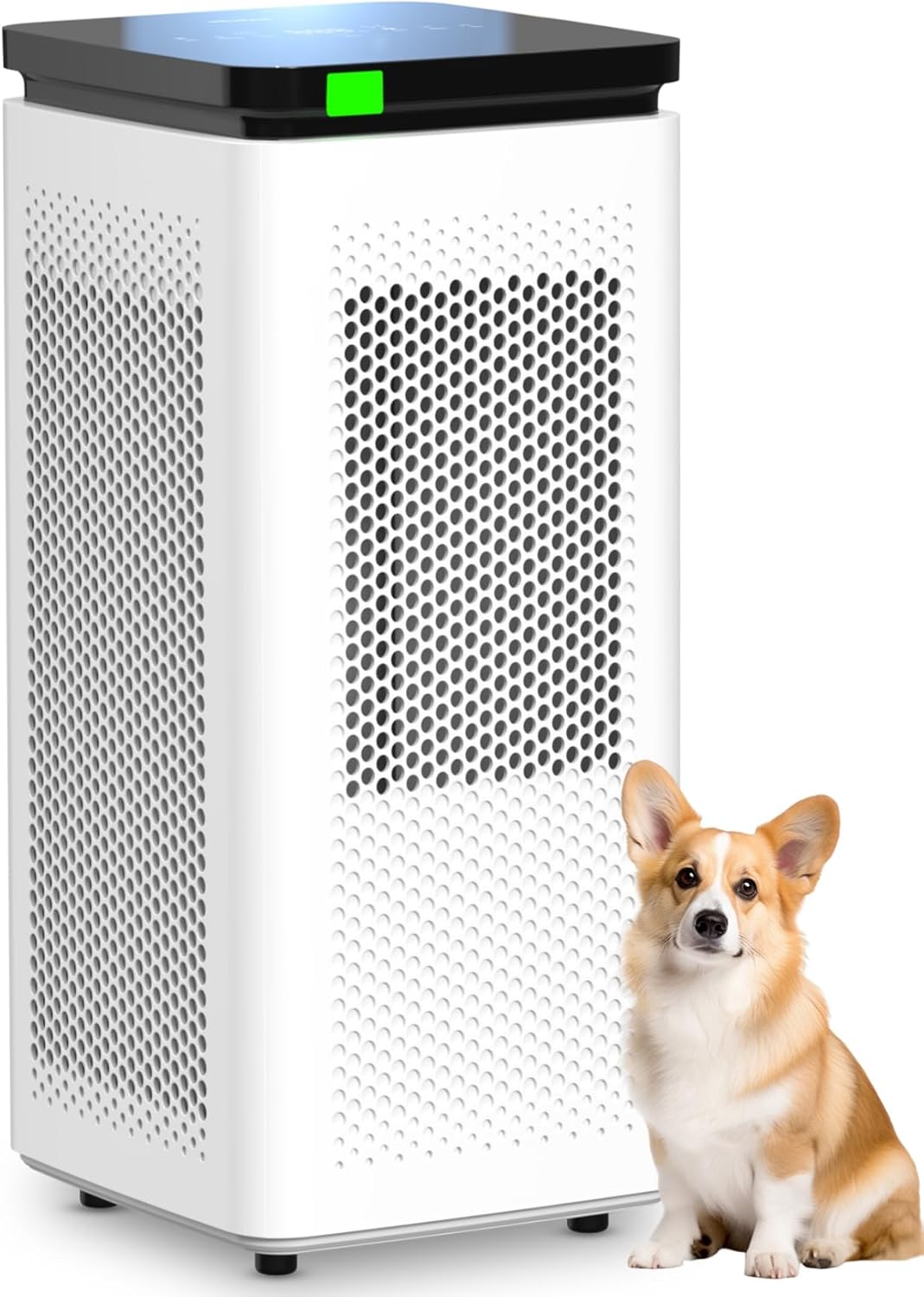 SIESEAN HEPA Air Purifier for Home up to 3500 Sq |
8.8/10 | Check price |
| Best Value |
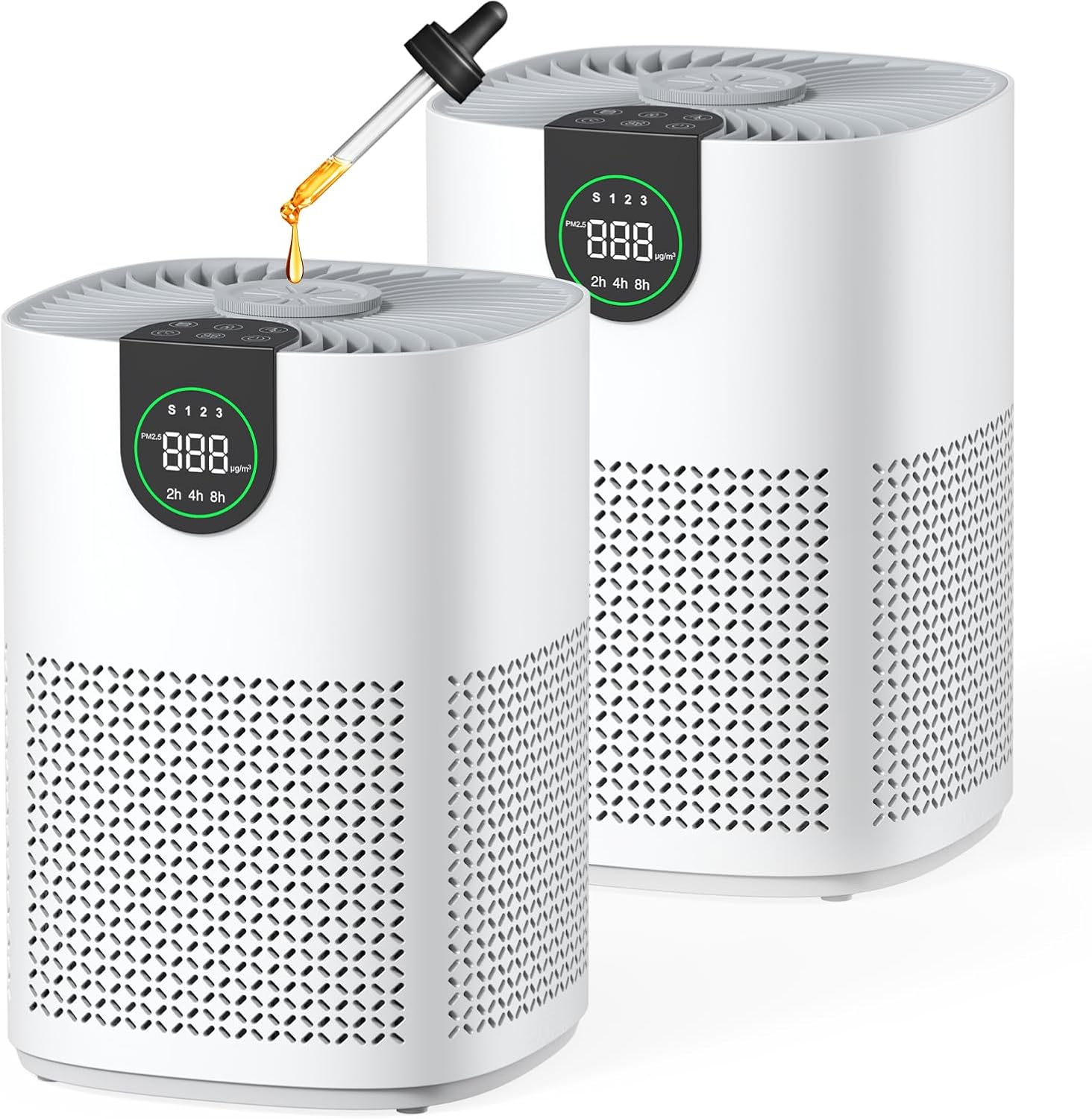 VEWIOR ClearAir-A12 2-Pack Air Purifier |
8.6/10 | Check price |
| Top Rated |
 GermGuardian AC4880B Air Purifier Tower |
8.4/10 | Check price |
| Best Budget |
 Heapets P358 Pet Air Purifier for Large Rooms |
8.0/10 | Check price |
Lunino K2 HEPA Air Purifier for Large Rooms
This Lunino air purifier is designed for larger spaces, promising to cover up to 3000 square feet. Based on customer feedback, it's praised for its quiet operation, effective air quality monitoring, and noticeable improvement in air freshness, particularly against pet odors and cooking smells.
Pros
- Quiet operation, especially on lower settings
- Effective at reducing odors from pets and cooking
- Sensitive air quality indicator
- Suitable for large room coverage
- Easy filter maintenance
Cons
- Physical size is relatively large (approx. 17 inches tall)
SIESEAN HEPA Air Purifier for Home up to 3500 Sq
The SIESEAN AP-400 HEPA air purifier delivers whole-room cleaning for spaces up to 3500 sq ft, with a 235 CADR and a whisper-quiet 30dB operating noise. Ideal for large living areas, bedrooms, and allergy-prone households.
Pros
- Large coverage area for one unit
- Quiet 30dB operation for night use
- Strong 235 CADR for faster air cleaning
- True HEPA filter for allergen and particle removal
- Sleek, compact design that fits most rooms
Cons
- The 3500 sq ft rating is based on optimal conditions; high ceilings or open doorways may reduce effective performance.
- No built-in smart features or Wi-Fi connectivity were listed.
- Replacement filter costs should be factored into long-term ownership.
VEWIOR ClearAir-A12 2-Pack Air Purifier
A two-pack of purifiers designed to handle spaces up to 1200 sq ft, noted by users for effectively reducing odors and allergy symptoms. The digital air quality indicator provides real-time feedback on its performance.
Pros
- Comes in a two-pack for multi-room coverage
- Effective odor and allergen reduction per user reviews
- Includes a digital air quality indicator
- Washable pre-filter for maintenance
Cons
- Higher fan speeds can be loud
- Main HEPA filter is not washable, requiring replacement
- May not effectively capture larger particles like pet hair
GermGuardian AC4880B Air Purifier Tower
This 22-inch tower is engineered for large spaces, offering intelligent air quality monitoring and a three-stage filtration system. It's a strong consideration for pet owners and allergy sufferers seeking automated purification for rooms up to 743 square feet.
Pros
- Features IntelliSense technology that monitors and automatically adjusts fan speed
- Three-stage filtration includes a True HEPA filter, UV-C light, and a carbon pre-filter
- Designed for large room coverage, circulating air in a 743 sq. ft. space once per hour
Cons
- At 22 inches tall, its tower design may be less suitable for rooms with low furniture clearance
Heapets P358 Pet Air Purifier for Large Rooms
This HEPA air purifier is designed with multi-pet households in mind, featuring a double-sided filter system to actively capture hair and dander. Based on user feedback, it is frequently praised for significantly reducing visible dust and pet odors in large spaces.
Pros
- Effectively captures pet hair, dander, and dust according to user reviews
- Features a washable pre-filter for easy maintenance
- Includes an auto mode and PM2.5 air quality monitor
- Reported to operate quietly, especially in sleep mode
Cons
- Some users note it does not capture 100% of airborne pet hair
- The fan is audible on the highest speed setting
Best Loud Air Purifier Buying Guide for 2026
Air Changes Per Hour (ACH) and Coverage Area
The fundamental metric for any air purifier’s effectiveness is its ability to cycle the air in a room multiple times per hour. For allergens, smoke, or dust, experts often recommend an air change rate of 4 to 6 ACH. A “loud” purifier typically achieves this through a higher Clean Air Delivery Rate (CADR) and powerful fans, allowing it to service a larger square footage effectively. When evaluating a model, don’t just look at the maximum claimed square footage; check the CADR ratings for smoke, dust, and pollen. A purifier like the Hepa Air Purifiers for Home up to 3500 Ft² highlights a substantial CADR, indicating it can move a high volume of clean air quickly, which is precisely what you want from a performance-focused, louder unit.
Fan Speed Settings and Noise Profile
Not all noise is created equal. A key buying criterion for a loud air purifier is the range and control of its fan speeds. The highest setting should provide maximum cleaning power for rapid purification when needed, while lower settings offer quieter operation for maintenance. Pay attention to the decibel (dB) ratings at each speed. A unit that is loud on high but has a very quiet low setting offers versatility. The nature of the noise also matters; a consistent, smooth fan hum is often less disruptive than a rattling or whining sound. Look for models that specify their noise levels across different modes.
Filtration System and Filter Longevity
The core of any purifier is its filter. For high-performance models, a true HEPA filter (capturing 99.97% of particles as small as 0.3 microns) is essential. However, the filter’s design must handle the increased airflow without restricting it too much. Some loud purifiers use thicker or multi-stage filters, which can impact noise and require more powerful fans. Also, consider filter replacement costs and indicators. A washable pre-filter, like that found on the Pet Air Purifier for Home Large Room 2500 Sq Ft, can extend the life of the main HEPA filter by capturing larger debris, making the ongoing maintenance of a frequently used, high-power unit more economical.
Build Quality and Durability
A purifier designed to operate at higher fan speeds consistently needs robust construction to minimize vibration and ensure long-term reliability. Check the housing material, the stability of the unit, and the quality of the internal components. A well-built purifier will maintain its performance and noise characteristics over time, whereas a cheaper model may develop rattles or see a drop in airflow as components wear. Brands with a reputation for durability, often reflected in warranty length, are a safer bet for a device you plan to run hard.
Additional Features for Convenience
Even performance-oriented purifiers benefit from smart features. An auto mode that adjusts fan speed based on real-time air quality readings allows the purifier to be loud only when necessary, conserving energy and reducing noise during clean periods. Timer functions, filter replacement indicators, and multiple operational modes (like a turbo or sleep mode) provide greater control over how and when the purifier uses its power. For more insights on features that matter, explore our broader Air Purifier Reviews category.
| Key Specification | Why It Matters for a Loud Purifier | What to Look For |
|---|---|---|
| CADR (Smoke/Dust/Pollen) | Directly measures cleaning speed; higher CADR = faster cleaning, often louder fan. | Match CADR to your room size; higher numbers for large spaces. |
| Max Noise Level (dB) | Indicates the upper limit of sound output at highest fan speed. | Understand the trade-off between power and noise for your tolerance. |
| Filter Stages | More stages (Pre-filter, HEPA, Carbon) can handle diverse pollutants but may increase airflow resistance. | True HEPA is essential; carbon filters help with odors/VOCs. |
| Air Quality Sensor | Enables Auto mode, so the purifier ramps up (gets loud) only when needed. | Look for PM2.5 or multi-pollutant sensors for accurate response. |
Why You Should Trust Us
Our recommendations are built on a foundation of transparent, data-driven analysis. We do not rely on manufacturer claims alone. Instead, we synthesize verified customer experiences, detailed technical specifications, and performance metrics like CADR ratings and decibel levels to provide a balanced view. Our goal is to cut through the marketing and highlight the practical trade-offs, such as the relationship between cleaning power and noise, so you can make an informed decision. We maintain objectivity by focusing on the facts and figures that directly impact your air quality and user experience.
Final Thoughts
After evaluating the 5 models in this roundup, a few stand out for specific needs. For the best overall combination of massive coverage, high CADR, and modern features, the LUNINO Air Purifiers for Home Bedroom Large Room is our top pick. Its ability to clean very large spaces efficiently makes its higher operational noise a worthwhile trade-off for sheer performance.
If you’re looking for the best value and need to purify multiple smaller areas, the VEWIOR 2 Pack Air Purifiers with Washable Filter offers a compelling two-unit solution. This provides flexible placement and can be more effective than a single large unit in a multi-room scenario, with the washable filter adding to long-term savings.
For households with pets where dander and odors are the primary concern, the best for specific use is the Pet Air Purifier for Home Large Room 2500 Sq Ft. Its dedicated pre-filter and H13 HEPA filter are tailored to capture pet allergens, and its auto mode will intelligently increase fan speed (and noise) when pet activity pollutes the air. For further reading on making the right choice, visit our Buying Guides section.
FAQs
What is the best Loud Air Purifier in 2026?
The “best” loud air purifier depends on your specific needs for room size and pollutant type. Based on our October 2026 analysis, the top performer for large spaces is the LUNINO Air Purifiers for Home Bedroom Large Room, due to its exceptional coverage area and high-efficiency filtration system designed for rapid air changes.
Is it bad to run an air purifier on high all the time?
Running an air purifier on its highest setting continuously is not typically bad for the unit if it’s designed for such operation, but it will consume more energy, generate more noise, and may lead to more frequent filter replacements. Using an auto mode is generally more efficient, allowing the purifier to ramp up to high speed only when air quality sensors detect a need.
Can a loud air purifier help with severe allergies?
Yes, a loud air purifier often indicates a higher CADR, meaning it can remove allergens like pollen, dust, and dander from the air more quickly. For severe allergies, this rapid purification in a large room can be more beneficial than a quieter unit that cleans more slowly. Ensure it uses a true HEPA filter for the best particle capture. Learn more about managing allergens with our guide on indoor air quality tips for allergy sufferers.
How do I know if an air purifier is too loud for my space?
Consider the room’s purpose. A loud purifier may be acceptable in a daytime living room, workshop, or basement but disruptive in a bedroom or home office. Check the product’s decibel (dB) ratings for different speeds; 50-60 dB is similar to a normal conversation, while levels above 60 dB can be distracting for focused work or sleep. Listen to sound demos online if available.
Do air purifiers get louder over time?
They can. Increased noise over time is often a sign that the filter is clogged and needs replacing, as the fan works harder to pull air through. It can also indicate that internal components like the fan motor or bearings are wearing out, or that something is loose and vibrating. Regular maintenance, like cleaning pre-filters and replacing HEPA filters on schedule, helps maintain consistent noise levels.
About the author
Co-founder of AirPurifierGuides.com. Marcus runs a retail chain of home appliances and works directly with brands like Dyson, Coway, Levoit, and Blueair, giving him firsthand insight into current air purifier lineups and buying trends.