The 7 Best Mi Air Purifier of 2026
Breathing clean, fresh air at home is more than a luxury; it’s a cornerstone of health and comfort, especially for...
 By Emily Foster
Updated October 18, 2026
Breathing clean, fresh air at home is more than a luxury; it’s a cornerstone of health and comfort, especially for allergy sufferers, pet owners, and those living in urban areas. The quest for the best Mi Air Purifier can be daunting, with countless models boasting various features and price points. That’s where our expert analysis comes in. In this comprehensive guide for 2026, we’ve meticulously evaluated 7 of the top-rated air purifiers and filters available, from high-end smart models to essential replacement filters for popular systems like Xiaomi. Our goal is to help you cut through the noise and find the perfect unit to purify your air, whether you need to cover a spacious living room or simply maintain your existing device. For more insights on managing allergens, check out our guide on indoor air quality tips for allergy sufferers.

Our top-rated pick, the GoveeLife Air Purifier for Bedroom, sets a high standard with its impressive coverage and whisper-quiet sleep mode. We’ve structured this guide to first present all contenders in a clear, sortable comparison table, followed by an in-depth buying guide to explain the key features that matter most. You’ll learn exactly what to look for in terms of filtration technology, room coverage, noise levels, and smart features. Finally, we’ll provide our trusted recommendations and answer your most pressing questions. Let’s dive in and find the ideal air purification solution for your home.
Our Top 7 Best Mi Air Purifier
Below is our curated list of the best Mi Air Purifier available in October 2026. This interactive table allows you to compare key metrics like APG Score, ratings, and features at a glance. Click on any product to jump to its detailed review card for more information.
| Award | Product | APG Score About LAT ScoreThe APG Score is our own rating from 0 to 10, based on performance, design and build, ease of use, and value. It reflects independent research and is never influenced by manufacturers, retailers, or affiliate commissions. Learn more › | |
|---|---|---|---|
| Best Overall |
GoveeLife H7129 Air Purifier for Bedrooms
|
8.9/10 | Check price |
| Best Value |
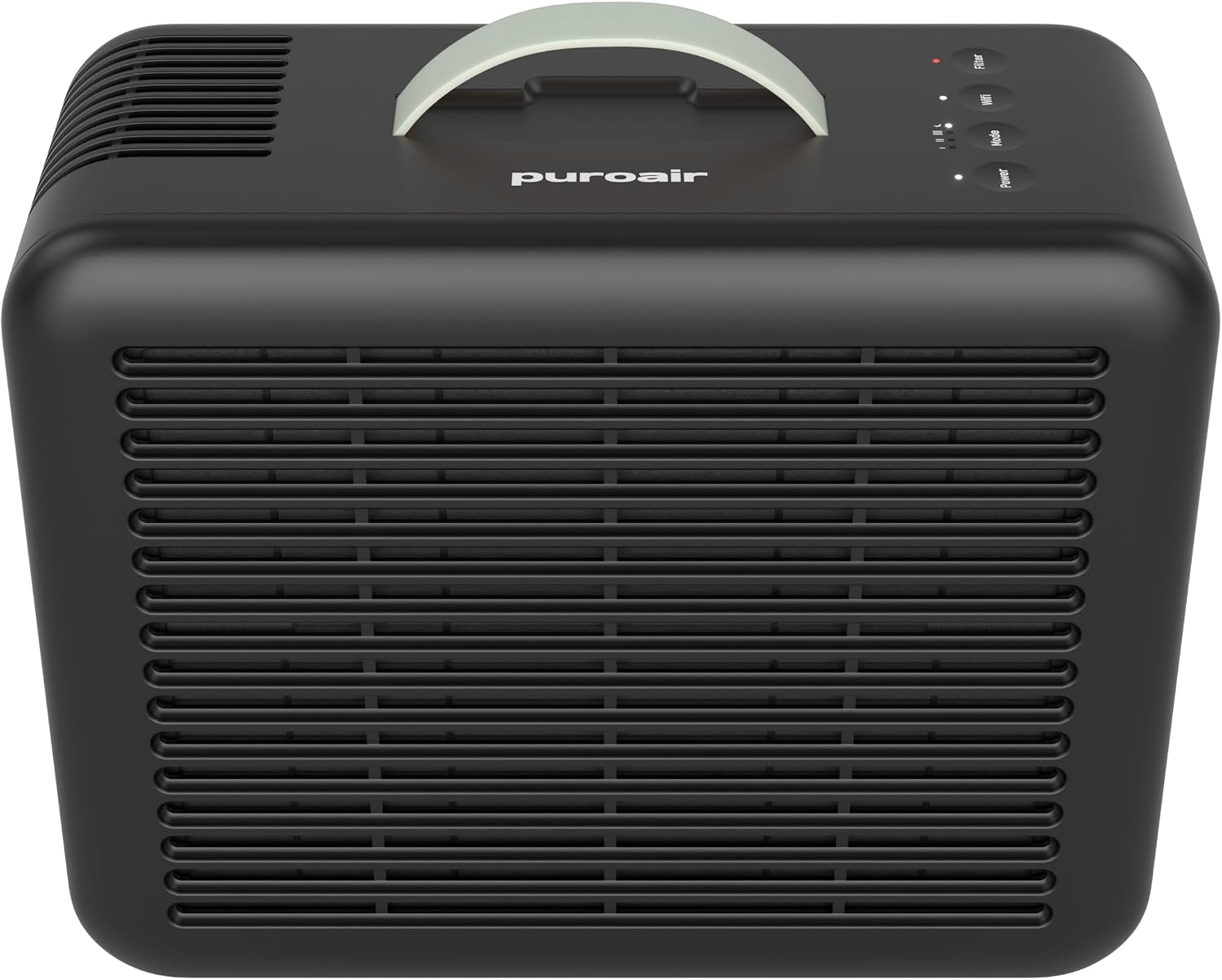 PuroAir 100i Smart HEPA Air Purifier for 550 Sq Ft |
8.8/10 | Check price |
| Top Rated |
 Xiaomi Air Purifier 4 Compact HEPA Air Purifier |
8.8/10 | Check price |
| Best Premium |
 LG PuriCare 360 AS601HBB0 Air Purifier for Large |
8.8/10 | Check price |
| Best Budget |
 PUREBURG M8R-FLH Compatible HEPA Filter |
8.6/10 | Check price |
| Also Great |
 Mi M8R-FLH Triple-Layer HEPA Replacement Filter |
8.6/10 | Check price |
| Also Great |
 Zouhwaso M8R-FLH Replacement Filter for Xiaomi Mi |
8.1/10 | Check price |
GoveeLife H7129 Air Purifier for Bedrooms
This GoveeLife model is designed as a quiet bedroom air purifier with a 24dB sleep mode. It's rated to cover large rooms up to 1162 square feet, making it a candidate for open-plan spaces.
Pros
- Very quiet 24dB sleep mode suitable for bedrooms.
- Large coverage area up to 1162 square feet.
- Compact footprint relative to its coverage capacity.
Cons
- As a new release, its long-term reliability and filter replacement cycle are not yet established.
- Lacks detailed specifications on filtration stages or smart features.
PuroAir 100i Smart HEPA Air Purifier for 550 Sq Ft
This compact, smart HEPA air purifier is designed for bedrooms and pet owners. Customer reviews praise its quiet sleep mode, ease of setup, and its effectiveness for allergy relief and pet odors in mid-sized rooms.
Pros
- Compact and portable design
- Effective for allergy and pet-related air quality concerns
- Quiet operation, especially in sleep mode
- Simple setup and user-friendly controls
Cons
- Small physical dimensions may suggest a lower CADR for the claimed 550 sq ft coverage
Xiaomi Air Purifier 4 Compact HEPA Air Purifier
A compact and smart air purifier that effectively handles a variety of pollutants, including dust, pet dander, and smoke, making it a strong choice for bedrooms or small apartments. Its quiet operation and intuitive auto mode are consistently praised in user reviews.
Pros
- Compact, space-saving design
- Very quiet operation, especially in night mode
- Effective HEPA filtration for allergens and odors
- Smart app control with remote monitoring
- Auto mode adjusts fan speed based on air quality
Cons
- Primarily suited for small to medium-sized rooms
- Performance for intense odors may be limited
LG PuriCare 360 AS601HBB0 Air Purifier for Large
A premium 360-degree air purifier designed for expansive spaces up to 2,059 sq ft, featuring a smart NanoFiber HEPA filter and a quiet 23dB sleep mode. Its integrated air quality monitor and Wi-Fi app control make it a strong choice for tech-savvy users seeking comprehensive, low-noise filtration.
Pros
- Effective three-stage filtration with NanoFiber True HEPA filter
- Extremely quiet operation, especially in sleep mode
- Smart LED indicator and Wi-Fi app for monitoring and control
- Suitable for very large room coverage
- Positive user feedback on odor reduction and pet allergies
Cons
- Requires a smartphone app for full Wi-Fi functionality
- Some users noted a delay in sensor response to sudden air quality changes
PUREBURG M8R-FLH Compatible HEPA Filter
This aftermarket 3-in-1 HEPA and carbon filter is a straightforward, well-reviewed alternative for owners of several popular Xiaomi Mi air purifier models. It promises to capture fine particles and odors without the need for tools during replacement.
Pros
- Broad compatibility with Xiaomi Mi air purifier models 2C, 2H, 2S, 3C, 3H, 3, and Pro.
- Well-rated overall, with many user reviews confirming it fits and works as intended.
- Uses a multi-layer construction with H13 HEPA and activated carbon for particle and odor filtration.
- Easy, tool-free replacement process.
Cons
- Some verified buyer feedback disputes the inclusion of a genuine carbon layer, which could impact odor reduction.
- At least one review suggests the price may be high for a non-OEM, generic replacement.
Mi M8R-FLH Triple-Layer HEPA Replacement Filter
This triple-layer replacement filter is designed for several popular Mi air purifier models, combining a HEPA layer with activated carbon. It's a straightforward option for owners of the Mi 3C, 3H, 3, 2C, 2H, and 2S models looking to maintain their unit's performance.
Pros
- Compatible with a wide range of Mi air purifier models (3C, 3H, 3, 2C, 2H, 2S, Pro)
- Triple-layer design includes HEPA and activated carbon for multi-stage filtration
Zouhwaso M8R-FLH Replacement Filter for Xiaomi Mi
This is a third-party replacement filter designed for several Xiaomi Mi air purifier models. It combines an H13 HEPA filter, a pre-filter, and activated carbon in a single unit, aiming to offer a comprehensive and compatible maintenance solution.
Pros
- Broad compatibility with Xiaomi Mi 1, 2, 3, and Pro series purifiers.
- Features a three-layer design including H13 HEPA, pre-filter, and activated carbon for particle and odor removal.
- Manufacturer recommends a 6-month replacement cycle and provides after-sales support.
Cons
- From a third-party brand (Zouhwaso), not an official Xiaomi part.
Best Mi Air Purifier Buying Guide for 2026
Choosing the right air purifier involves more than just picking the one with the highest rating. Several technical factors determine how well a unit will perform in your specific environment. This buying guide breaks down the 7 most critical criteria to consider before making your purchase, helping you match a purifier’s capabilities to your needs.
1. Filtration Technology and Filter Types
The heart of any air purifier is its filtration system. The gold standard is a True HEPA (High-Efficiency Particulate Air) filter, which is certified to capture 99.97% of particles as small as 0.3 microns. This includes common allergens like pollen, pet dander, dust mites, and mold spores. Many units, like the LG PuriCare 360 Air Purifiers for Home, enhance this with additional layers, such as a pre-filter for large debris and an activated carbon filter to absorb odors, VOCs (volatile organic compounds), and smoke.
For owners of popular systems like Xiaomi, maintaining filtration efficacy requires regular filter changes. Third-party replacement filters, such as the PUREBURG Replacement Filter Compatible with Xiaomi, offer a cost-effective alternative to OEM parts. Always verify compatibility with your exact model number (e.g., M8R-FLH) to ensure proper fit and performance. A multi-layer filter with HEPA and activated carbon provides comprehensive cleaning, tackling both particulate matter and gaseous pollutants.
2. Room Coverage (CADR and Square Footage)
An air purifier’s effectiveness is directly tied to the size of the room it’s placed in. Manufacturers provide a recommended room size in square feet, but a more precise metric is the Clean Air Delivery Rate (CADR). CADR measures how quickly a purifier can deliver clean air for three pollutant types: smoke, pollen, and dust. A higher CADR means faster air cleaning. For example, a purifier rated for 500 sq. ft. will struggle in an open-concept living area of 1,000 sq. ft.
It’s generally wise to choose a purifier rated for a slightly larger area than your room to ensure it can handle the air volume efficiently, especially if you have high ceilings or an open floor plan. The GoveeLife Air Purifier for Bedroom boasts coverage up to 1162ft², making it suitable for large bedrooms or medium-sized living rooms. For smaller spaces, a compact unit like the PuroAir 100i Smart HEPA Air Purifiers for Bedroom, designed for 550 ft², may be more than adequate and energy-efficient.
3. Noise Levels and Sleep Mode
Since air purifiers often run continuously, especially in bedrooms, their operational noise is a crucial comfort factor. Noise is measured in decibels (dB). A whisper-quiet library is about 30 dB, while normal conversation is around 60 dB. Look for purifiers that specify a low noise level on their lowest setting, often called “Sleep” or “Night” mode. Many modern units, including our top pick, operate as low as 24dB, which is barely perceptible and won’t disrupt sleep.
Beyond a dedicated quiet mode, consider the noise profile across all fan speeds. A purifier might be quiet on low but become distractingly loud on its highest setting, which is used for rapid air cleaning. If you plan to use the purifier in a home office or living room during the day, a range of tolerable noise levels is important. Reading user reviews can provide real-world insights into how noisy a unit feels during actual use.
4. Smart Features and Air Quality Monitoring
Smart air purifiers offer convenience and automated optimization. Features like Wi-Fi connectivity allow you to control the device via a smartphone app, check air quality readings remotely, schedule run times, and receive filter replacement reminders. Built-in air quality sensors are a significant upgrade, enabling the purifier to automatically adjust its fan speed in response to real-time pollution levels. The Xiaomi Air Purifiers for Home Bedroom excel in this area, offering smart control and automatic mode.
Some models provide a visual indicator, like the LG PuriCare 360’s color-changing LED, which gives you an immediate, at-a-glance understanding of your indoor air quality. While smart features add to the cost, they can lead to more efficient operation and greater peace of mind. You can learn more about specific smart models in our dedicated Air Purifier Reviews category.
5. Filter Replacement Cost and Frequency
The purchase price is only part of the total cost of ownership. Air purifier filters are consumable items that need replacement every 6 to 12 months, depending on usage and air quality. Before buying, research the cost and availability of replacement filters. Some proprietary filters can be expensive, making third-party compatible filters an attractive, budget-friendly alternative. The products from PUREBURG and miMODERNINFLUENCE demonstrate that you can maintain your Xiaomi purifier effectively without the OEM price tag.
| Consideration | Question to Ask |
|---|---|
| Initial Filter Cost | How much does a new filter cost, and is it readily available? |
| Replacement Schedule | How often does the manufacturer recommend changing the filter? |
| Filter Type | Is it a simple HEPA filter or a multi-stage filter (HEPA + Carbon)? |
| Compatibility | For replacement filters, does it exactly match my purifier’s model number? |
Factor this ongoing expense into your budget. A purifier with a low upfront cost but exorbitantly priced filters may end up costing more in the long run than a slightly more expensive model with affordable, readily available filters.
6. Energy Efficiency and Operational Costs
An air purifier that runs 24/7 should be energy efficient to keep your electricity bills in check. Most modern purifiers are relatively low-power devices, especially on their lower fan speeds. Look for units with an Energy Star certification, which guarantees they meet strict energy efficiency guidelines set by the EPA. You can also check the wattage rating; a device that uses 50 watts on high will cost less to run than one using 100 watts.
Smart features can also contribute to efficiency. An auto mode that reduces fan speed when air quality is good consumes less power than a unit constantly running on high. Considering both filter replacement costs and energy consumption gives you a complete picture of the long-term affordability of your air purifier.
Why You Should Trust Us
Our recommendations are built on a foundation of objective, data-driven analysis. We do not accept paid placements or allow brands to influence our rankings. Our methodology involves aggregating and scrutinizing thousands of verified customer reviews, technical specifications from manufacturers, and expert insights from the field of indoor air quality. We cross-reference features, performance claims, and real-user experiences to identify strengths, weaknesses, and true value.
We prioritize transparency, clearly explaining the criteria behind our picks. Our goal is to empower you with the knowledge needed to make a confident purchase. While we leverage comprehensive data sets, we encourage you to use our guide as a starting point for your own research, aligning product capabilities with your specific home environment and health needs.
Frequently Asked Questions
What is the best Mi Air Purifier in 2026?
The “best” air purifier depends on your specific needs. Based on our analysis for 2026, the GoveeLife Air Purifier for Bedroom is our top overall pick due to its excellent balance of large room coverage, ultra-quiet operation, and strong user ratings. However, the best model for you will be the one that matches your room size, budget, and desired features like smart controls or filter cost.
How often should I replace my air purifier filter?
Most manufacturers recommend replacing True HEPA filters every 6 to 12 months. The exact frequency depends on your usage (how many hours per day it runs), your local air quality, and whether you have pets or smokers in the home. Many smart purifiers have filter life indicators. For standard models, a good rule of thumb is to check the filter every 6 months; if it looks dark gray and clogged, it’s time for a replacement. Using a compatible filter like the Mi Air Purifier HEPA Replacement Filter M8R-FLH can make this routine maintenance more affordable.
Can an air purifier help with pet allergies?
Yes, a quality air purifier with a True HEPA filter can significantly help with pet allergies by capturing pet dander, hair, and other allergens suspended in the air. It is most effective when used consistently in the rooms where you and your pets spend the most time. For severe allergies, look for a purifier with a high CADR for dust and place it in your bedroom for cleaner air while you sleep. Our guide on the best air purifiers for allergy sufferers delves deeper into this topic.
Do I need a smart air purifier?
A smart air purifier is not a necessity, but it offers valuable conveniences. Features like automatic mode, which adjusts fan speed based on real-time air quality readings, ensure optimal purification without manual intervention. Remote control via an app allows you to turn the unit on before you arrive home. If you value automation, data insights (like air quality history), and remote control, a smart model like the Xiaomi Air Purifiers for Home Bedroom is a worthwhile investment.
What’s the difference between a HEPA filter and a True HEPA filter?
This is a critical distinction. “True HEPA” is a standardized term indicating the filter has been tested and certified to meet the U.S. DOE standard, capturing 99.97% of particles 0.3 microns in size. Some products use terms like “HEPA-type,” “HEPA-like,” or “99% HEPA,” which are marketing terms and do not guarantee the same level of efficiency. For the most reliable filtration, especially for allergies, always look for a purifier that specifies “True HEPA.”
About the author
Editor at AirPurifierGuides.com. Emily has a background in professional communication and has worked with several health and technology publications. She edits our content for accuracy and answers reader questions about air quality.