Can Air Purifiers Remove Kitchen Smoke? A Practical Guide
Yes, air purifiers with HEPA and activated carbon filters can effectively capture smoke particles and odors, but their performance depends on several key factors.
 By Sarah Jenkins
Updated October 17, 2026
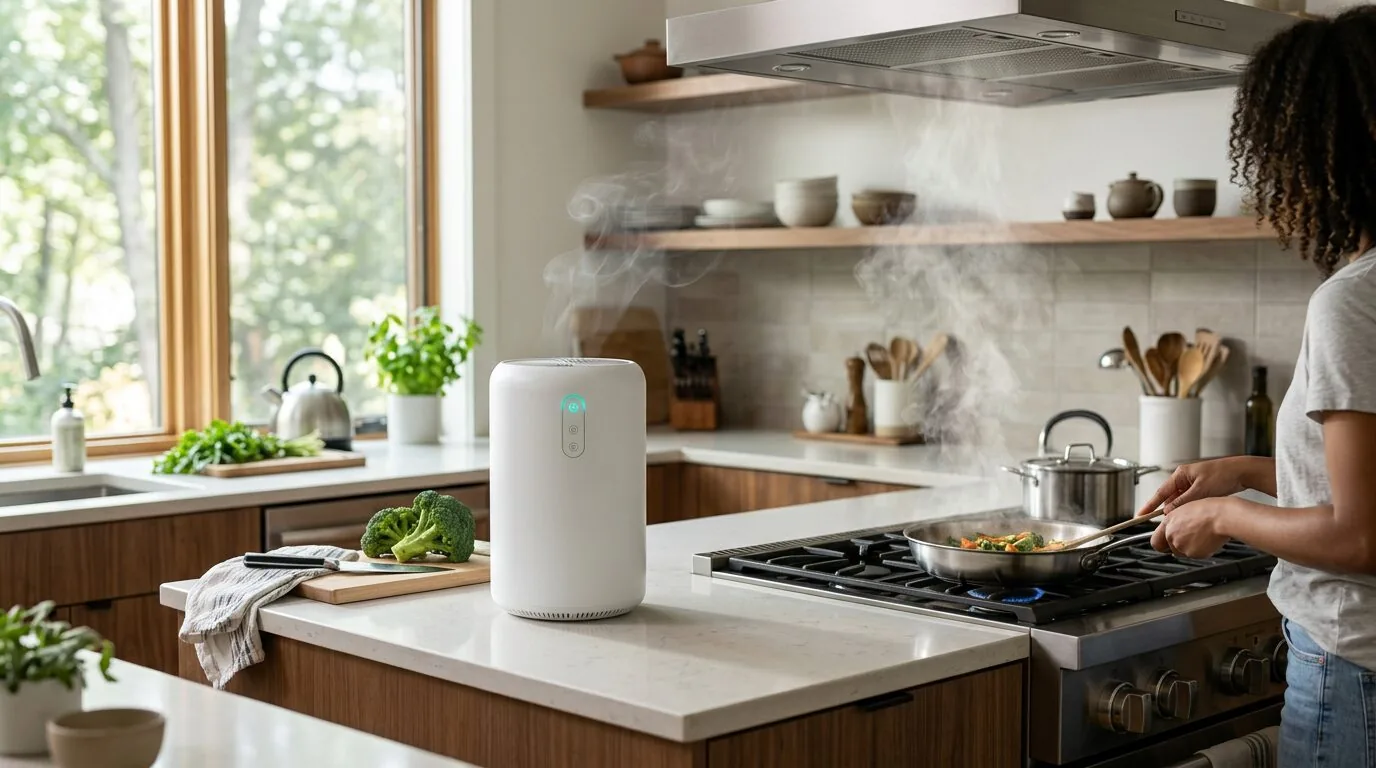
Yes, a quality air purifier can significantly reduce kitchen smoke. The key is using a unit that combines a True HEPA filter to trap the microscopic smoke particles and a substantial activated carbon filter to adsorb the odors and volatile organic compounds (VOCs). While they won’t eliminate smoke instantly from a major grease fire, they are highly effective at clearing lingering smoke, cooking odors, and airborne grease from everyday stovetop cooking.
That lingering haze and smell after searing a steak or frying bacon isn’t just unpleasant—it’s a sign of particulate pollution in your home. Kitchen smoke contains fine particles (PM2.5) and gaseous pollutants that can irritate your eyes, throat, and lungs. Understanding how air purifiers tackle this specific problem helps you choose the right tool and use it effectively to maintain cleaner indoor air.
How Air Purifiers Capture Kitchen Smoke and Odors
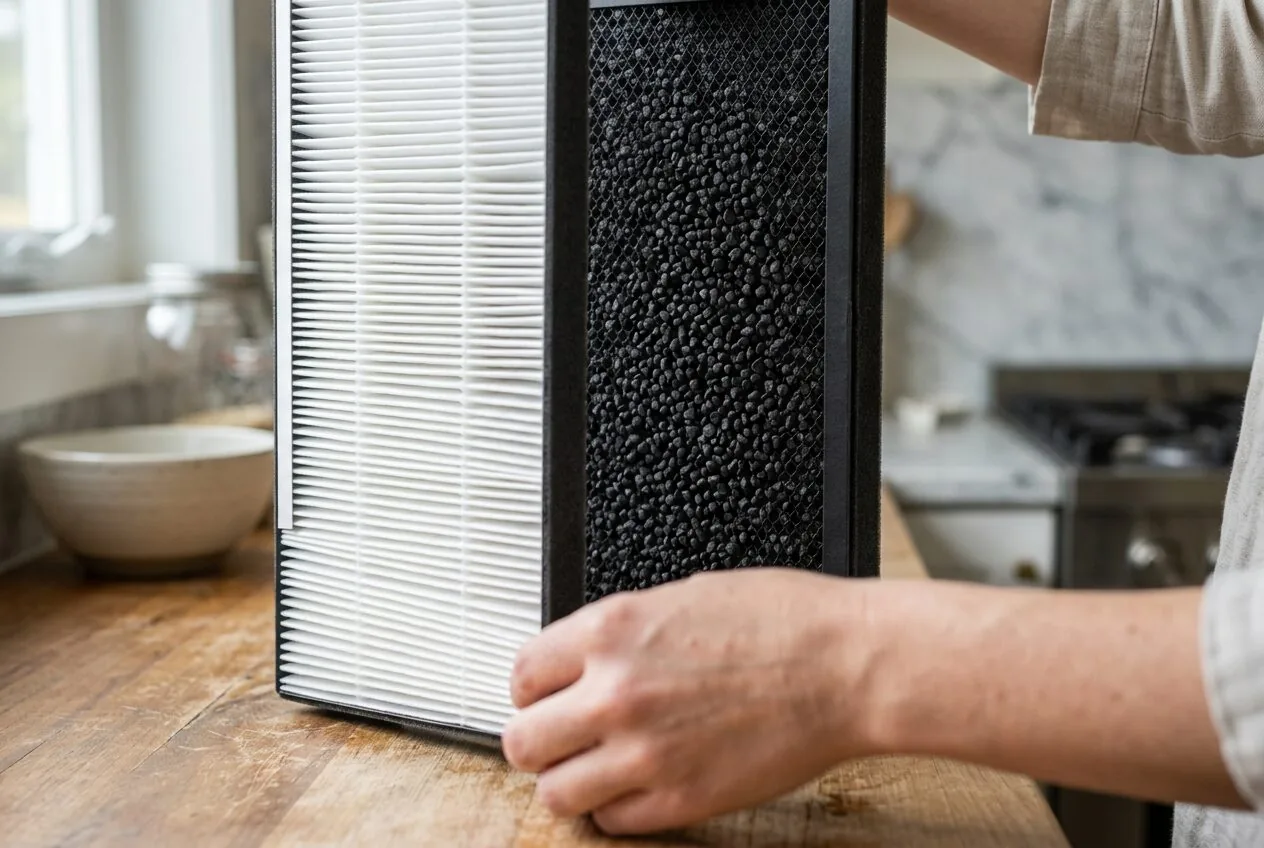
Kitchen smoke is a complex mixture of different pollutants, so a single-stage filter isn’t enough. An effective air purifier uses a multi-stage filtration system to address each component.
The Role of HEPA Filters
A True HEPA (High-Efficiency Particulate Air) filter is non-negotiable for smoke removal. It’s a dense, pleated mechanical filter that can capture at least 99.97% of particles as small as 0.3 microns. The visible haze from smoke is primarily made of these fine particles. By trapping them, the HEPA filter clears the air of the actual smoke you can see and the finer particles you can’t.
The Power of Activated Carbon
While HEPA catches particles, it does little for gases and odors. This is where activated carbon comes in. This filter is made of charcoal treated to be extremely porous, creating a massive surface area. Odor molecules and gaseous pollutants from cooking (like those from burnt food or frying oil) get trapped (adsorbed) onto this surface as air passes through. The more carbon a filter has, the more odors it can absorb and the longer it will last before needing replacement.
Key Factors That Determine Effectiveness
Not all purifiers are created equal for smoke. Several specifications and usage factors directly impact how well a unit will perform in your kitchen.
Filter Combination and Quality
Look for a purifier that explicitly states it has both a True HEPA filter and an activated carbon filter. Be wary of units that only have a “carbon-treated” mesh or a thin carbon layer on a HEPA filter; these have limited capacity. A dedicated, thick carbon filter is far superior for tackling persistent cooking smells. For more on filter types and their roles in a clean home, see our guide on air purifiers and household dust reduction.
Room Size and Air Changes per Hour (ACH)
An air purifier’s Clean Air Delivery Rate (CADR) for smoke indicates how quickly it can filter smoke particles in a given room size. More important is the Air Changes per Hour (ACH). For smoke, you want a unit powerful enough to cycle all the air in the kitchen 4-5 times per hour. This means if your kitchen is 200 square feet with 8-foot ceilings, you need a purifier rated for a room size of at least 1,600 cubic feet.
Placement and Usage
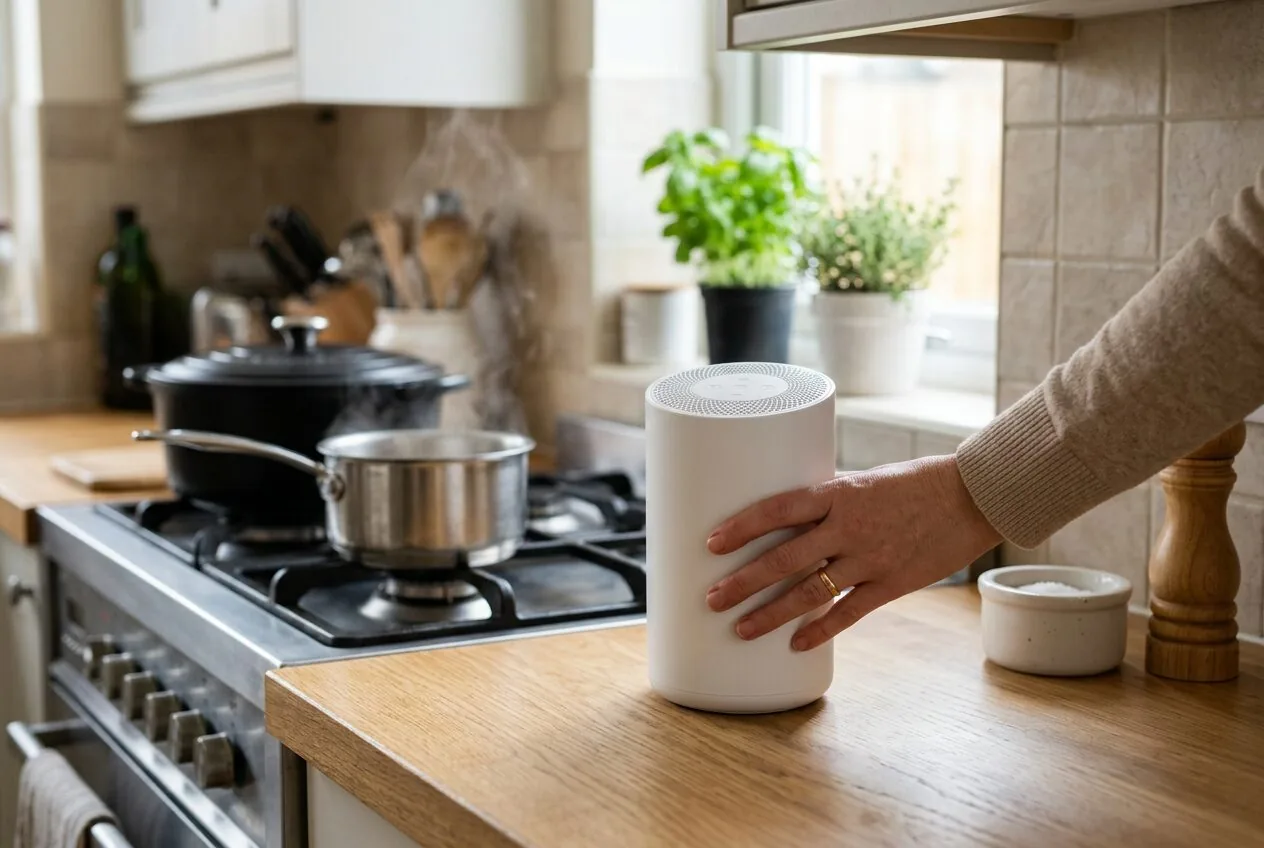
Placement is critical. For best results, run the purifier on a high setting during and immediately after cooking. Place it on a counter or island a few feet away from the stove—close enough to capture smoke at the source but not so close that heat or grease splatter could damage it. Let it run for an hour or two after you’re done cooking to clear any lingering pollutants.
Limitations and What Air Purifiers Can’t Do
It’s important to have realistic expectations. An air purifier is a remediation tool, not a replacement for source control.
- Not an Instant Fix for Major Smoke Events: If you’ve set off every smoke alarm with a burnt pan, an air purifier will help clear the air over time, but you should first ventilate the area by opening windows and using exhaust fans.
- Doesn’t Replace Your Range Hood: Your stove’s exhaust fan is the first line of defense, designed to capture smoke, steam, and grease at the source before they spread. Always use it while cooking.
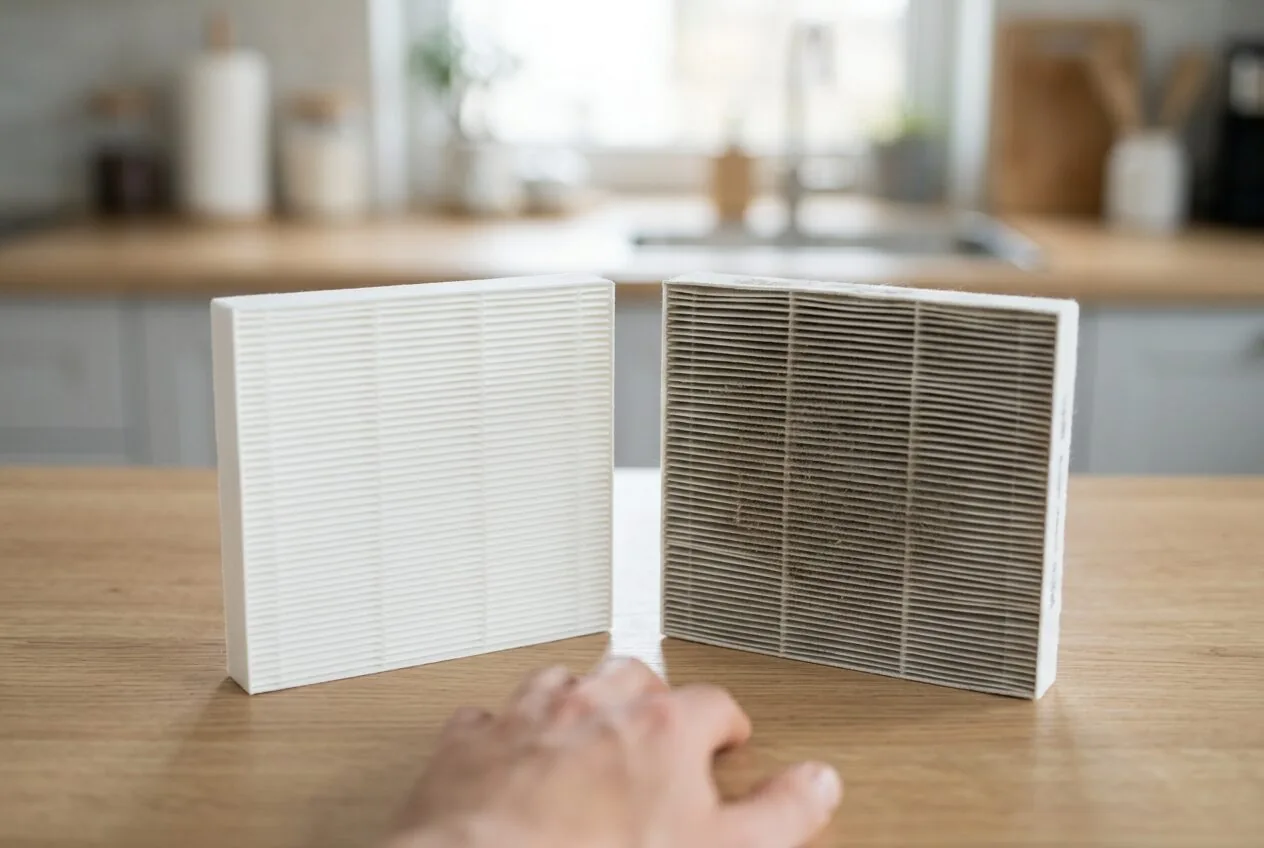
- Requires Regular Maintenance: Filters get saturated. A HEPA filter clogged with particles and a carbon filter saturated with odors will lose effectiveness. Follow the manufacturer’s replacement schedule, especially in a kitchen where the filter works hard. For example, having a 2 PACK 2801 Replacement Filter Compatible on hand ensures you never run your purifier with a spent filter.
- May Not Capture All Ultra-Fine Particles: Some studies suggest the smallest nanoparticles in smoke may pass through HEPA filters, though most particulate matter is effectively captured.
Recommended Products
When choosing an air purifier for kitchen smoke, prioritize models with robust HEPA and carbon filtration and sufficient power for your space. Here are a few options that fit these criteria well.


As an Amazon Associate we earn from qualifying purchases. Product prices and availability are accurate as of the date/time indicated.
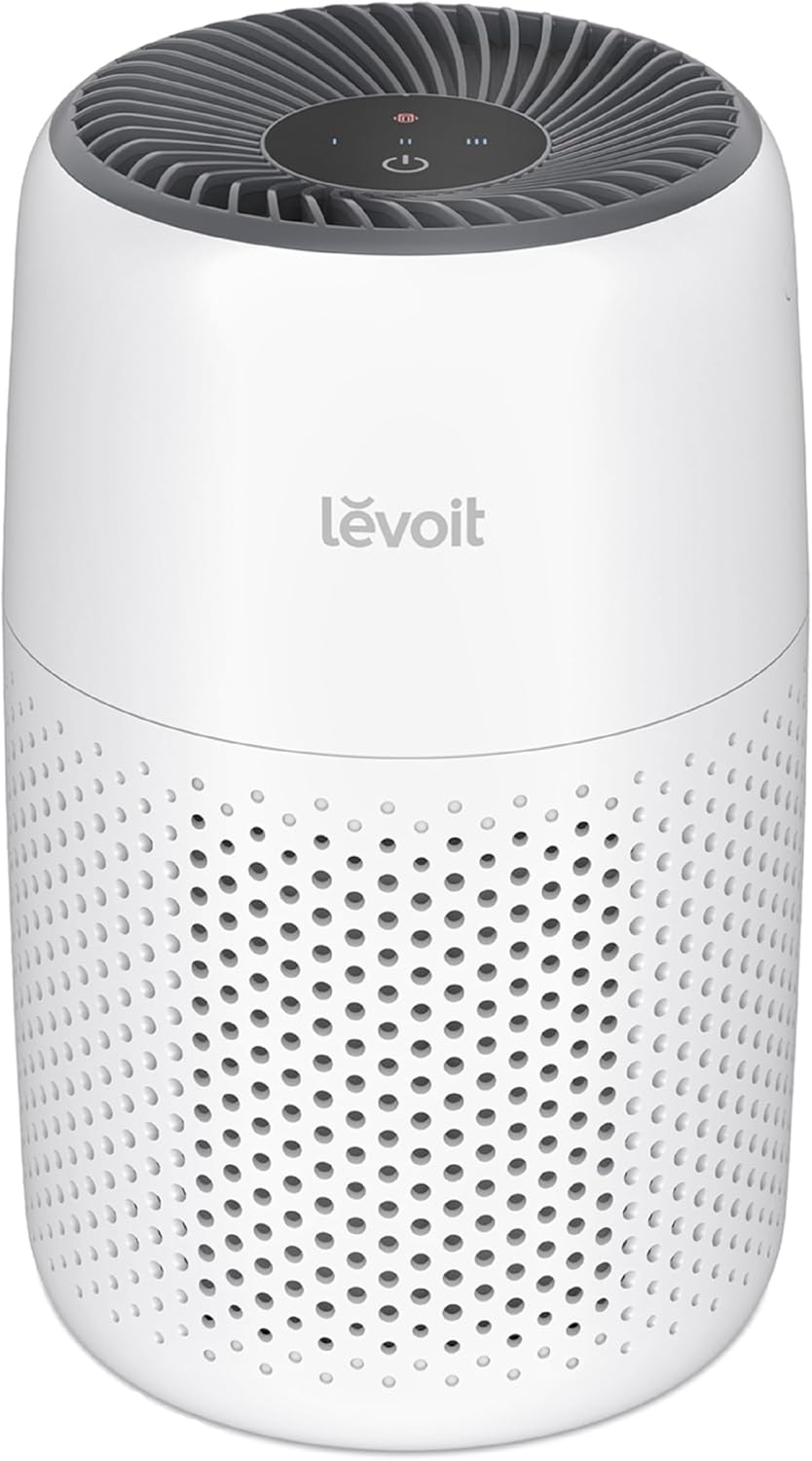
For smaller kitchens or apartments where space is limited, a compact model like the Levoit Air Purifiers for Bedroom Home Pets Dorm offers a good combination of HEPA and carbon filtration in a quiet, space-saving design. For larger, open-plan kitchens that flow into living areas, you’ll need a unit with a higher CADR and capacity, such as the MOOKA Air Purifier for Home Bedroom Large Room, which is rated for very large spaces.
Frequently Asked Questions
Can an air purifier remove the smell of burnt food?
Yes, this is where the activated carbon filter shines. Burnt food odors are primarily gaseous compounds that carbon is designed to adsorb. Running an air purifier with a fresh carbon filter during and after a cooking mishap will significantly reduce and often eliminate the smell much faster than ventilation alone.
Where is the best place to put an air purifier for kitchen smoke?
Place it on a stable surface like a countertop or kitchen island, ideally 3 to 6 feet from your stove. This allows it to capture the smoke plume directly without being so close that it could be damaged by heat, steam, or grease. Ensure it has a few inches of clearance on all sides for proper air intake and output.
Do I need a special air purifier for smoke?
You don’t need a u0022smoke-onlyu0022 purifier, but you do need one with the right features. Prioritize models that list a u0022True HEPAu0022 filter and a substantial u0022activated carbonu0022 or u0022charcoalu0022 filter. Check the product’s CADR rating for smoke, which should be appropriate for your room’s cubic footage.
How often should I replace the filters if I use it in the kitchen?
In a kitchen environment, filters may need replacement more frequently than the manufacturer’s general guideline. The carbon filter, in particular, will saturate faster due to constant exposure to odors and grease vapors. If you cook daily, inspect the filters every 3-4 months. A noticeable decline in odor control or an increase in noise/effort from the fan are signs it’s time for a change.
Can air purifiers help with other indoor air quality issues?
Absolutely. The same HEPA and carbon filters that capture smoke are also effective against many common indoor pollutants, including dust, pet dander, pollen, and household odors. Improving your kitchen air quality is just one benefit. For a broader look at their impact, explore our article on u003ca href=u0022https://airpurifierguides.com/how-indoor-air-quality-affects-daily-life/u0022u003ehow indoor air quality affects daily lifeu003c/au003e.
Final Thoughts
An air purifier is a highly effective tool for managing kitchen smoke, provided you select the right type and use it correctly. By combining a True HEPA filter to remove particulate matter and a robust activated carbon filter to eliminate odors, you can significantly improve the air quality in your cooking space. Remember, it works best as part of a broader strategy that includes using your range hood and proper ventilation.
For persistent issues or to address air quality throughout your entire home, consider how a purifier fits into your overall approach. You can learn more about comprehensive solutions in our buying guides. Investing in a suitable air purifier means you can enjoy cooking your favorite meals without the lingering side effects of smoke and smell.
About the author
Lead content creator at AirPurifierGuides.com. Sarah is a senior product researcher in health-tech with years of experience testing smart home and HVAC devices. She writes most of our reviews, CADR comparisons, and filter analyses.