Do Air Purifiers Reduce Household Dust? What You Need to Know
Discover how air purifiers capture dust particles, what types are most effective, and how to integrate them into a comprehensive dust-reduction strategy for a cleaner home.
 By Marcus Thorne
Updated October 17, 2026
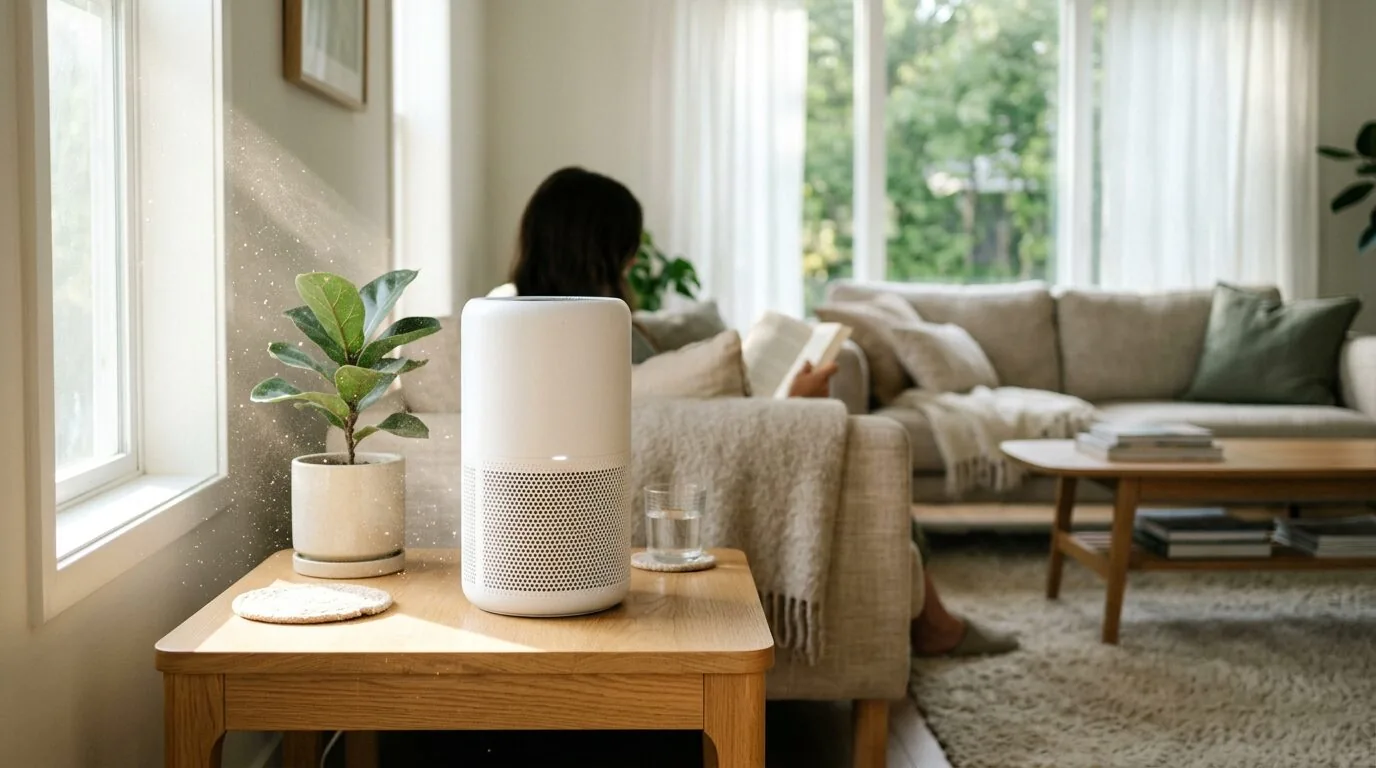
Yes, a HEPA air purifier can be a powerful tool for reducing airborne household dust by trapping the fine particles that settle on surfaces. However, it’s most effective when used as part of a broader cleaning strategy that includes regular vacuuming and dusting.
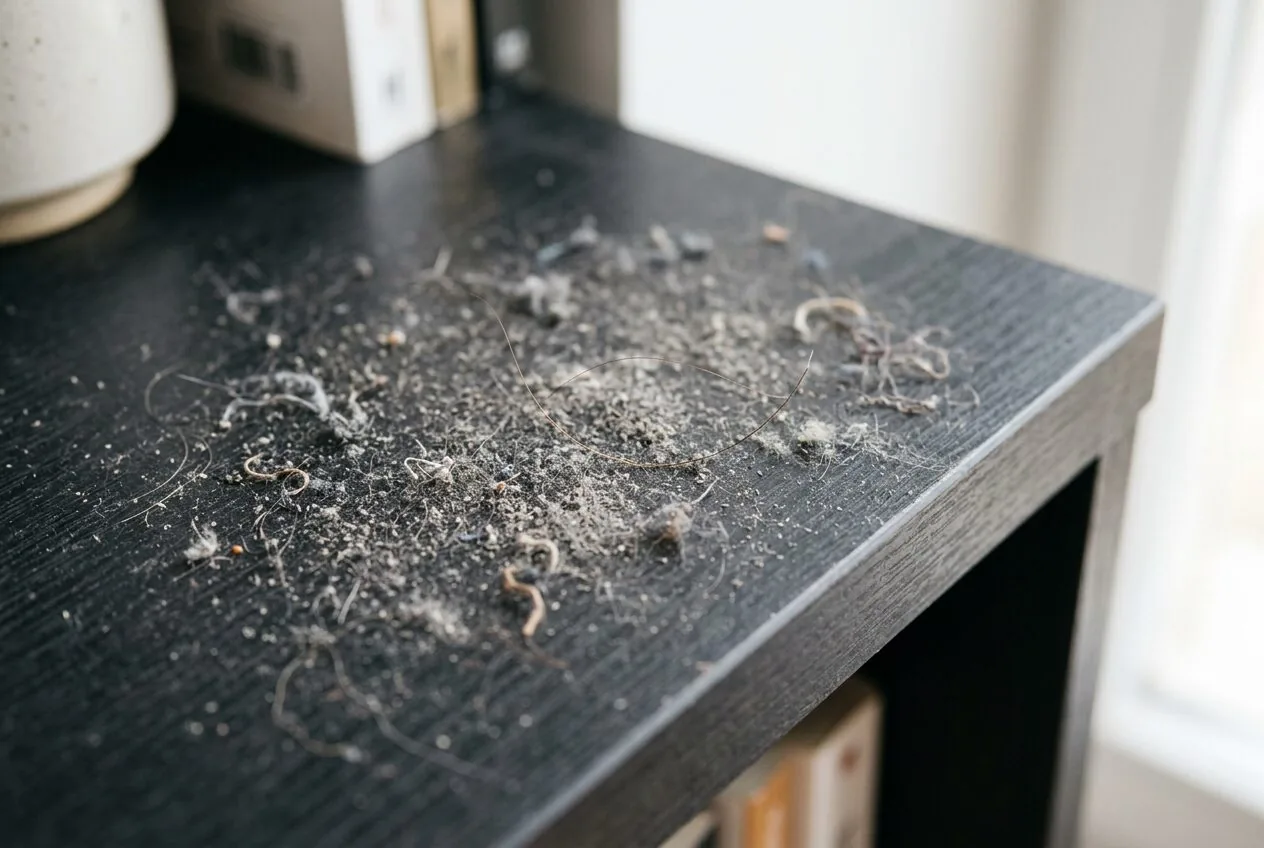
Household dust is a complex mix of dead skin cells, fabric fibers, pet dander, pollen, and microscopic particles tracked in from outdoors. It doesn’t just sit on your shelves; a significant portion is constantly circulating in the air you breathe. This is where an air purifier steps in, working to clean the air before that dust has a chance to settle.
This guide will explain how air purifiers tackle dust, the key features to look for, and how to use them effectively alongside other cleaning habits for a noticeably less dusty home.
How Air Purifiers Capture Dust Particles
The primary mechanism for dust removal in most quality air purifiers is mechanical filtration. Air is drawn into the unit by a fan and passed through one or more filters designed to trap particles of specific sizes.
The Role of HEPA Filters
A true HEPA (High-Efficiency Particulate Air) filter is the gold standard for dust removal. To be certified HEPA, a filter must capture 99.97% of particles that are 0.3 microns in size. This size is scientifically tested because it’s the most penetrating particle size (MPPS), meaning it’s hardest to catch. Since most dust particles are larger than 0.3 microns, a HEPA filter is exceptionally effective at removing them from the air.
Pre-Filters and Activated Carbon
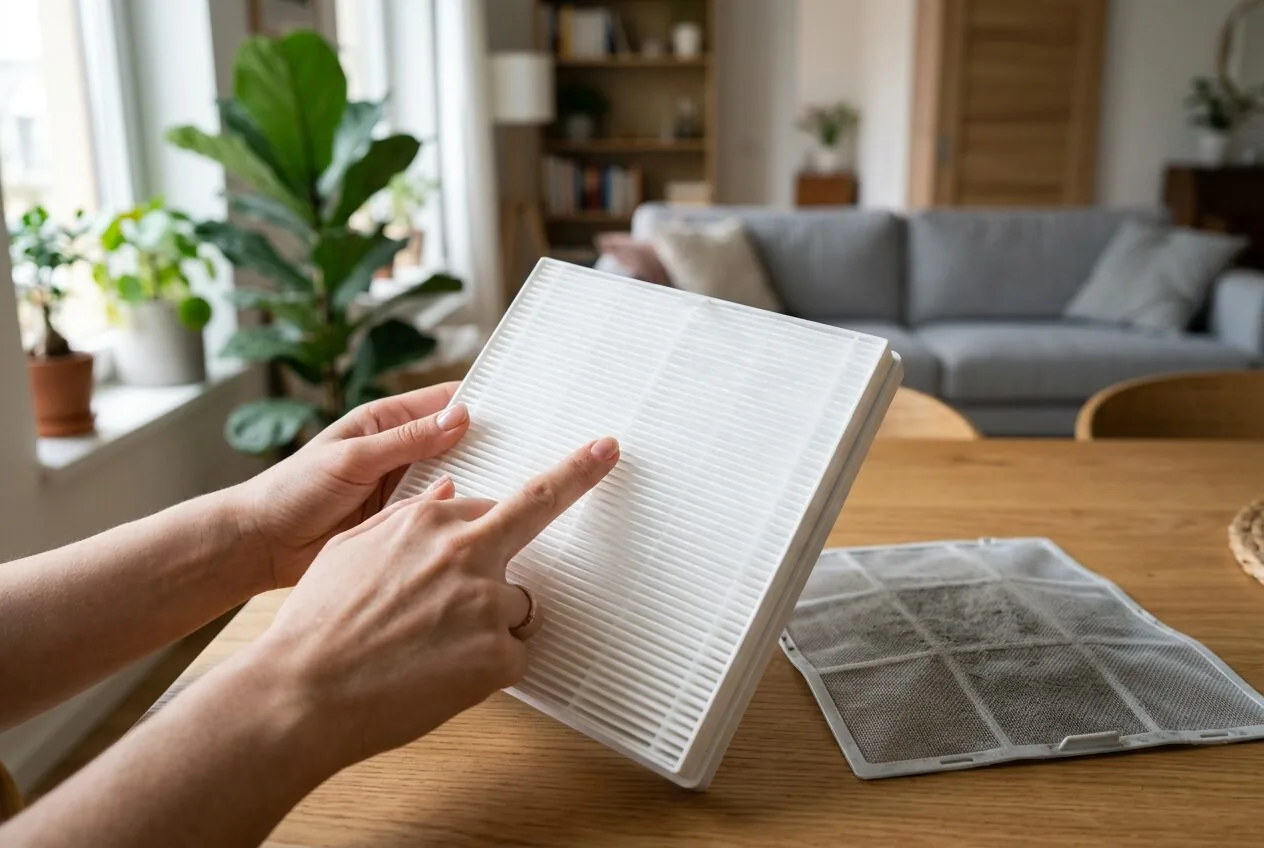
Many purifiers use a multi-stage system. A pre-filter, usually a mesh screen, catches larger debris like hair and big dust bunnies, protecting the more delicate and expensive HEPA filter and extending its life. An activated carbon filter, while not for dust, tackles odors and volatile organic compounds (VOCs), which can be part of the overall “stale dust” smell in a home.
It’s important to run your purifier consistently, not just when you see dust. Dust is constantly being generated and resuspended into the air from activities like walking on carpets or sitting on upholstery. Continuous operation maintains lower background levels of airborne dust.
The Evidence: How Effective Are They Really?
Studies and real-world observations confirm that air purifiers with HEPA filters significantly reduce the concentration of particulate matter (PM) in indoor air. This includes PM2.5 and PM10, which are key components of household dust. You may notice that surfaces take longer to get dusty, and the air may feel and smell fresher.
However, an air purifier is not a magic bullet. It captures airborne dust but does not remove dust that has already settled on floors, furniture, or shelves. For that, you need physical cleaning methods. Think of an air purifier as controlling the source (airborne particles) to reduce the symptom (dust accumulation), while vacuuming addresses the symptom directly.
Choosing the Right Air Purifier for Dust
Not all air purifiers are created equal when it comes to dust reduction. Here are the key factors to consider for optimal performance.
1. Look for a True HEPA Filter
Avoid marketing terms like “HEPA-type” or “HEPA-like.” Look for specifications that state “True HEPA” or “HEPA H13” (or higher). This ensures the filter meets the rigorous standard for capturing fine particles. A model like the Purivortex Air Purifiers for Bedroom utilizes a true HEPA filter, making it a capable choice for dust in medium-sized rooms.
2. Match the Clean Air Delivery Rate (CADR) to Your Room Size
CADR measures how quickly a purifier can deliver clean air. For dust, look at the CADR for dust (sometimes listed as for pollen). Choose a purifier with a dust CADR that is at least two-thirds the area of your room in square feet. For a 300 sq. ft. bedroom, aim for a dust CADR of 200 or higher.
3. Consider Features for Convenience
Since consistency is key, features like a timer, multiple fan speeds, and an auto mode can help. Auto mode uses sensors to detect particle levels and adjust the fan speed accordingly, saving energy when the air is clean and ramping up when needed. For a comprehensive solution that also manages temperature, the Dyson Purifier Hot+Cool HP07 Air Purifier, Heater offers advanced sensing and fully sealed HEPA filtration.
- True HEPA Filtration: Non-negotiable for effective dust capture.
- Adequate CADR: Ensures the purifier is powerful enough for your space.
- Good Airflow Design: Helps circulate and clean air throughout the room, not just near the unit.
- Filter Replacement Indicators: Reminds you to maintain peak performance.
Integrating an Air Purifier into Your Dust-Fighting Routine
To maximize dust reduction, your air purifier should be part of a team effort. Here’s how to make it work in harmony with other practices.
Strategic Placement
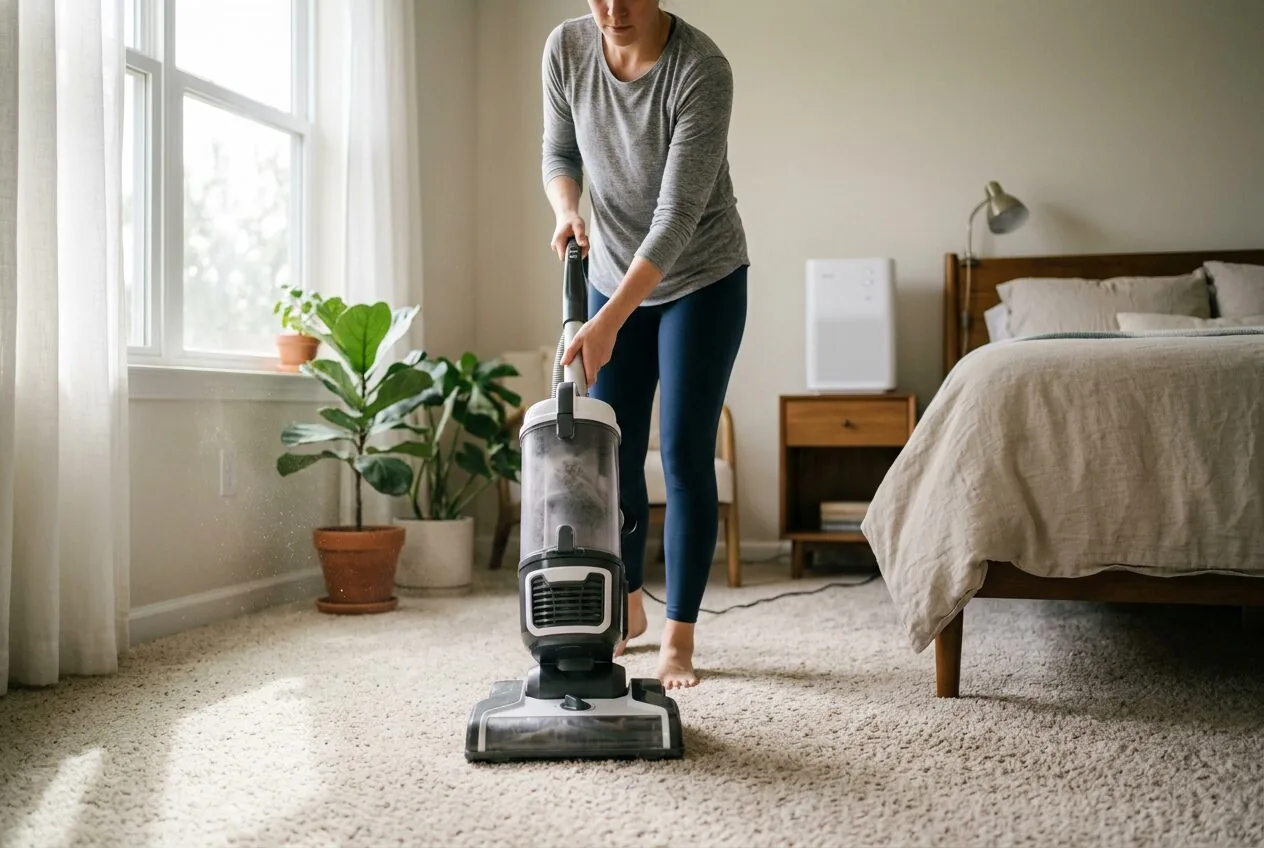
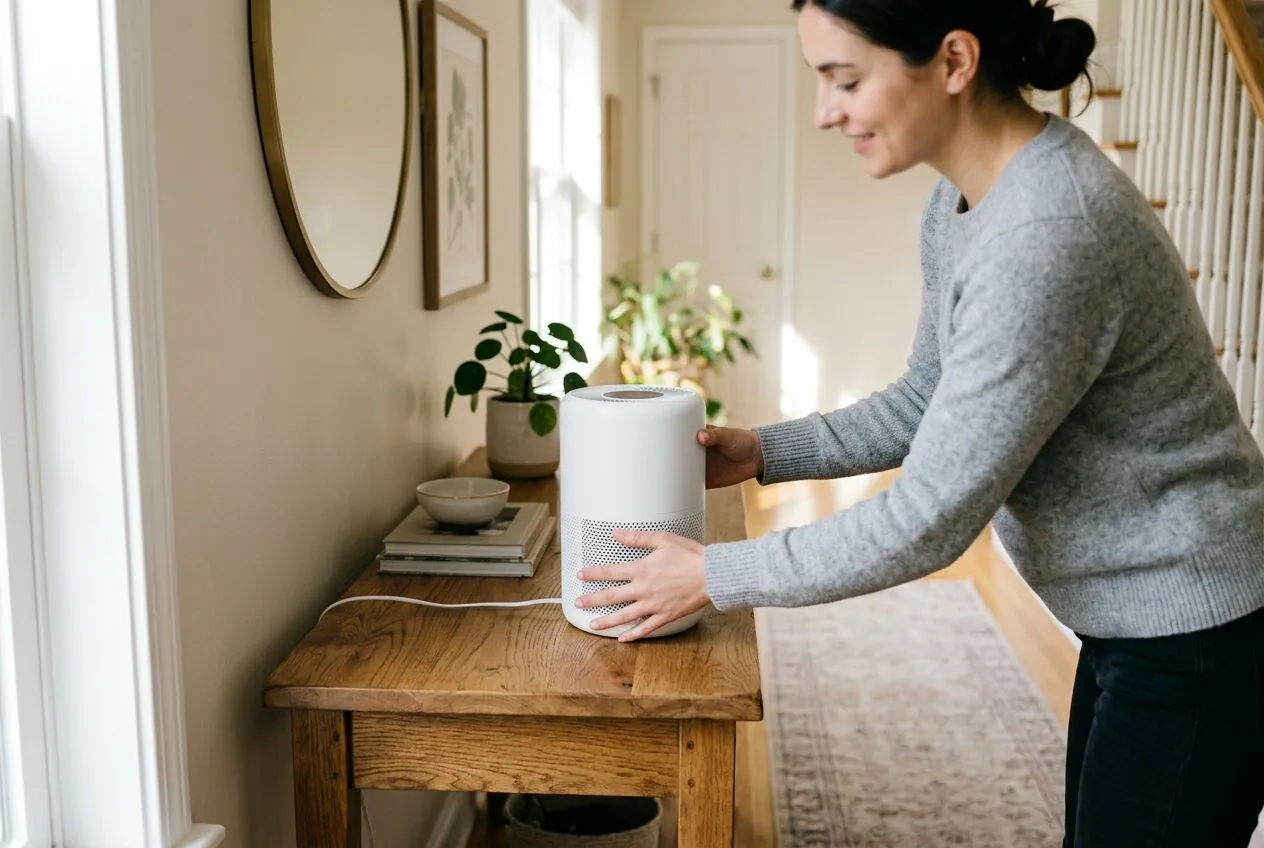
Place your purifier in the room where you spend the most time, like a bedroom or living room. Keep it away from walls and large furniture to allow for unrestricted air intake and output. Running it on a higher speed while you are cleaning can help capture dust you kick up during vacuuming or dusting.
Pair with Regular Cleaning
Use a vacuum cleaner with a HEPA filter to prevent dust from being blown back into the air. Damp-dust surfaces with a microfiber cloth, which traps dust instead of just moving it around. Wash bedding and soft furnishings regularly. An air purifier like the AIRROMI Air Purifier for Home Pet Hair Allergens can be particularly helpful in bedrooms where bedding is a major source of dust mites and fibers.
Addressing the source of dust is also crucial. Use doormats, remove shoes at the door, and maintain proper humidity levels (ideally 30-50%) to minimize dust mite populations.
Recommended Products
Choosing an air purifier with the right features can make a significant difference in your battle against dust. The following models are well-suited for this task, offering true HEPA filtration and designs that promote clean air circulation.


As an Amazon Associate we earn from qualifying purchases. Product prices and availability are accurate as of the date/time indicated.
Frequently Asked Questions
Where is the best place to put an air purifier for dust?
Place it in the room where you spend the most time, typically a bedroom or main living area. Position it a few feet away from walls and large furniture for optimal airflow. Avoid corners, as they restrict air circulation into and out of the unit.
How long does it take for an air purifier to reduce dust?
You may notice a difference in air freshness within hours, but for a measurable reduction in settled dust on surfaces, give it a few days to a week of continuous operation. The purifier needs time to repeatedly cycle and clean the entire volume of air in the room.
Do I need to run my air purifier all the time?
For consistent dust control, yes, running it continuously on a low or auto setting is most effective. Dust is constantly being generated and resuspended into the air. Modern purifiers are designed for 24/7 operation and use minimal energy on low settings.
Can an air purifier make dust worse?
A properly functioning HEPA purifier will not make dust worse. However, ionizing purifiers (which emit charged particles) can sometimes cause dust to stick to walls and surfaces. For dust reduction, a purifier that uses only mechanical HEPA filtration is the most straightforward and recommended choice.
Is an air purifier or a humidifier better for dust?
They serve different purposes. An air purifier removes dust particles from the air. A humidifier adds moisture, which can weigh down dust so it settles faster, but it doesn’t remove it. For dust mite control, maintaining humidity between 30-50% is helpful, but for airborne dust, a purifier is the direct solution.
Final Thoughts
An air purifier with a true HEPA filter is a highly effective tool for reducing airborne household dust, leading to cleaner air and less frequent dust accumulation on surfaces. Its real power is unlocked when used as part of a holistic approach that includes source control, regular cleaning with the right tools, and proper purifier placement and maintenance.
By understanding how air purifiers work and integrating them wisely into your home care routine, you can create a healthier, more comfortable living environment with noticeably less dust. For more on managing your indoor environment, explore our guide on how indoor air quality affects daily life or learn about air circulation strategies for the home.
About the author
Co-founder of AirPurifierGuides.com. Marcus runs a retail chain of home appliances and works directly with brands like Dyson, Coway, Levoit, and Blueair, giving him firsthand insight into current air purifier lineups and buying trends.