Do Air Purifiers Help With Construction Dust? A Clear Guide
Learn how air purifiers capture construction dust, the best features to look for, and a complete strategy for keeping your home's air clean during and after renovations.
 By Emily Foster
Updated October 17, 2026
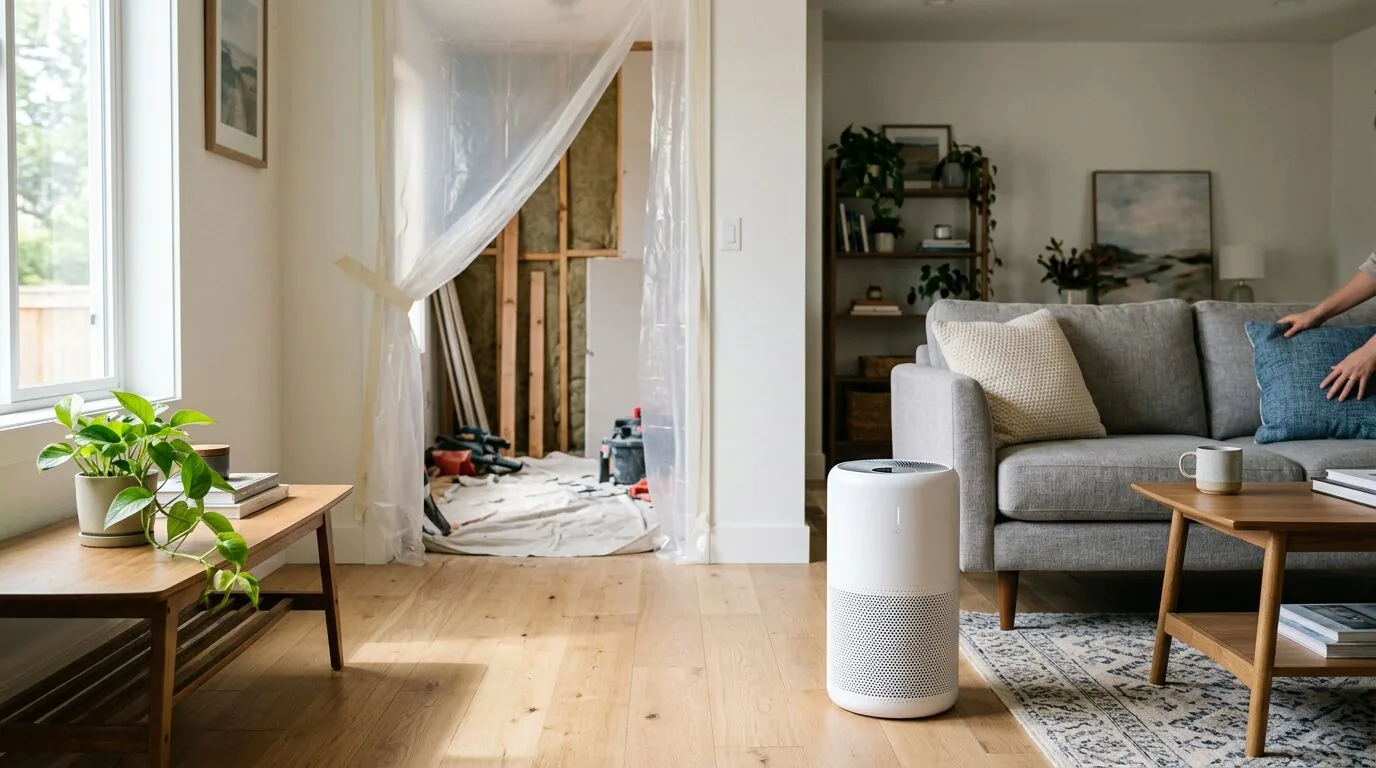
Yes, a high-quality air purifier with a True HEPA filter is one of the most effective tools for removing fine construction dust from your indoor air. It captures the microscopic particles that settle deep in your lungs and can cause respiratory irritation, complementing physical cleaning to protect your health during and after renovation projects.
Renovations, whether a small bathroom update or a major home addition, generate a staggering amount of dust. This isn’t just ordinary house dust; it’s a complex mixture of drywall particles, sawdust, silica, and other fine debris that can linger in the air for days and settle into every crevice. This guide explains how air purifiers work against this specific challenge and how to use them effectively as part of a comprehensive clean-air strategy.
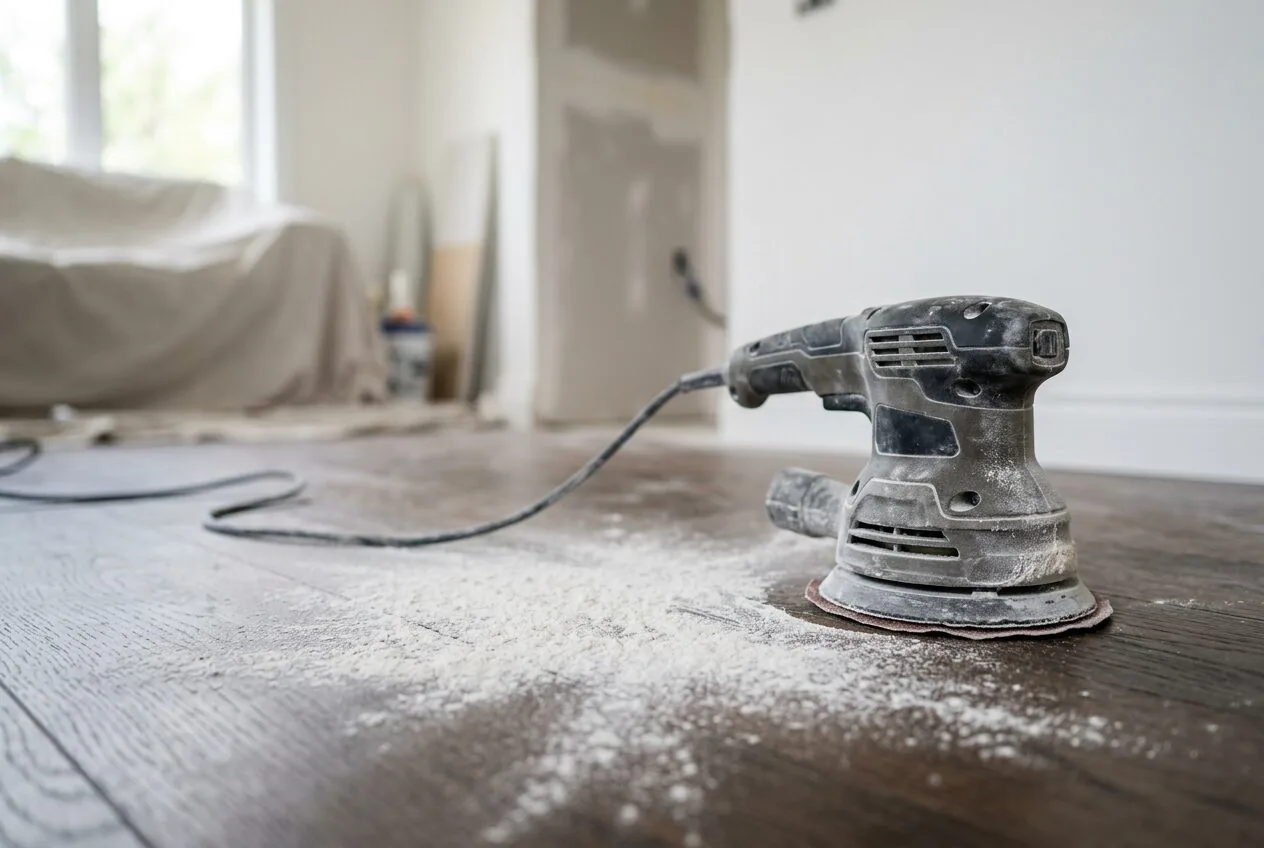
Why Construction Dust Is a Serious Air Quality Problem
Construction dust is classified as PM2.5 and PM10—particulate matter small enough to be inhaled deep into the lungs and even enter the bloodstream. Common sources during renovations include:
- Drywall Sanding: Creates extremely fine gypsum dust that is highly pervasive.
- Cutting & Sanding Wood: Produces sawdust, a common allergen and irritant.
- Demolition: Kicks up old dust, mold spores, and potentially harmful materials.
- Tile & Concrete Work: Can release crystalline silica dust, a known respiratory hazard.
Without intervention, these particles can cause coughing, sneezing, aggravated asthma, and long-term respiratory issues. They also settle on every surface, making post-construction cleaning a monumental task. For more on common indoor pollutants, see our guide on reducing airborne contaminants.
How Air Purifiers Capture Construction Dust
Air purifiers work by pulling room air through a series of internal filters, trapping pollutants, and circulating clean air back into the space. For construction dust, the filtration stages are critical.
The Essential Filtration System
A purifier designed for heavy particulate matter should have a robust multi-stage system:
- Pre-filter: A mesh screen that catches larger debris like hair and bigger dust clumps, protecting the main filter and extending its life.
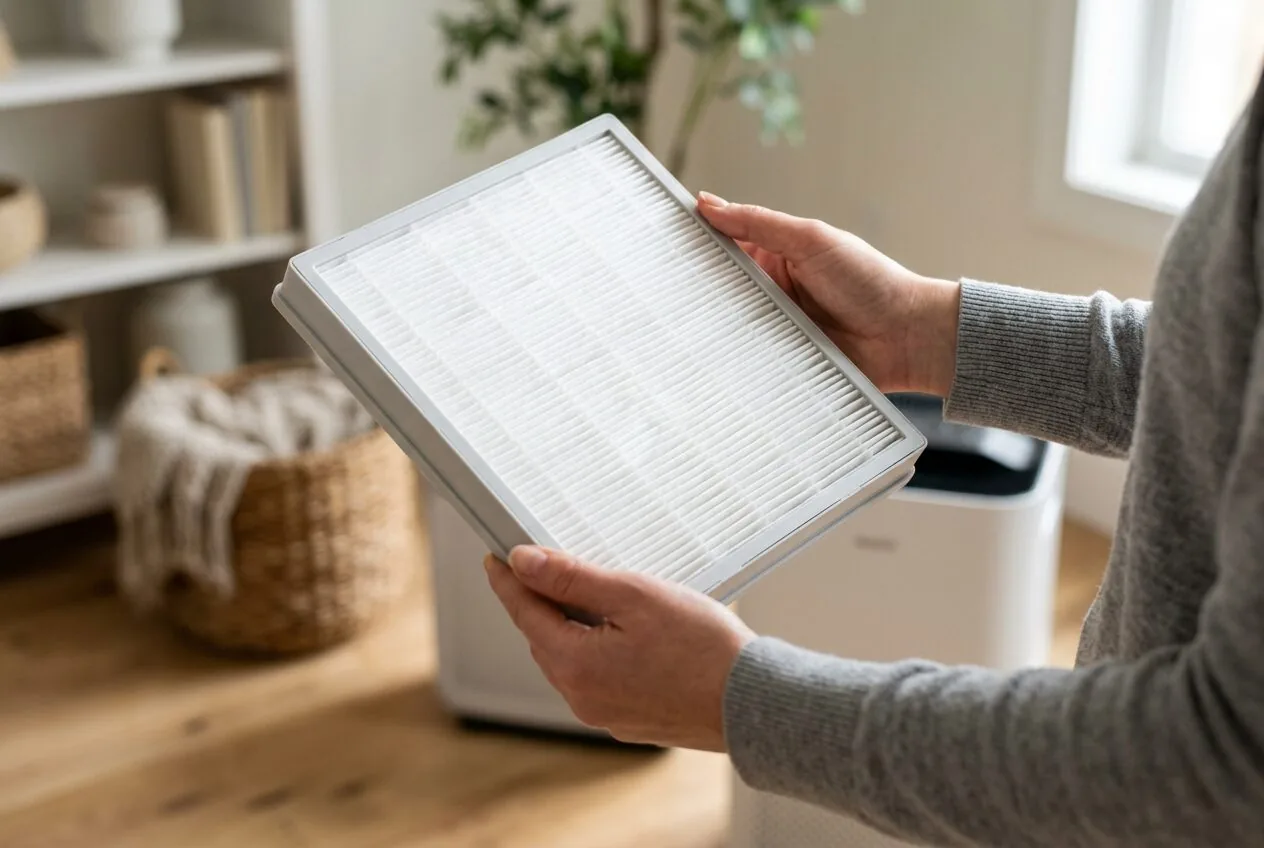
- True HEPA Filter: The most important component. A True HEPA filter is tested to capture 99.97% of particles as small as 0.3 microns. This includes the vast majority of fine construction dust particles.
- Activated Carbon Filter: While not for dust, this layer tackles volatile organic compounds (VOCs) and odors from paints, adhesives, and solvents used in construction.
Key Features for Renovation Projects
Not all air purifiers are built for the high-volume, continuous workload of a dusty renovation. Look for these features:
- High CADR for Dust: The Clean Air Delivery Rate (CADR) measures how quickly a purifier can filter smoke, pollen, and dust. A higher “dust” CADR rating is crucial for keeping up with constant particle generation.
- Strong Fan Speeds & Large Room Coverage: Choose a unit rated for a room size larger than your actual space to account for the heavy pollutant load. Powerful fan speeds allow for rapid air exchanges.
- Durable, Washable Pre-filter: During heavy construction, the pre-filter will clog quickly. A washable one saves money and maintenance hassle.
- Quiet Operation on High: Renovations are noisy enough. A purifier that can run effectively without being overly loud is a significant quality-of-life benefit.
Understanding these features is key, much like knowing the factors that affect air quality in older homes before starting a retrofit.
Creating an Effective Dust Control Strategy
An air purifier is a powerful tool, but it works best as part of a broader containment and cleaning plan.
During Active Construction
- Seal the Area: Use plastic sheeting and zip walls to isolate the work zone from the rest of the home.
- Run the Purifier Continuously: Place the unit just outside the sealed work area, drawing air away from living spaces. Run it on the highest safe setting 24/7.
- Use Negative Air Pressure: For major projects, professionals use an “air scrubber” to create negative pressure, sucking dust into the machine and preventing its escape.
After Construction is Complete
The cleanup phase is when your air purifier does its most important work for your living environment.
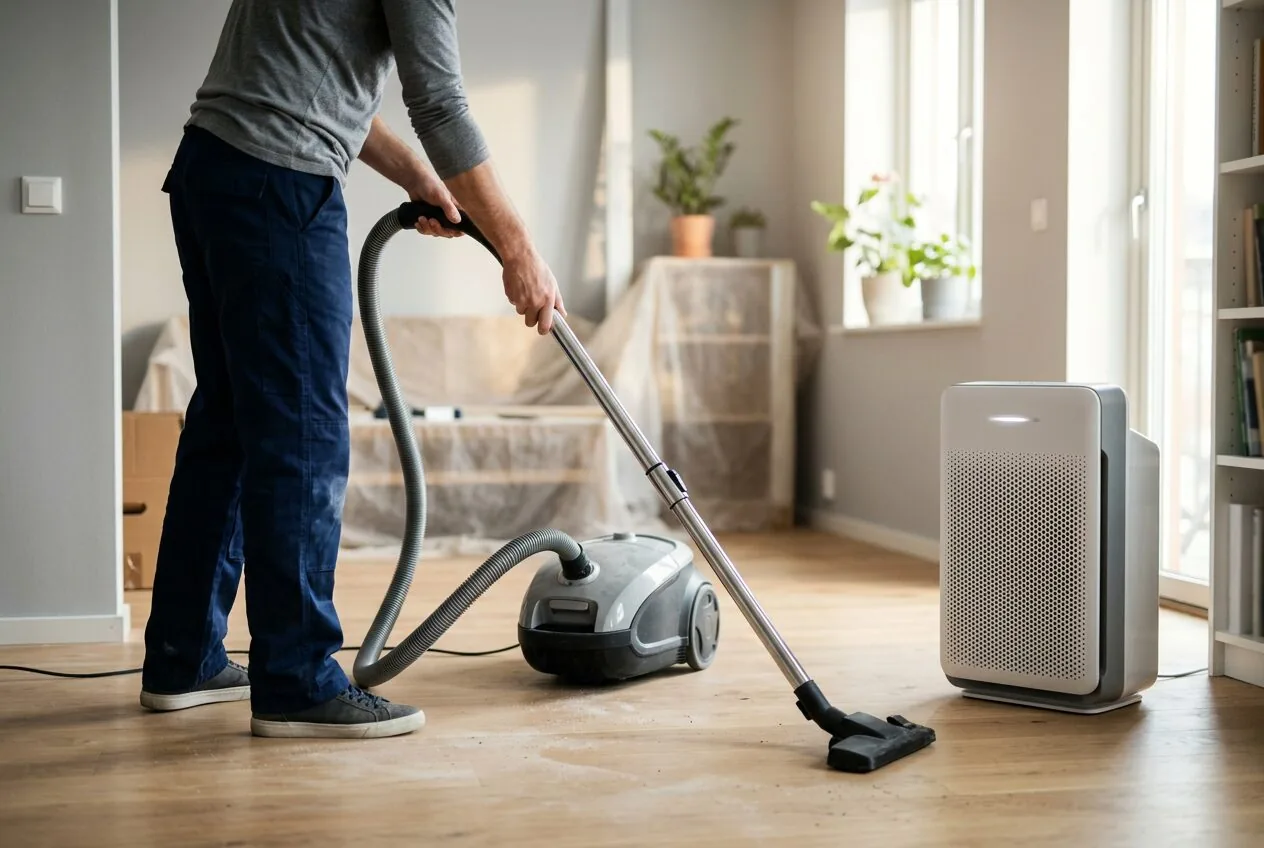
- Deep Clean First: Vacuum all surfaces with a HEPA-filter vacuum cleaner and wet-wipe walls and hard surfaces. This removes settled dust so the purifier isn’t constantly recirculating it.
- Strategic Placement: Move the purifier into the center of the renovated room. Keep it running on high for several days to capture lingering airborne particles.
- Check and Replace Filters: Construction dust will saturate filters much faster than normal use. Inspect the pre-filter daily and be prepared to replace the HEPA filter sooner than the recommended schedule. For popular models, affordable replacement options like the FLT4825 HEPA Filter B Replacement Compatible set can be a cost-effective solution.
Recommended Products
When dealing with the heavy, continuous dust load of a renovation, you need a purifier built for the job. The following models are well-suited for large spaces and high-volume particle filtration, making them excellent allies during construction cleanup.


As an Amazon Associate we earn from qualifying purchases. Product prices and availability are accurate as of the date/time indicated.
For example, a unit like the FreAire Air Purifiers for Home Large Room Up is designed to handle very large areas, which is ideal for keeping an entire floor clean during a project. For bedrooms or smaller spaces you want to protect, a compact and quiet model like the Air Purifiers for Home Bedroom can run continuously on sleep mode. Remember, maintaining your purifier is key; always use the correct replacement filters, such as the 360° Combi Glass Hepa + Carbon Filter for Dyson for compatible models, to ensure it keeps performing effectively.
Frequently Asked Questions
Can an air purifier remove all construction dust?
No air purifier can remove 100% of dust, and it cannot eliminate dust that has already settled on surfaces. Its primary function is to clean the airborne particles, which dramatically improves air quality and reduces the rate at which dust settles. It must be used alongside thorough vacuuming and wiping for a complete cleanup.
Where is the best place to put an air purifier during renovations?
Place it just outside the sealed work area, between the renovation zone and your clean living spaces. This position allows it to capture dust particles that try to migrate. Ensure it has a few feet of clearance from walls and furniture for optimal air intake and circulation.
How long should I run the air purifier after construction ends?
Run it continuously on a high setting for at least 48-72 hours after all major dust-generating work and initial deep cleaning is complete. After that, you can switch to lower, maintenance settings. Some fine dust may linger for weeks, so periodic high-speed runs can be helpful.
Do I need a special u0026quot;construction-gradeu0026quot; air purifier?
While professional u0022air scrubbersu0022 are used on job sites, a robust residential air purifier with a True HEPA filter and a high CADR for dust is sufficient for most home renovations. The key is choosing a unit powerful enough for your space and committed to the necessary maintenance.
Will an air purifier help with the smell of paint and solvents?
Yes, but only if it has a substantial activated carbon filter. The HEPA filter only catches particles. A thick carbon filter is needed to adsorb the gaseous VOCs that cause odors from paints, stains, and adhesives. Look for a purifier that specifies a weighty carbon filter for this purpose.
Final Thoughts
Managing construction dust is about defense in depth. While physical barriers and thorough cleaning are non-negotiable, a capable air purifier serves as a critical layer of protection for your respiratory health. By investing in a unit with a genuine HEPA filter and adequate power for your space, and by using it strategically before, during, and after your project, you can significantly reduce the airborne particulate pollution that makes renovations so disruptive. Clean air is a cornerstone of a healthy home, a principle that holds true whether you’re renovating or simply maintaining your space, as highlighted in our article on why bedroom air quality matters.
About the author
Editor at AirPurifierGuides.com. Emily has a background in professional communication and has worked with several health and technology publications. She edits our content for accuracy and answers reader questions about air quality.