How Air Purifiers Can Improve Indoor Air Quality After Cooking
Learn how cooking pollutes your indoor air and how the right air purifier can effectively remove smoke, grease, and odors to keep your home fresh and healthy.
 By Sarah Jenkins
Updated October 17, 2026
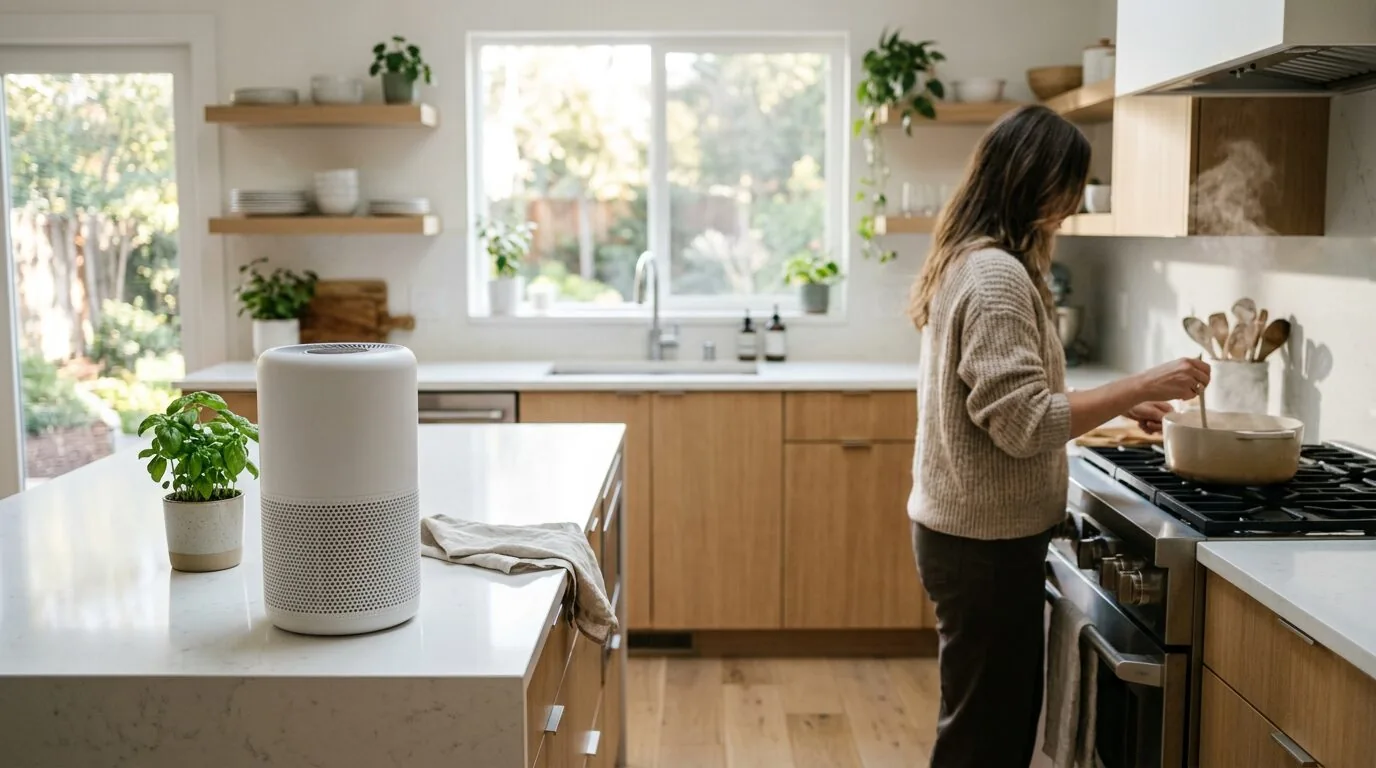
Yes, air purifiers are highly effective at improving indoor air quality after cooking. They work by capturing the fine particulate matter (PM2.5), smoke, grease aerosols, and volatile organic compounds (VOCs) released during food preparation. Using an air purifier with a HEPA and activated carbon filter can significantly reduce lingering odors and harmful pollutants, making your kitchen and adjacent living spaces healthier and more pleasant.
That wonderful aroma of a sizzling steak or freshly baked bread is one of life’s simple pleasures. But what’s left behind after the meal is cooked isn’t so pleasant for your indoor air. Cooking is a major, yet often overlooked, source of indoor air pollution. From smoke and grease to strong odors and invisible gases, your kitchen activity can degrade the air your family breathes for hours afterward.
This article will explain exactly what pollutants cooking releases, how they affect your health and home, and how an air purifier acts as your kitchen’s clean-up crew. We’ll break down the science of filtration, offer practical tips for placement and use, and help you understand what features to look for if you want to tackle post-cooking air quality effectively.
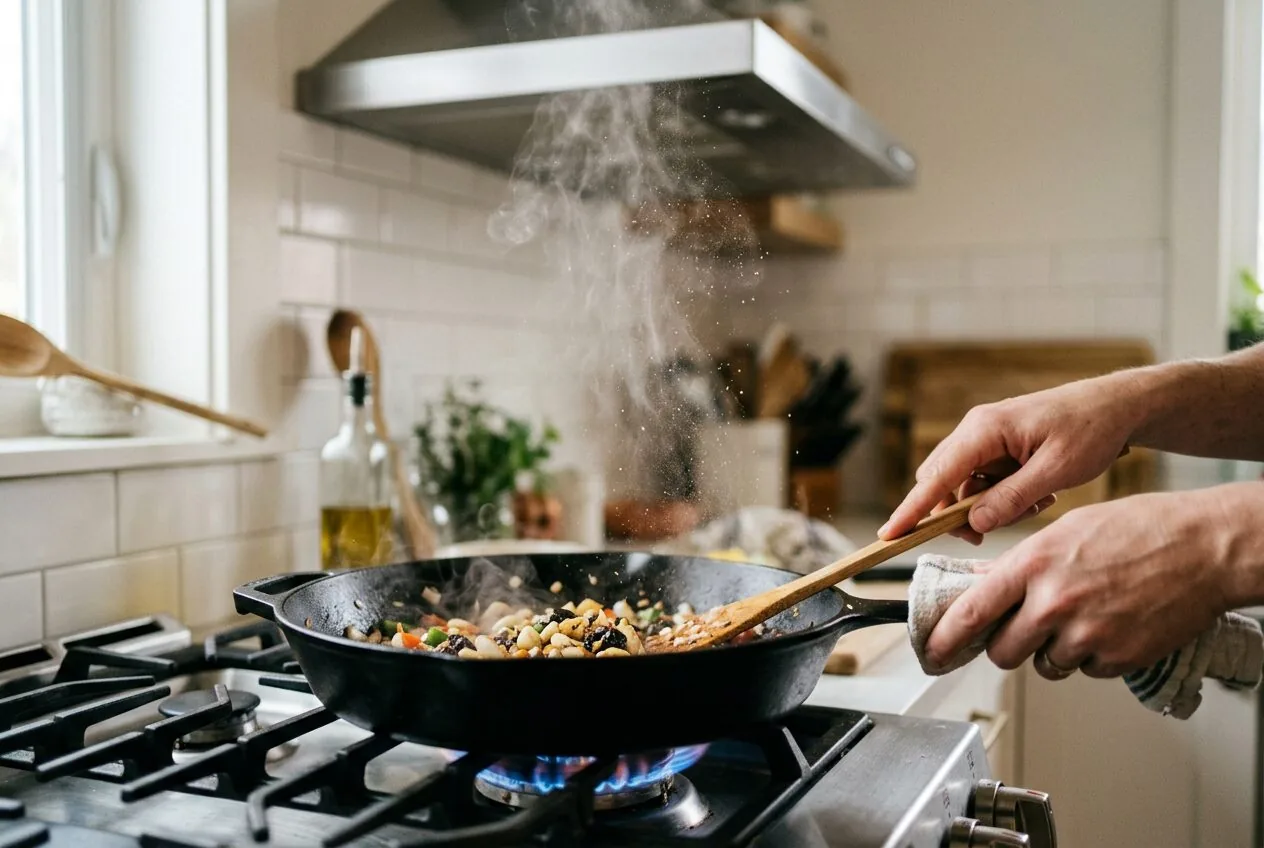
What Cooking Releases Into Your Air
Turning on the stove or oven initiates a complex series of chemical reactions that release a variety of pollutants into your kitchen air. Understanding what you’re dealing with is the first step to cleaning it up.
Particulate Matter (PM2.5 and PM10)
This is the visible smoke and microscopic grease particles suspended in the air. Frying, sautéing, and grilling are major producers. PM2.5 refers to particles smaller than 2.5 micrometers—so tiny they can penetrate deep into your lungs and even enter your bloodstream. These particles are the primary cause of hazy air and reduced visibility during and after cooking.
Volatile Organic Compounds (VOCs) and Odors
These are the gases released from heating oils and foods. They are responsible for the distinct smells of cooking, from fragrant garlic and onions to less pleasant burnt scents. While some VOCs are harmless, others can irritate the eyes, nose, and throat. Lingering cooking odors are primarily VOC-based.
Nitrogen Dioxide (NO2)
Gas stoves are a significant source of this pollutant, produced when natural gas burns at high heat. Studies have linked elevated NO2 levels from gas cooking to increased risk of respiratory issues, especially in children. Even electric stoves can produce some NO2 from the high-temperature reaction of nitrogen and oxygen in the air.
Carbon Monoxide (CO) and Other Combustion Byproducts
Incomplete combustion from gas flames or charring food can produce carbon monoxide, a dangerous, odorless gas. Proper ventilation is critical to mitigate this risk. Burning food or overheating oils also releases acrolein and other aldehydes, which are severe respiratory irritants.
How Air Purifiers Tackle Cooking Pollutants
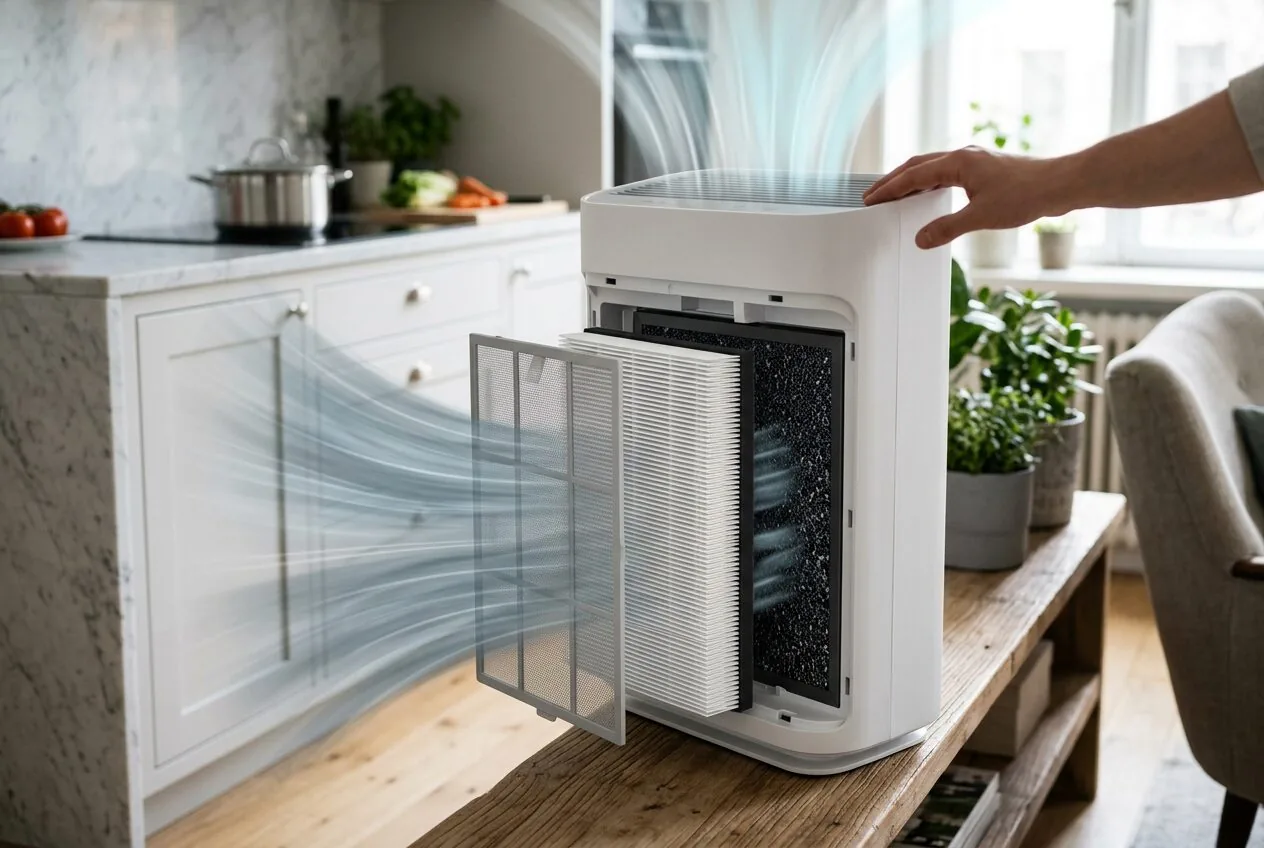
Air purifiers clean your air by pulling it through a series of internal filters. For cooking pollutants, a multi-stage filtration system is essential. No single filter type can catch everything, which is why the most effective purifiers use a combination.
The HEPA Filter: Capturing Particles
A True HEPA filter is the gold standard for removing particulate matter. To be certified True HEPA, a filter must capture 99.97% of particles as small as 0.3 microns. This makes it incredibly effective at trapping cooking smoke, grease aerosols, and other fine PM2.5. When you see the haze clear from your kitchen after turning on a purifier, the HEPA filter is doing the heavy lifting. For more on how HEPA filters tackle common household dust, you can read our guide on air purifiers and household dust reduction.
The Activated Carbon Filter: Neutralizing Gases and Odors
HEPA filters can’t capture gases. That’s where activated carbon comes in. This filter is made of carbon treated to have a massive surface area full of microscopic pores. As air passes through, VOC molecules, odors, and some gases like NO2 become trapped (adsorbed) onto the carbon’s surface through a chemical attraction. The more carbon a filter contains, the more odors and gases it can absorb before needing replacement. A purifier with a substantial carbon filter is crucial for eliminating stubborn smells like fish, curry, or fried food.
Prefilters and Additional Technologies
Most purifiers have a prefilter—a simple mesh that catches larger particles like lint and hair. This protects the more expensive HEPA filter and extends its life. Some models also include additional technologies like UV-C light, which can help neutralize certain airborne microbes, or ionizers. It’s important to note that some ionizers can produce ozone, a lung irritant, so if you have respiratory sensitivities, a purifier that relies solely on mechanical filtration (HEPA + carbon) is often the safest, most recommended choice.
Best Practices for Using an Air Purifier in the Kitchen
Simply owning an air purifier isn’t enough; where and how you use it dramatically impacts its effectiveness against cooking pollutants.
Strategic Placement is Key
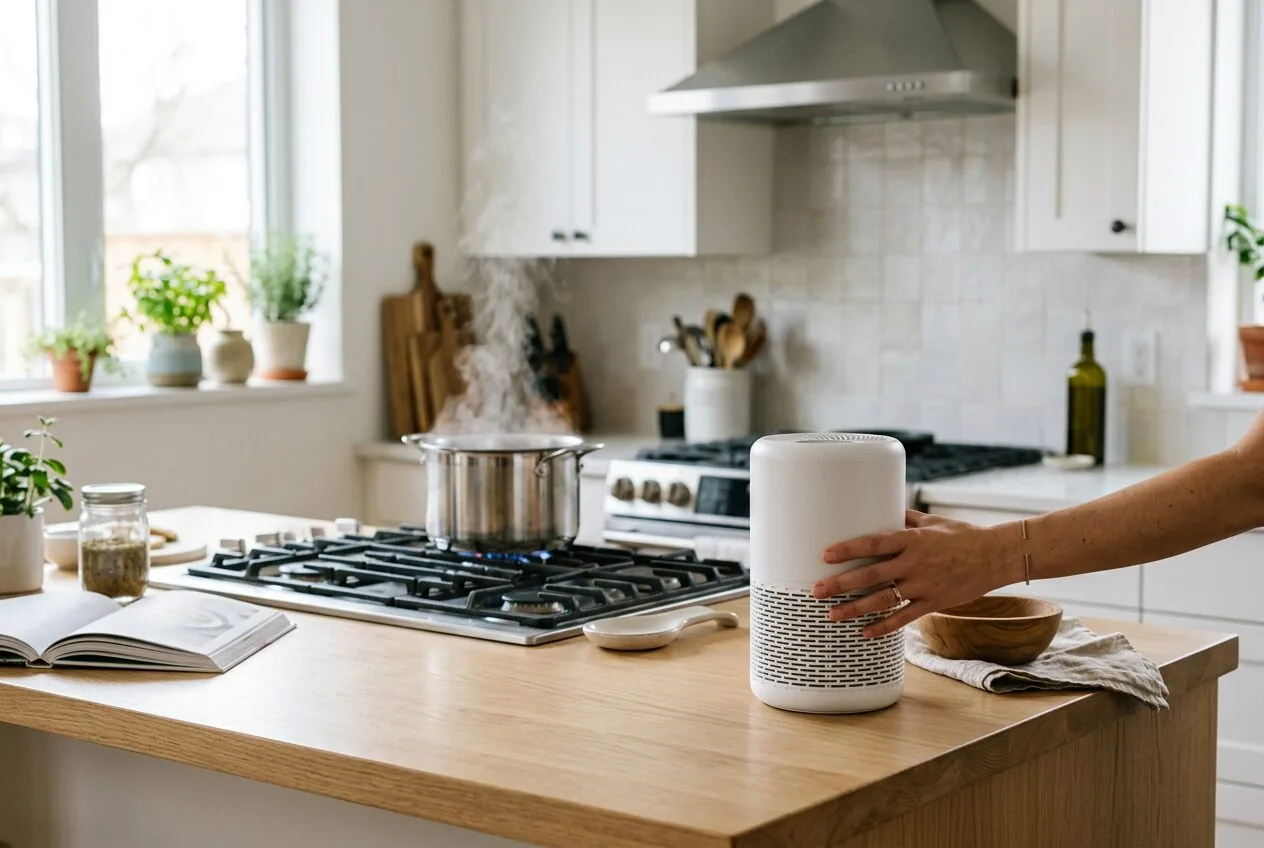
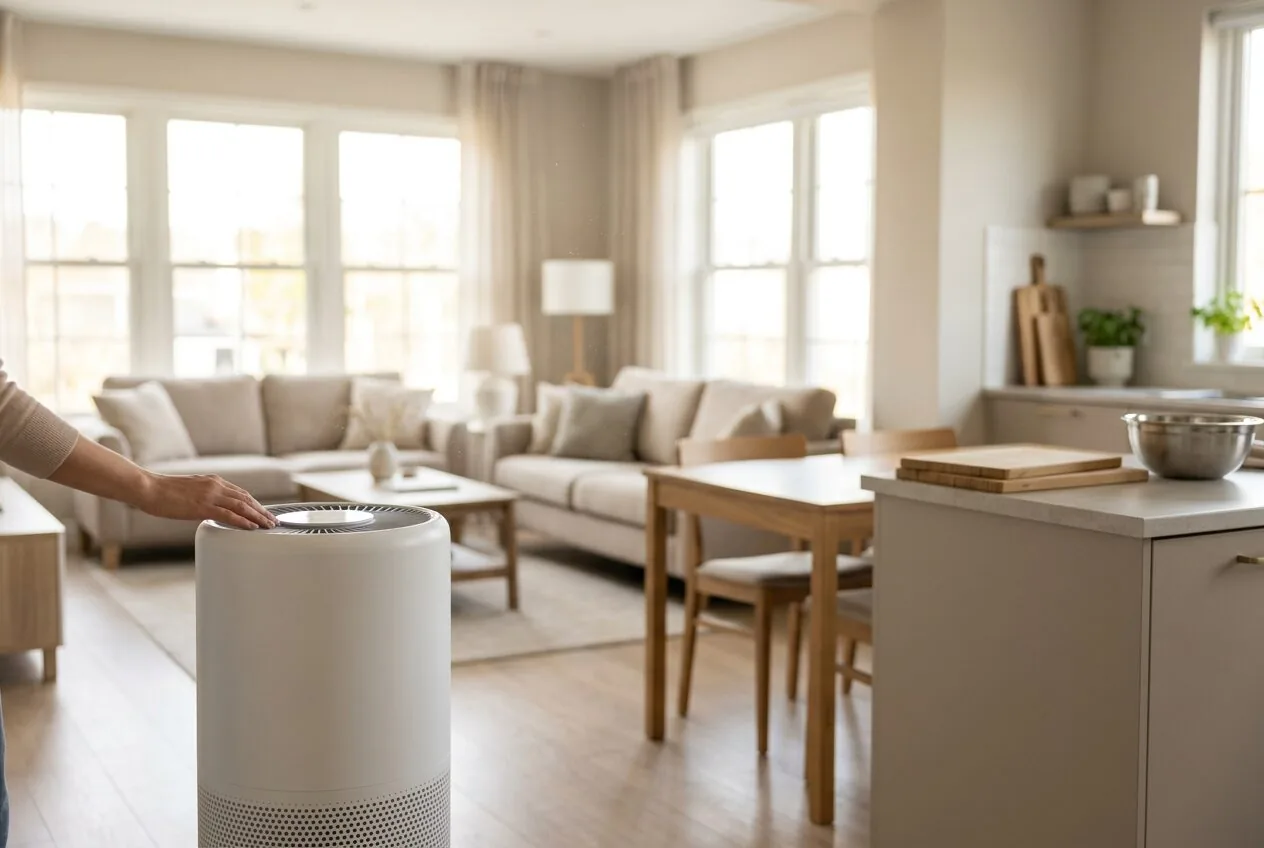
Place the purifier as close to the source as safely possible—on a counter or island a few feet from the stove, but not where it could be splattered with grease or steam. Avoid corners or inside cabinets, as this restricts airflow. If your kitchen is open-plan, placing the purifier between the cooking area and the living space can create a clean air barrier. For insights on how air quality impacts different areas of your life, see our article on how indoor air quality affects daily life.
Timing and Speed Settings
Turn the purifier on to its highest setting (often called “Turbo” or “High”) 10-15 minutes before you start cooking. Let it run on high during cooking and for at least 30-60 minutes afterward to fully scrub the air. Many modern purifiers have an “Auto” mode that uses a built-in sensor to detect rising particle levels and will automatically ramp up when you start frying or broiling.
Complement, Don’t Replace, Your Range Hood
Your range hood is your first and most important line of defense, as it captures pollutants at the source and vents them outside (if it’s ducted). Always use your hood on its highest practical setting while cooking. An air purifier is a perfect complement, capturing what the hood misses and cleaning the air throughout the rest of your home. Think of the hood as dealing with the immediate plume and the purifier as handling the ambient fallout.
What to Look for in an Air Purifier for Cooking
Not all air purifiers are equally suited for kitchen duty. Here are the key specifications and features to prioritize.
Filtration System: HEPA + Substantial Carbon
This is non-negotiable. Ensure the purifier has a True HEPA filter and a separate activated carbon filter. Look for models that specify the weight of carbon (e.g., “contains 1.5 lbs of activated carbon”)—more carbon generally means better and longer-lasting odor control.
Clean Air Delivery Rate (CADR) for Smoke
CADR measures how quickly a purifier can deliver clean air, specifically for smoke, dust, and pollen. For kitchen use, the “Smoke” CADR number is the most relevant. Choose a purifier with a Smoke CADR that is appropriate for the size of the room where it will be used. A higher CADR means faster cleaning.
Room Size Coverage and Air Changes per Hour (ACH)
Manufacturers state a maximum room size. For kitchen pollutants, it’s wise to select a purifier rated for a room slightly larger than your actual kitchen or open-plan area. This ensures it has enough power to achieve a high Air Changes per Hour (ACH)—ideally 4-5 ACH for effective contaminant removal. A model like the Hepa Air Purifiers for Home up to 3500 Ft² is designed for large, open spaces where cooking odors can travel.
Helpful Features
- Auto Mode with a Particle Sensor: Automatically adjusts fan speed based on real-time air quality, perfect for responding to cooking smoke.
- Quiet Operation on Lower Settings: Since you’ll run the purifier for extended periods, you want it to be unobtrusive. Look for decibel ratings in the mid-20s for sleep modes.
- Durable and Easy-to-Clean Housing: Kitchen environments can get greasy. A purifier with a smooth exterior that’s easy to wipe down is a practical advantage.
Recommended Products
Choosing an air purifier with robust filtration for both particles and odors is crucial for kitchen air. The following models are well-suited to handle the specific challenges posed by cooking, from quick clean-ups to managing odors in larger connected living areas. For a comprehensive look at various models and their capabilities, you can browse our air purifier reviews.
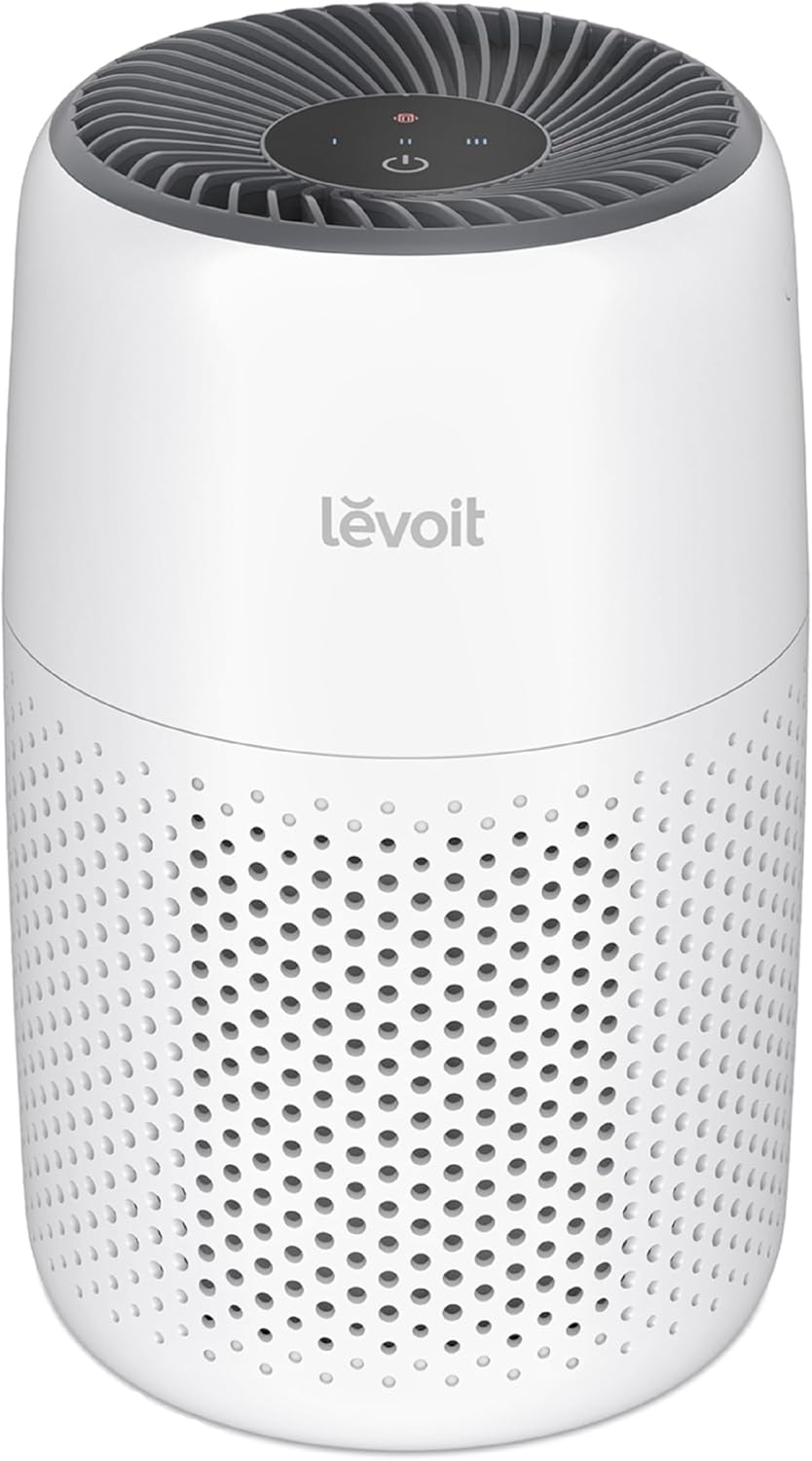
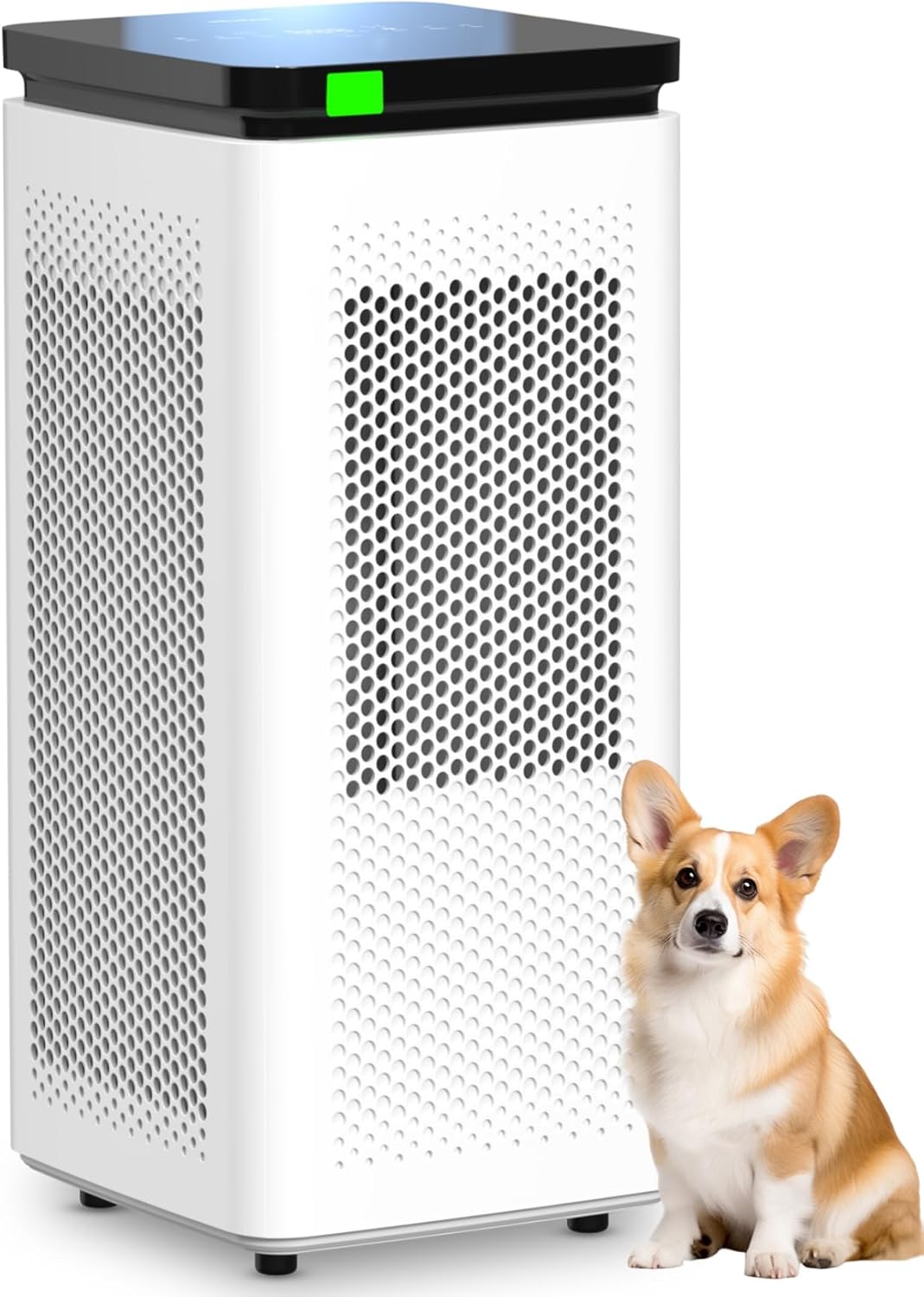
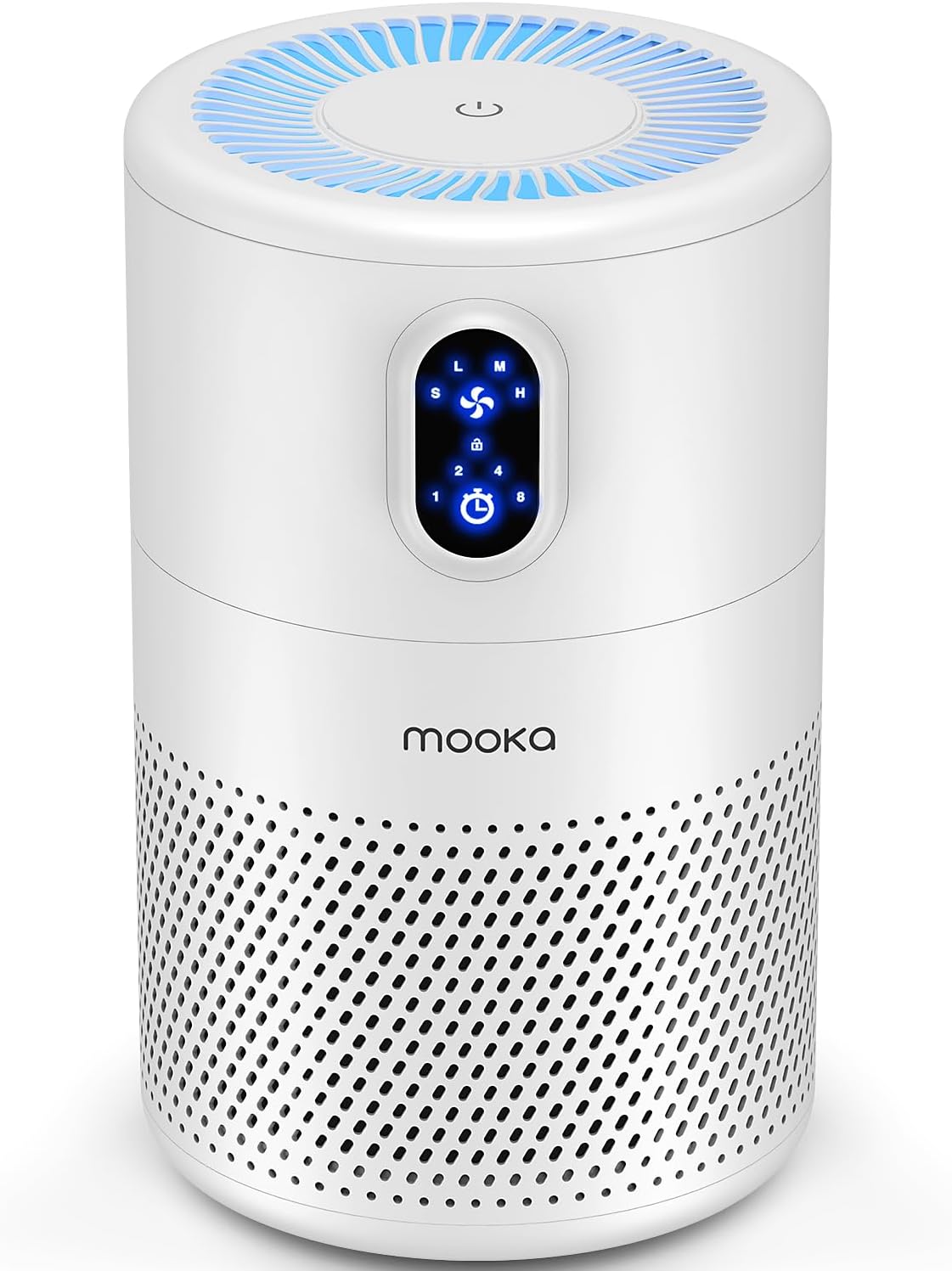

As an Amazon Associate we earn from qualifying purchases. Product prices and availability are accurate as of the date/time indicated.
For smaller kitchens or apartments, a compact and efficient model like the Levoit Air Purifiers for Bedroom Home Pets Dorm offers HEPA and carbon filtration in a space-saving design. If you need to clean the air in a room adjacent to the kitchen, such as a home office, a purifier like the YARIKI Air Purifiers for Bedroom,High Efficiency can help maintain a fresh, pollutant-free workspace, which is especially important as discussed in our article on air purifiers and air quality for remote workers.
Frequently Asked Questions
Can an air purifier completely remove strong cooking smells like fish or curry?
A purifier with a thick, high-quality activated carbon filter can significantly reduce and often eliminate these odors over time. However, for the most pungent smells, it works best in conjunction with source control: using your range hood, opening windows for cross-ventilation if possible, and promptly cleaning cooking utensils and pans. The purifier will clean the ambient air, but carbon filters have a saturation point and will need replacement eventually.
How often will I need to replace the filters if I use it for cooking daily?
Frequent cooking, especially frying, will accelerate filter wear. The prefilter may need vacuuming every two weeks. The HEPA filter typically lasts 6-12 months, but in a heavy-cooking household, check it at the 6-month mark. The activated carbon filter, which absorbs odors, may need replacement more frequently—potentially every 3-6 months—as it becomes saturated with VOC molecules. Always follow your manufacturer’s guidelines, which are based on runtime.
Is it safe to put an air purifier on the kitchen counter?
Yes, it is generally safe, provided you follow common-sense precautions. Keep it at least 3 feet away from the stovetop to avoid direct heat, splattering grease, and steam, which could damage the unit or pose a safety risk. Ensure it’s on a stable, level surface and that its air intakes and outlets are not blocked by appliances, backsplashes, or cabinets.
Do air purifiers help with grease buildup on kitchen surfaces?
Indirectly, yes. A significant amount of airborne grease is suspended in the air as fine aerosols after cooking. By capturing these grease particles in the HEPA filter, the purifier prevents them from settling on your cabinets, walls, and countertops. This can reduce the rate of sticky grease buildup, making your kitchen easier to clean. However, it does not replace the need for regular surface cleaning, especially near the stove.
Whatu0026#039;s more important for cooking fumes: a high CADR or a heavy carbon filter?
You need both, but they serve different purposes. A high Smoke CADR is crucial for quickly removing the visible smoke and particulate matter. A heavy carbon filter is essential for removing the gaseous odors and VOCs that linger long after the smoke clears. For comprehensive post-cooking clean-up, prioritize a purifier that scores well in both categories. For a deeper dive into removing smoke, you can explore our article on u003ca href=u0022https://airpurifierguides.com/can-air-purifiers-remove-kitchen-smoke/u0022u003ecan air purifiers remove kitchen smokeu003c/au003e.
Final Thoughts
Cooking fills our homes with nourishment and warmth, but it also fills the air with an invisible cocktail of pollutants. An air purifier equipped with a True HEPA and a robust activated carbon filter is a powerful tool to reclaim your indoor air quality. It acts as a constant, silent partner to your range hood, capturing what ventilation misses and ensuring that the comfort of your home extends to the very air you breathe.
By understanding the pollutants, choosing the right purifier with adequate CADR and filtration, and using it strategically, you can significantly reduce lingering odors, clear hazy air, and create a healthier environment. The result is a home that smells fresh and clean, where the only reminder of a great meal is the satisfied feeling it left behind, not the air it left behind. For more tips and information on managing your home’s environment, visit our main blog page.
About the author
Lead content creator at AirPurifierGuides.com. Sarah is a senior product researcher in health-tech with years of experience testing smart home and HVAC devices. She writes most of our reviews, CADR comparisons, and filter analyses.