How to Use Air Purifiers and Dust Control Strategies for a Cleaner Home
A practical guide on combining an effective air purifier with proactive cleaning habits to significantly reduce household dust and improve indoor air quality.
 By Emily Foster
Updated October 19, 2026
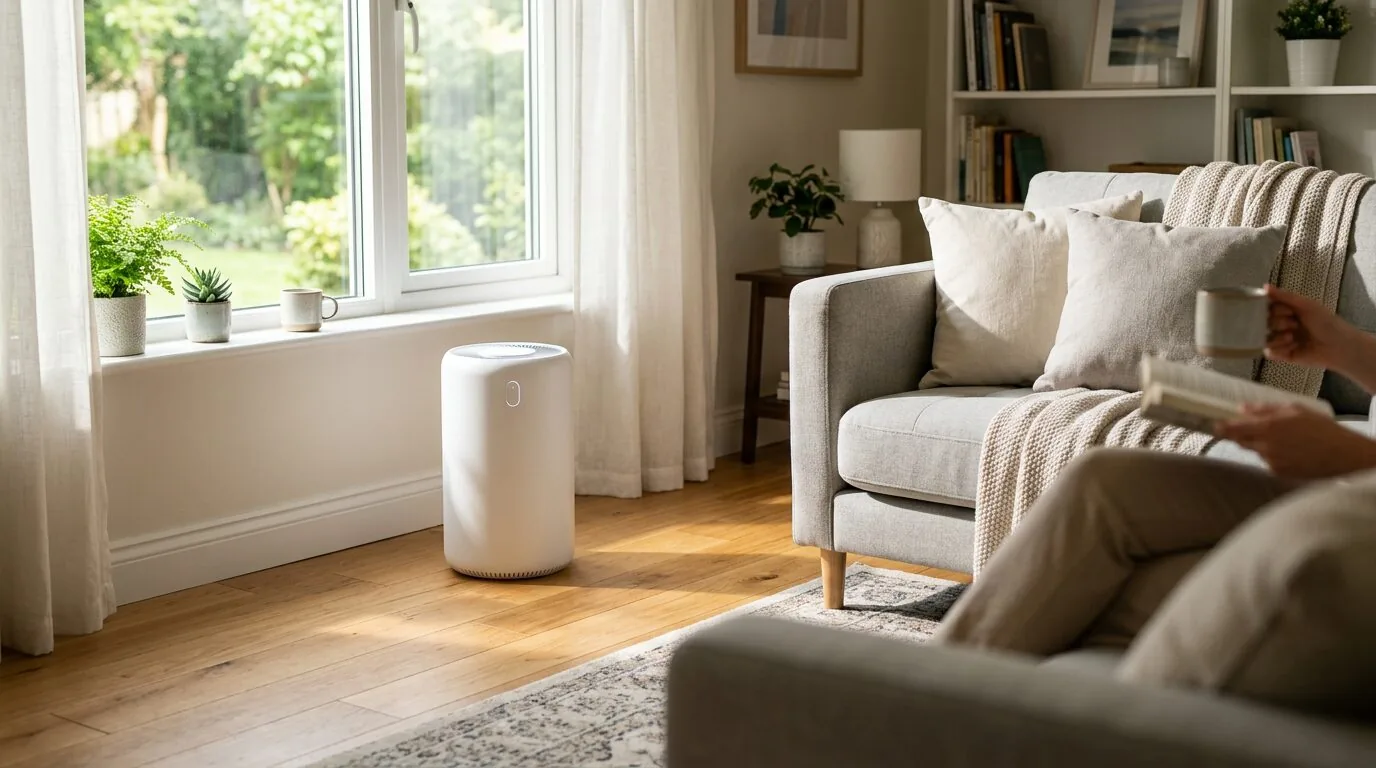
Yes, a comprehensive dust control strategy combines a quality air purifier with targeted cleaning habits. An air purifier with a HEPA filter can capture airborne dust particles, while regular vacuuming, dusting, and managing humidity prevent dust from accumulating in the first place. This dual approach tackles both the symptom and the source for a cleaner, healthier home.
Dust is more than just a nuisance; it’s a complex mixture of skin cells, fibers, pollen, and microscopic particles that can affect air quality and trigger allergies. While you can’t eliminate dust entirely, you can dramatically reduce it. This guide will walk you through a multi-layered strategy, pairing the right air purification technology with simple, effective household habits to keep your space fresher.
What You’ll Need
- A vacuum cleaner with a HEPA filter attachment.
- Microfiber cloths and a damp mop.
- High-quality doormats for every entrance.
- An effective air purifier, like the Aurora AR100W Air Purifier for Mold, Smoke, Dust or the AIRROMI Air Purifiers for Quiet Bedroom Home Pets, sized for your room.
- Replacement filters for your purifier, such as the 2 Pack MK04 Filter Replacements For AROEVE MK04.
How to Implement a Dust Control Strategy, Step by Step
Step 1: Understand Your Dust Sources
Effective control starts with knowing where dust comes from. Outdoor dust enters on shoes, pets, and through windows. Indoor sources include shedding skin cells, fabric fibers from carpets and upholstery, and even cooking residue. Identifying the main contributors in your home helps you target your efforts more efficiently.
Step 2: Choose and Position Your Air Purifier
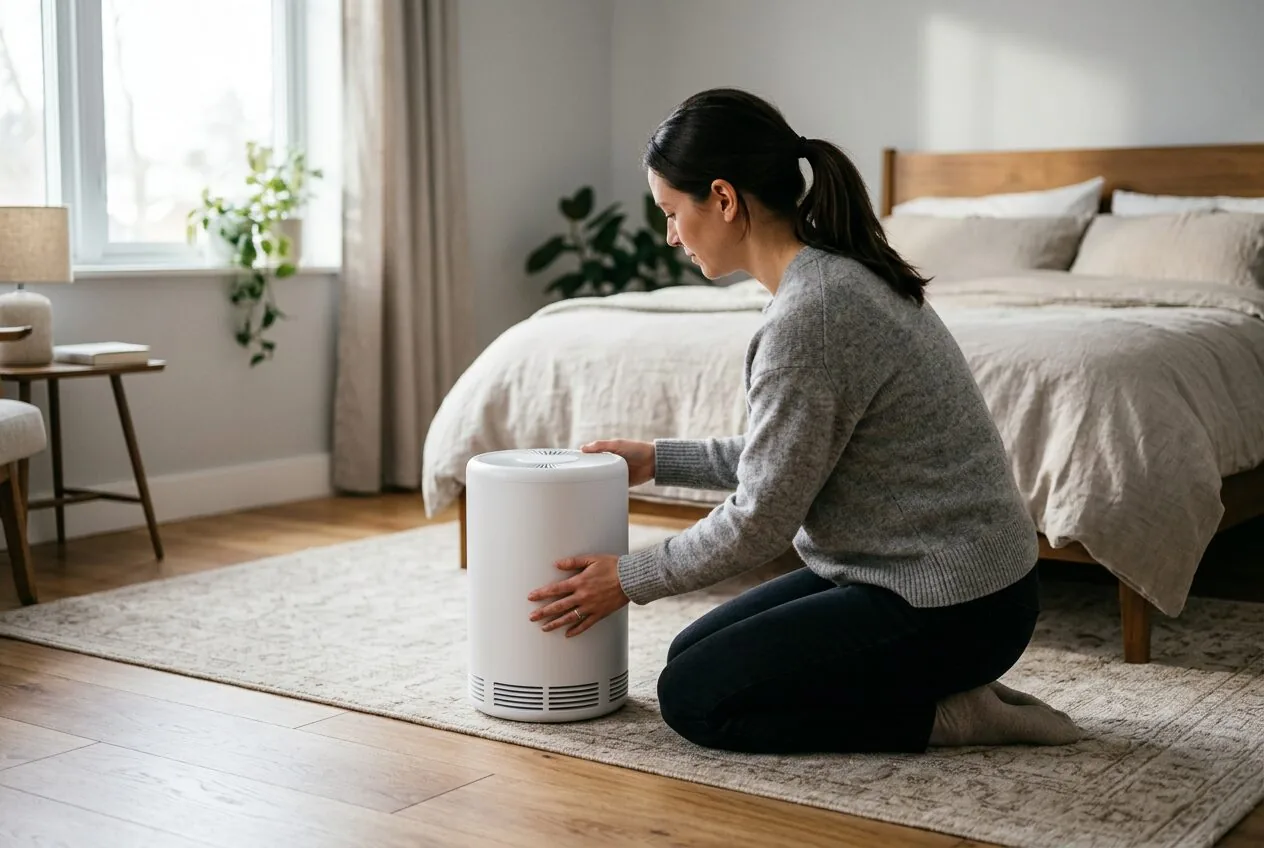
Select an air purifier with a true HEPA filter, which is certified to capture 99.97% of particles as small as 0.3 microns. Ensure its Clean Air Delivery Rate (CADR) is appropriate for your room size. Place the purifier in the room where you spend the most time, like a bedroom or living room, and keep it away from walls and furniture for optimal airflow.
Step 3: Establish a Proactive Cleaning Routine
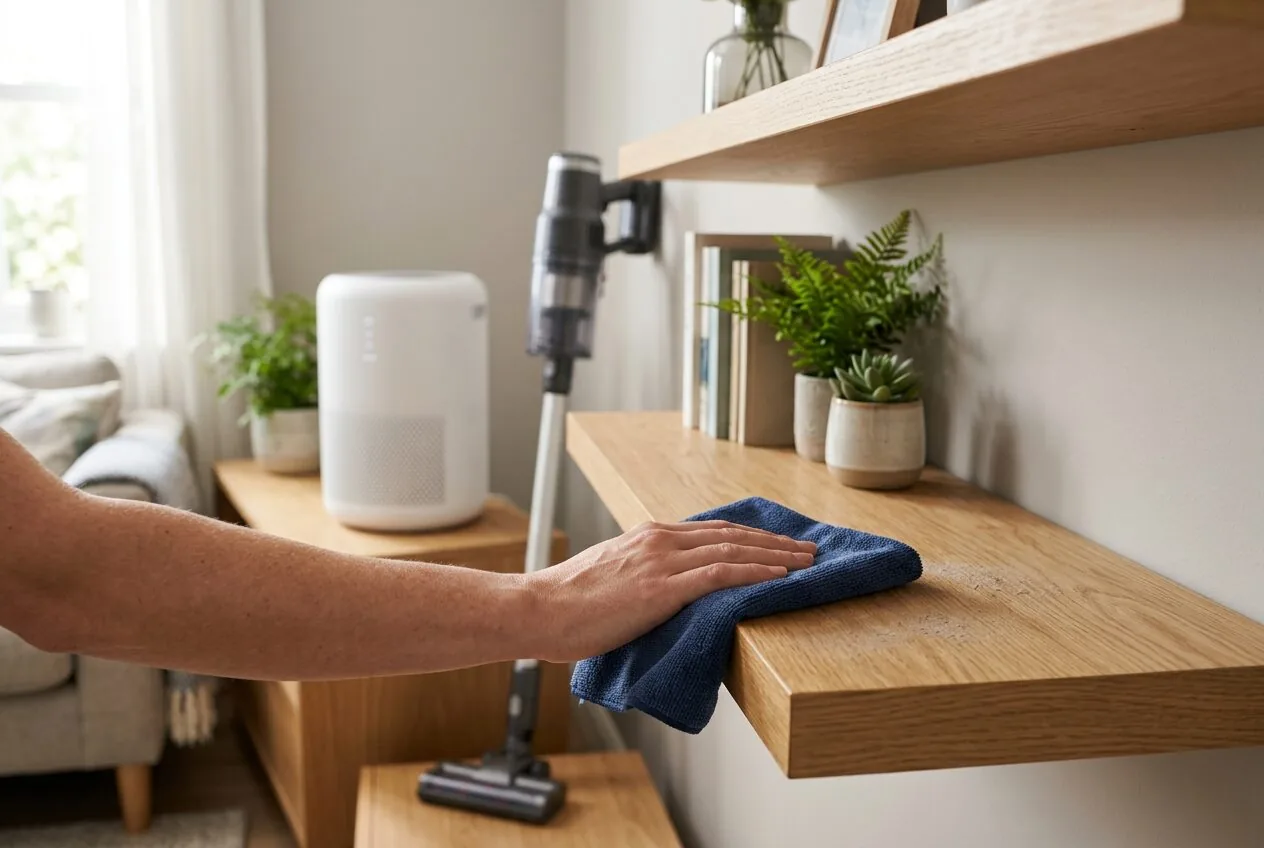
Your air purifier captures what’s in the air, but you must stop dust from becoming airborne. Vacuum carpets and upholstery at least twice a week using a HEPA-filter vacuum. Use damp microfiber cloths to dust surfaces, as dry dusting often just redistributes particles. Wash bedding and soft furnishings regularly in hot water.
Step 4: Create Entryway Barriers
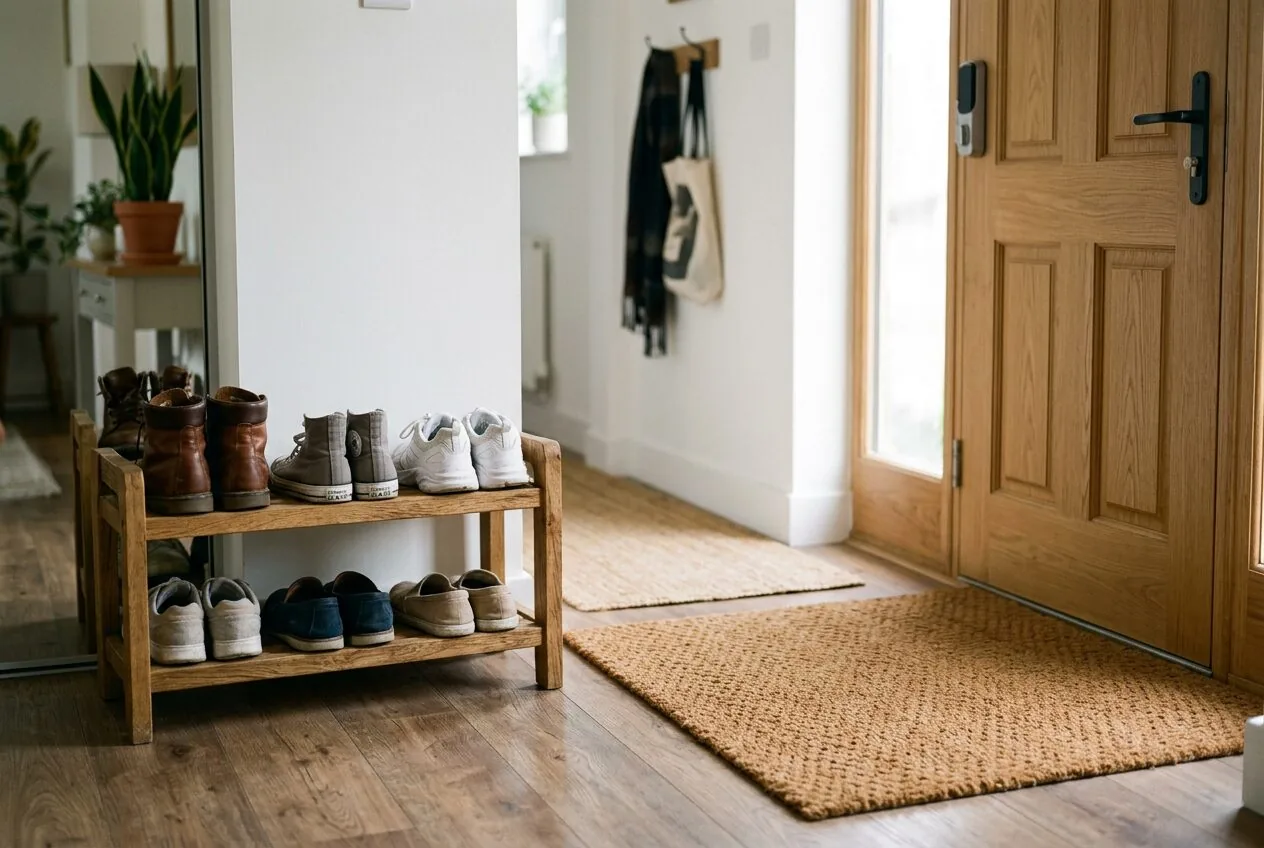
A significant amount of dust is tracked in from outside. Place high-quality, scraper-style doormats at every entrance. Adopt a “no shoes indoors” policy to prevent dirt, pollen, and other outdoor debris from spreading throughout your home. This simple habit is one of the most effective ways to reduce the incoming dust load.
Step 5: Manage Humidity and Ventilation
Dust mites, a major component of household dust, thrive in humid environments. Use a dehumidifier or air conditioner to keep indoor relative humidity between 30% and 50%. Ensure your home is well-ventilated, especially during and after activities like cooking or showering, to remove moisture and airborne particles.
Step 6: Maintain Your Air Purifier Faithfully
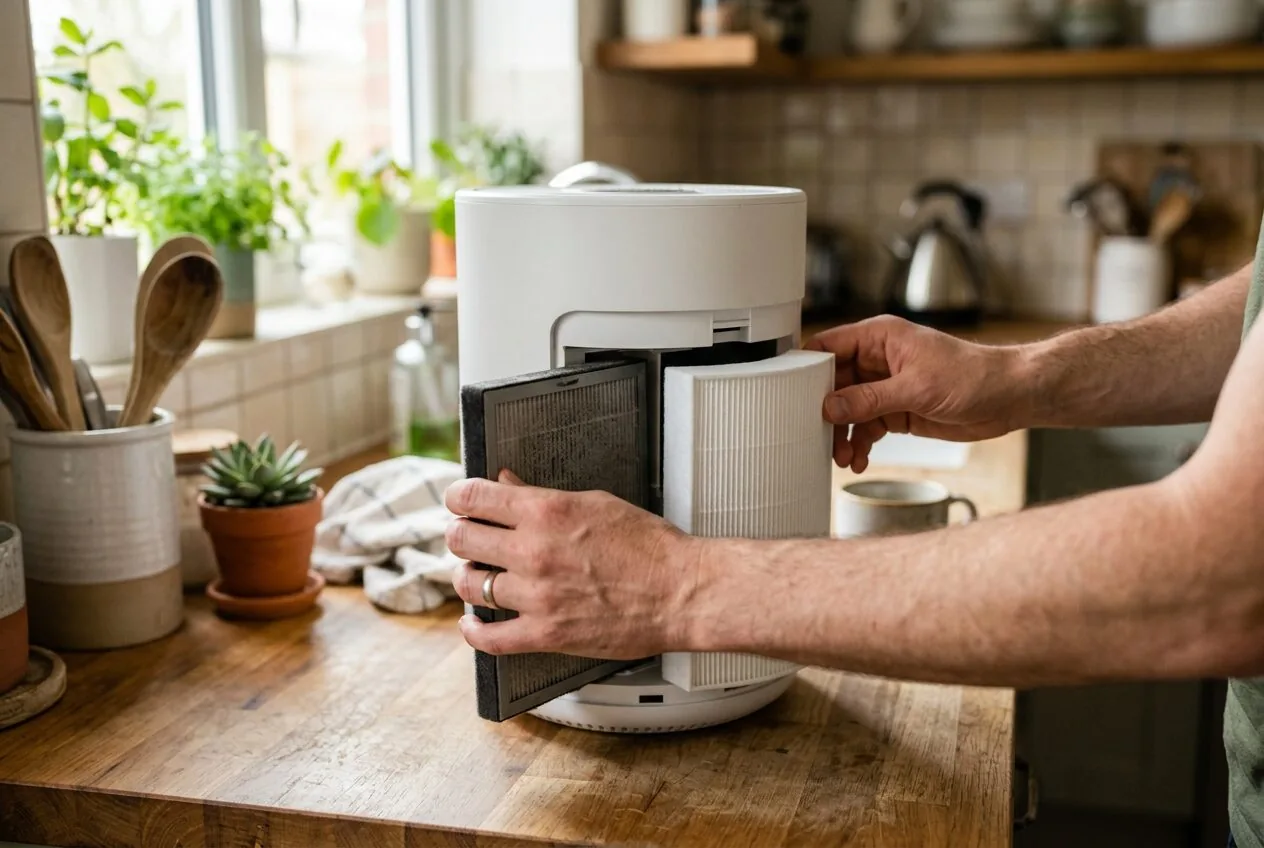
An air purifier is only as good as its filter. Check the pre-filter monthly and vacuum it if it’s reusable. Replace the HEPA and carbon filters according to the manufacturer’s schedule or when the indicator light alerts you. A clogged filter reduces efficiency and can strain the motor. Keeping a spare filter on hand ensures you never miss a replacement.
Step 7: Declutter and Choose Furnishings Wisely
Clutter collects dust. Minimize knick-knacks, stacks of papers, and decorative items that are difficult to clean. When choosing new furnishings, opt for hard-surface flooring over carpet, and select leather or vinyl upholstery instead of heavy fabrics, which are harder to keep dust-free.
Recommended Products
These tools can support different aspects of your dust control plan, from quiet bedroom purification to tackling large open spaces.


As an Amazon Associate we earn from qualifying purchases. Product prices and availability are accurate as of the date/time indicated.
Common Mistakes to Avoid
- Neglecting filter replacements: Running an air purifier with a dirty filter is wasteful and ineffective.
- Dry dusting: This simply kicks dust back into the air. Always use a damp or treated cloth.
- Placing the purifier in a corner: This restricts airflow. Keep it in an open area for best circulation.
- Forgetting to clean the pre-filter: A clogged pre-filter makes the main HEPA filter work harder and clog faster.
- Using the wrong vacuum: A vacuum without a HEPA filter can exhaust fine dust particles back into the room.
- Ignoring humidity: High humidity encourages dust mites, increasing the biological component of your dust.
Frequently Asked Questions
Do air purifiers get rid of dust on surfaces?
No, air purifiers are designed to clean the air, not surfaces. They capture airborne dust particles, which prevents them from settling. However, dust that has already settled on furniture or floors must be removed through vacuuming and damp wiping. The purifier helps by reducing the amount of dust available to settle in the future.
How often should I run my air purifier for dust control?
For continuous dust control, run your air purifier on a low or automatic setting 24/7. This maintains a constant clean airflow, capturing new dust particles as they become airborne. Modern, energy-efficient models are designed for continuous operation without significantly impacting your electricity bill.
Is an ionizer or ozone generator good for dust?
Ionizers can cause dust particles to clump together and fall out of the air onto surfaces, which you then must clean. Devices like the u003ca href=u0022https://airpurifierguides.com/elixrion-e03-ozoneg01-review/u0022u003eOzone Generator – 80,000mg/h High-Capacity O3 Airu003c/au003e are intended for severe odor removal in unoccupied spaces, not for ongoing dust control in living areas. Ozone is a lung irritant and is not recommended for continuous use around people or pets. For dust, a standard HEPA filter purifier is the safer, more effective choice.
Can air purifiers help with dust mite allergies?
Yes, indirectly. Air purifiers with HEPA filters can capture dust mite allergens (their feces and body fragments) that have become airborne. However, live dust mites live in bedding, carpets, and upholstery. To control them, you must combine air purification with allergen-proof mattress covers, frequent hot washing of bedding, and humidity control.
What size air purifier do I need for my living room?
Calculate the square footage of your room (length x width). Choose a purifier whose recommended coverage area is at least that size. For open floor plans, consider a model rated for larger spaces, such as the u003ca href=u0022https://airpurifierguides.com/ameifu-f1-review-2/u0022u003eAir Purifiers for Home Large Room with Remoteu003c/au003e. It’s often better to slightly oversize the purifier for more effective air changes per hour.
Final Thoughts
Controlling dust is not about a single magic solution but about implementing a consistent, layered system. A capable air purifier acts as your first line of defense, working silently to clean the air you breathe. When paired with smart cleaning habits, entryway management, and humidity control, you create an environment where dust struggles to gain a foothold.
Start by choosing the right purifier for your needs and establishing one or two new habits, like diligent vacuuming or a no-shoes policy. Over time, these strategies become routine, leading to a noticeably cleaner home and better indoor air quality. For more guidance on specific air quality challenges, explore our other buying guides, such as our article on air purifiers and mold prevention strategies.
About the author
Editor at AirPurifierGuides.com. Emily has a background in professional communication and has worked with several health and technology publications. She edits our content for accuracy and answers reader questions about air quality.