Air Purifiers and New Furniture Off-Gassing: A Complete Guide
Learn how air purifiers can help protect you from volatile organic compounds released by new furniture and the key features to look for.
 By Emily Foster
Updated October 19, 2026
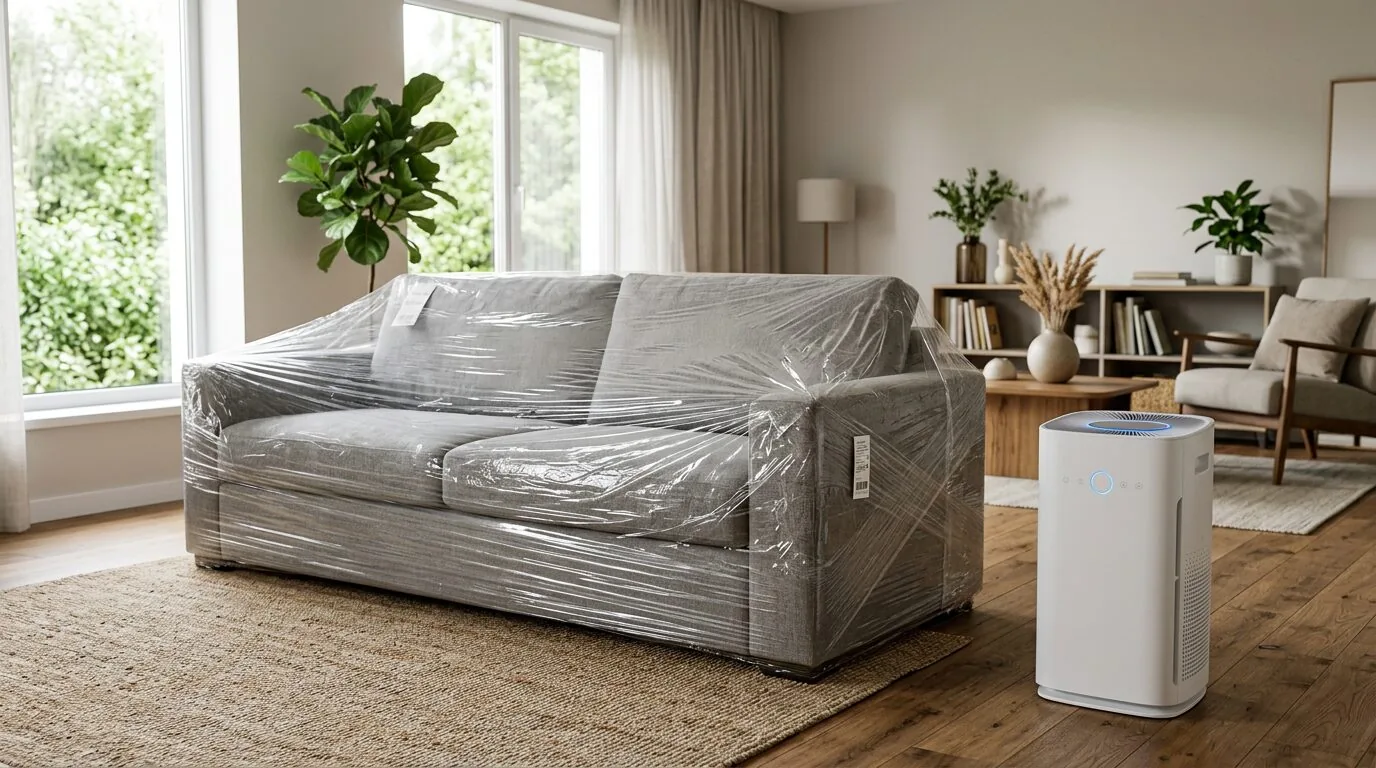
Bringing home a new sofa, mattress, or cabinet is exciting, but that “new furniture smell” is a warning sign. It’s caused by volatile organic compounds (VOCs) off-gassing from materials like glues, paints, and synthetic foams. These chemicals, including formaldehyde and benzene, can cause headaches, dizziness, and irritate your eyes and throat. An air purifier with the right filtration technology can be a powerful tool to reduce these pollutants and improve your indoor air quality.
This guide explains what off-gassing is, how air purifiers tackle it, and what you need to know to choose an effective unit. You’ll learn which features are essential and get practical tips to combine with an air purifier for a healthier home environment.
What Is Off-Gassing and Why Is It a Concern?
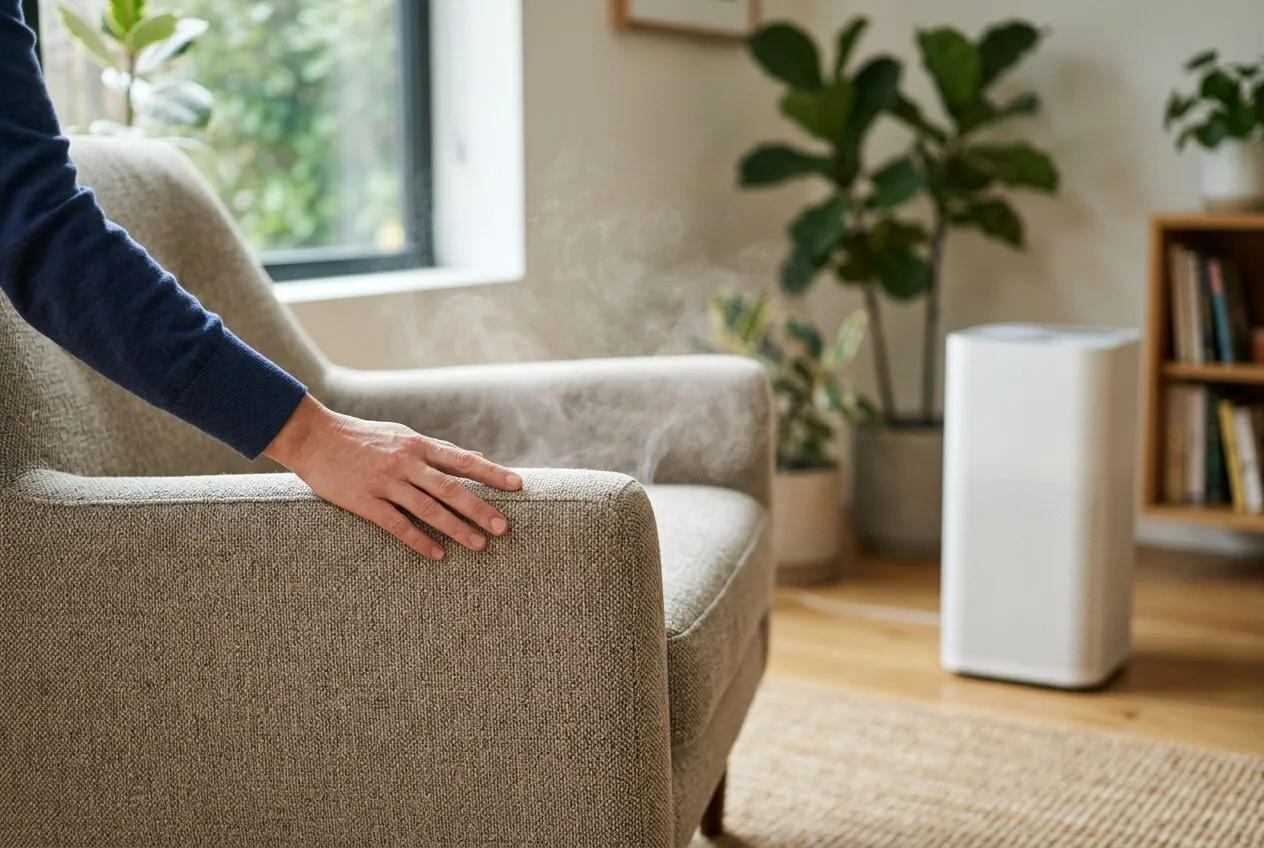
Off-gassing is the process where manufactured materials release volatile organic compounds into the air. These VOCs are gases emitted from solids or liquids. In furniture, common sources include pressed wood products (like plywood and particleboard), upholstery fabrics, adhesives, and fire-retardant treatments. The release is most intense when the item is new and can continue at lower levels for months or even years.
Short-term exposure to high levels can lead to immediate symptoms like nausea, headaches, and respiratory irritation. Long-term exposure to certain VOCs has been linked to more serious health risks. While ventilation is the first line of defense, it’s not always practical, especially in winter or in rooms with few windows. This is where an air purifier becomes a valuable, continuous solution.
How Air Purifiers Remove VOCs and Odors
The Role of Activated Carbon
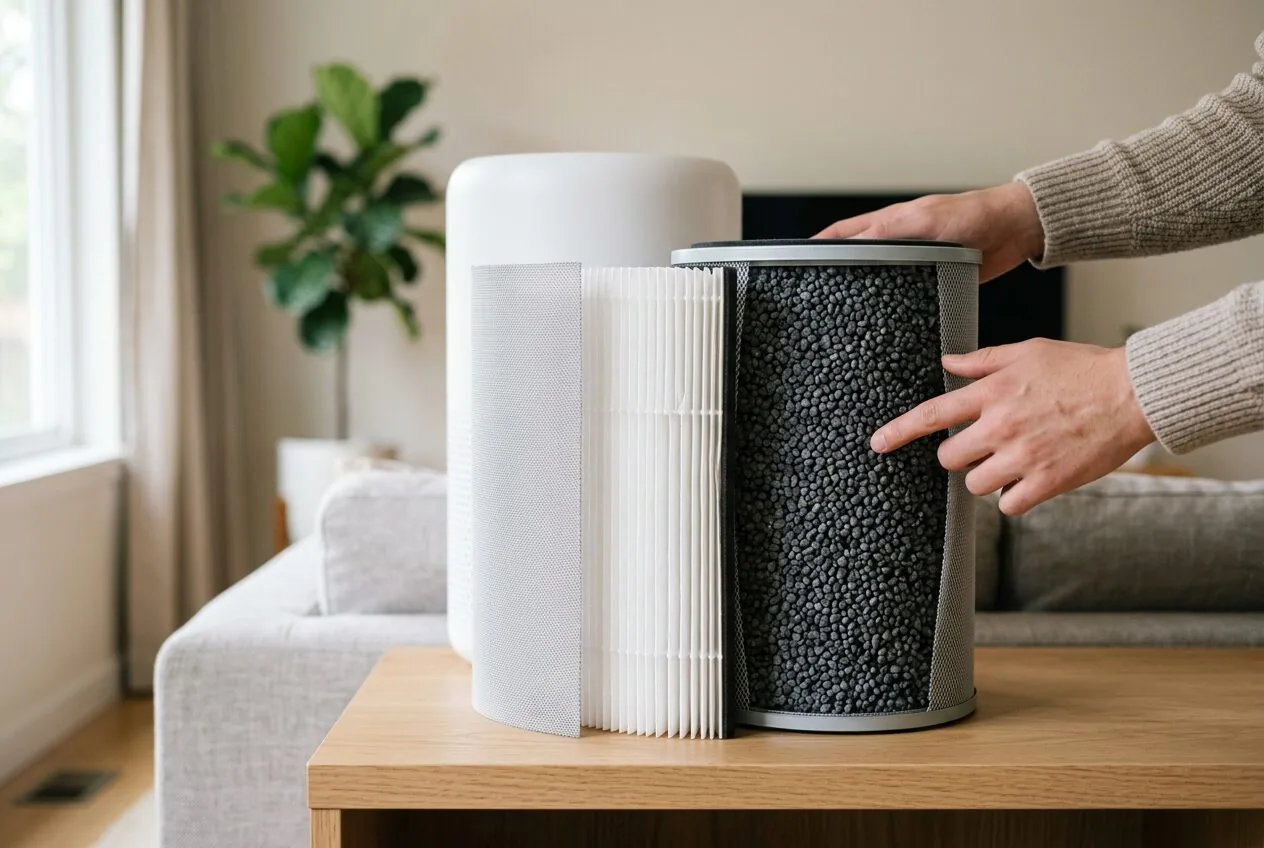
A standard True HEPA filter is excellent for trapping particles like dust and pollen, but it cannot capture gaseous pollutants like VOCs. For that, you need a substantial amount of activated carbon. This highly porous material acts like a sponge, adsorbing gases, chemicals, and odors onto its vast surface area. The more carbon a purifier has—often measured by weight—the more VOCs it can capture before the filter needs replacing.
Specialized Gas-Phase Filters
Some higher-end air purifiers go beyond basic carbon and use specialized gas-phase filters. These may contain potassium permanganate or other oxidizing agents that don’t just trap VOCs but help break them down into harmless substances like water and carbon dioxide. If you are particularly sensitive or have brought several new items into your home, a purifier with this enhanced filtration can be a worthwhile investment.
Key Features to Look for in an Air Purifier for Off-Gassing
Not all air purifiers are created equal for this specific task. When shopping for a unit to combat furniture off-gassing, prioritize these features.
- A Heavy Carbon Filter: Look for specifications mentioning “activated carbon,” “charcoal,” or “gas filter.” Avoid models with only a thin carbon mesh wrapped around a HEPA filter; these are insufficient. For example, the Airdog Air Purifier for Home Pets Bedroom Dorm features a substantial carbon filter designed to tackle odors and VOCs effectively.
- Appropriate Room Size Coverage: Match the purifier’s Clean Air Delivery Rate (CADR) and recommended room size to the space where the new furniture is located. A small desktop unit won’t clean the air in a large living room. For larger spaces, a model like the Air Purifiers for Home Large Rooms is designed to move more air volume.
- Quiet Operation on Low Settings: Since you’ll likely run the purifier continuously, especially in a bedroom, a quiet fan is essential for sleep and daily life. Many models offer a “sleep” or low-speed mode.
- Smart Features (Optional): Features like auto mode, which uses a sensor to adjust fan speed based on air quality, can be helpful. However, most standard VOC sensors in consumer purifiers detect only a limited range of gases.
Recommended Products
Choosing an air purifier with a robust carbon filter is crucial for addressing the chemical odors from new furniture. Here are a few models that incorporate this important technology alongside HEPA filtration to provide comprehensive cleaning.


As an Amazon Associate we earn from qualifying purchases. Product prices and availability are accurate as of the date/time indicated.
How to Use an Air Purifier Effectively for New Furniture
Simply placing an air purifier in the room is a good start, but these strategies will maximize its effectiveness against off-gassing.
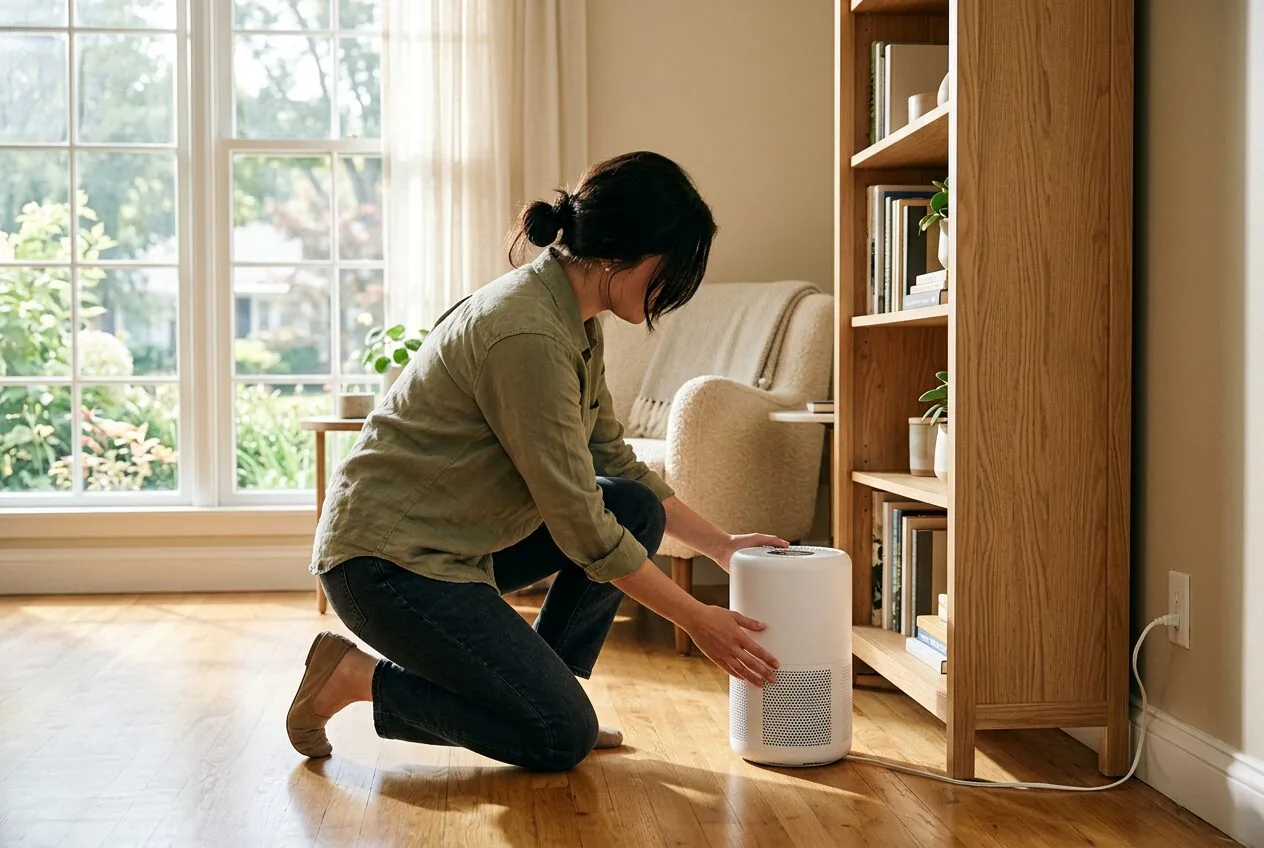
- Place It Close to the Source: Position the air purifier as close to the new furniture item as practical. Since VOCs are released directly from the material, capturing them at the source is most efficient.
- Run It Continuously at First: For the first few weeks, when off-gassing is most intense, run the purifier on a medium or high setting 24/7. After the strong smell dissipates, you can switch to a lower, quieter setting or auto mode.
- Combine with Ventilation: When weather permits, open windows to create a cross-breeze. Use the air purifier in conjunction with this to help flush VOCs outside. This is one of the most effective strategies for improving indoor air quickly.
- Don’t Forget Filter Replacement: The carbon filter will become saturated over time. Follow the manufacturer’s replacement schedule, but be prepared to change it sooner if you notice odors returning. For more on maintenance, see our guide on how to clean an air purifier filter.
Frequently Asked Questions
How long does new furniture off-gas?
The most intense off-gassing typically occurs during the first few weeks after unpacking. However, lower levels of VOCs can continue to be released for several months to a few years. The duration depends on the materials, the manufacturing process, and environmental factors like temperature and humidity.
Can an air purifier completely eliminate the u0026quot;new furnitureu0026quot; smell?
While a high-quality air purifier with a strong carbon filter can significantly reduce the concentration of VOCs and associated odors, it may not eliminate the smell entirely, especially in the first few days. It works best as part of a combined strategy that includes ventilation and allowing the furniture to air out in a well-ventilated space before bringing it indoors, if possible.
Are HEPA filters alone enough for off-gassing?
No. HEPA filters are designed to capture solid particles. VOCs are gaseous chemicals that pass right through a standard HEPA filter. You specifically need an air purifier that includes a deep-bed activated carbon filter or other specialized gas-phase filtration to adsorb these chemicals.
Where is the best place to put the air purifier for a new couch?
Place the air purifier on the floor or a low table near the new couch, ideally on the same side of the room as your primary seating area. This allows the unit to draw in the VOC-laden air directly from the source and recirculate cleaner air where you breathe. Avoid tucking it into a corner behind the furniture.
Final Thoughts
Protecting your indoor air from new furniture off-gassing is a smart step for your comfort and health. An air purifier equipped with a substantial activated carbon filter is a highly effective tool for this job, working continuously to reduce your exposure to VOCs. Remember, the goal is to manage and reduce these pollutants, and a purifier is a key part of that solution.
For smaller items or focused areas, a compact unit like the Pure Enrichment PureZone Breeze Tabletop Air can be a good choice for a home office or bedside. Ultimately, by understanding how off-gassing works and choosing the right air purifier features, you can breathe easier and enjoy your new furnishings with greater peace of mind. For more information on tackling different airborne contaminants, explore our other buying guides.
About the author
Editor at AirPurifierGuides.com. Emily has a background in professional communication and has worked with several health and technology publications. She edits our content for accuracy and answers reader questions about air quality.