Air Purifiers and Airborne Particles: What You Need to Know
Learn how air purifiers capture different types of airborne particles, from dust and pollen to viruses and VOCs, and how to choose the right one for your needs.
 By Ethan Wright
Updated October 19, 2026
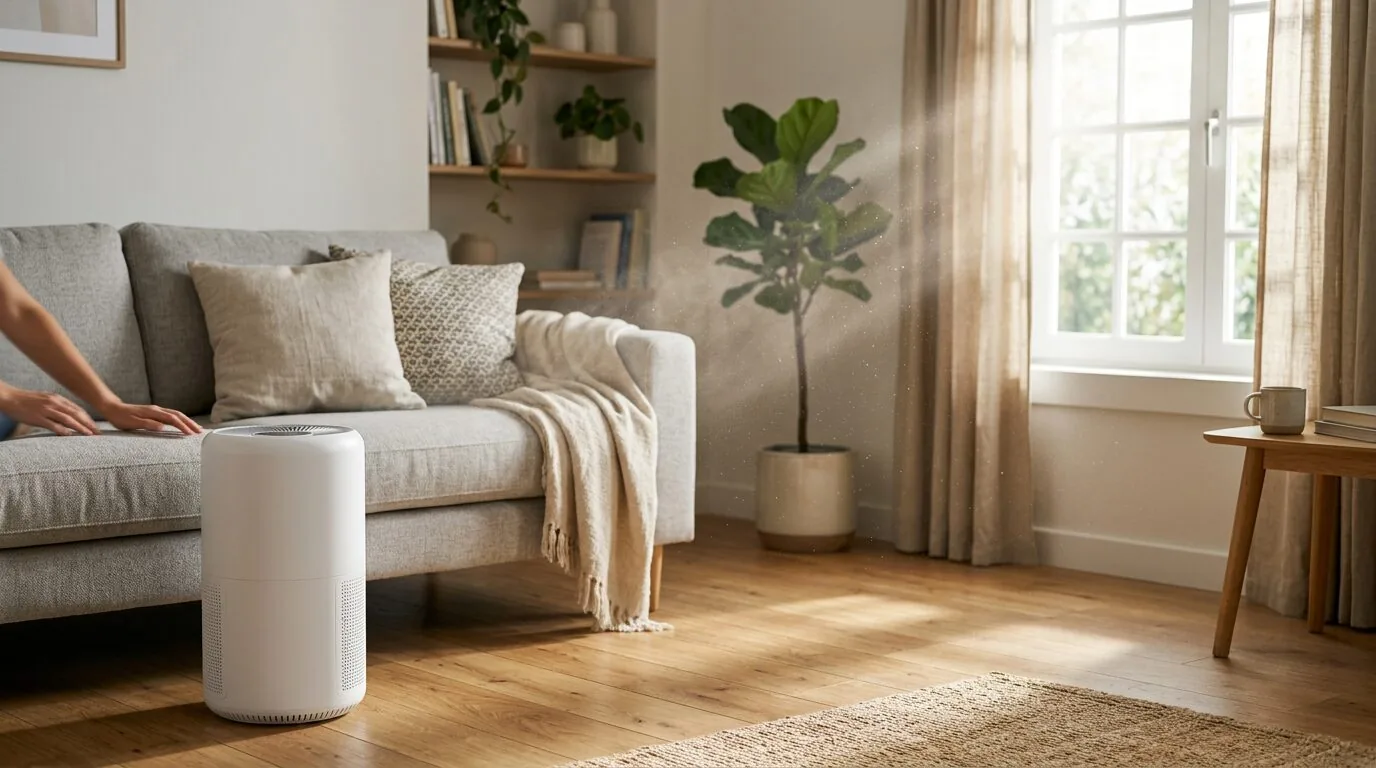
Air purifiers work by pulling air through internal filters to capture harmful airborne particles, improving indoor air quality. Their effectiveness depends on the type of filter, the size of the particles, and the unit’s capacity for your room size.
You breathe in countless invisible particles every day. From dust and pet dander to pollen and mold spores, these microscopic bits can affect your comfort, health, and overall well-being. Understanding what air purifiers can and cannot filter out is key to making an informed decision and breathing cleaner air at home or in the office.
How Air Purifiers Capture Airborne Particles
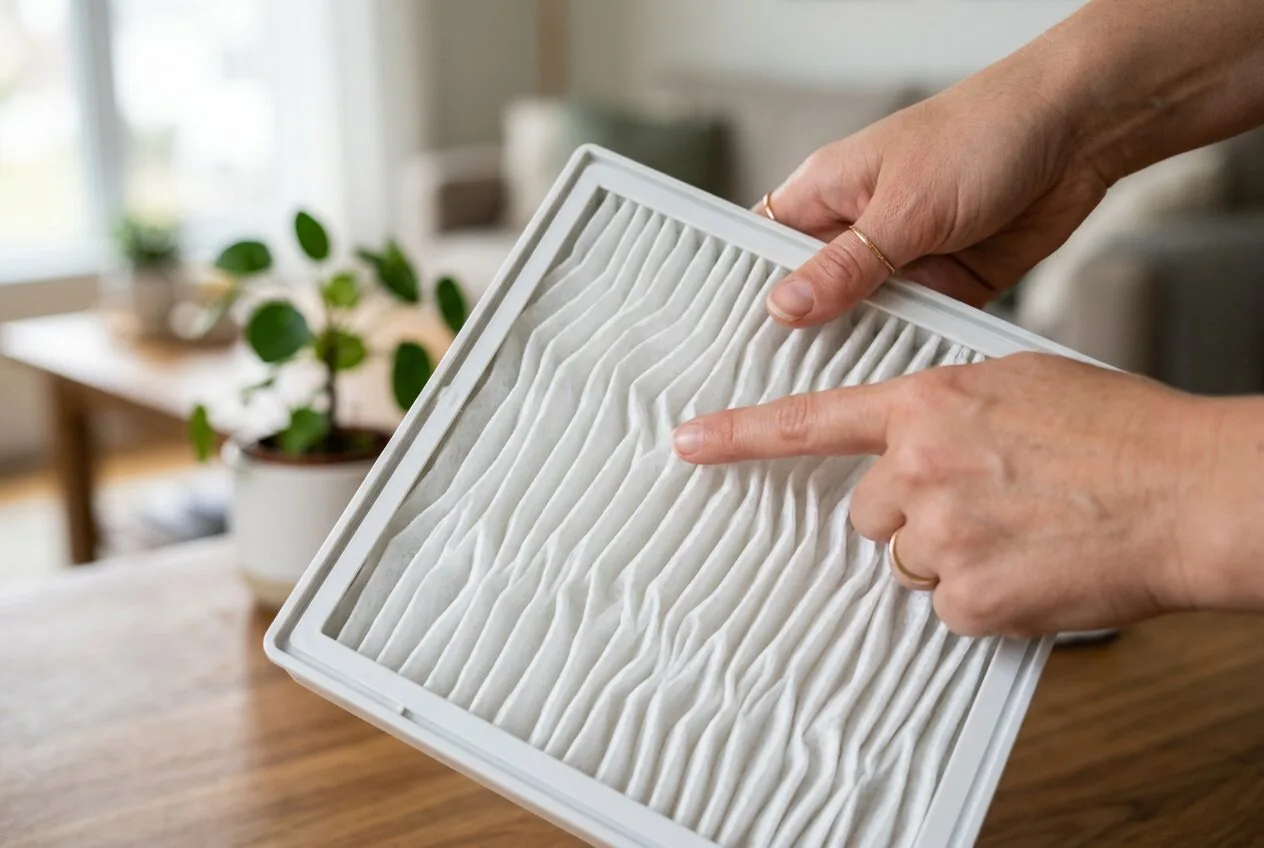
Most modern air purifiers use a multi-stage filtration process to tackle particles of different sizes and types. The core component is typically a mechanical filter, like a HEPA filter, which physically traps particles as air is forced through it. Pre-filters catch larger debris first, protecting the main filter and extending its life.
Some models add other technologies. Activated carbon filters adsorb gases and odors, while UV-C light aims to disrupt the DNA of microorganisms. It’s important to note that filtration is a mechanical process; the air must physically pass through the filter to be cleaned, which is why proper placement and running time are crucial.
The Role of HEPA Filters
True HEPA (High-Efficiency Particulate Air) filters are the gold standard for particle removal. To earn the designation, a filter must capture 99.97% of particles that are 0.3 microns in size. This size is the most penetrating particle size (MPPS), meaning it’s the hardest to catch. HEPA filters are even more effective at capturing both larger and smaller particles.
Types of Airborne Particles and Purifier Performance
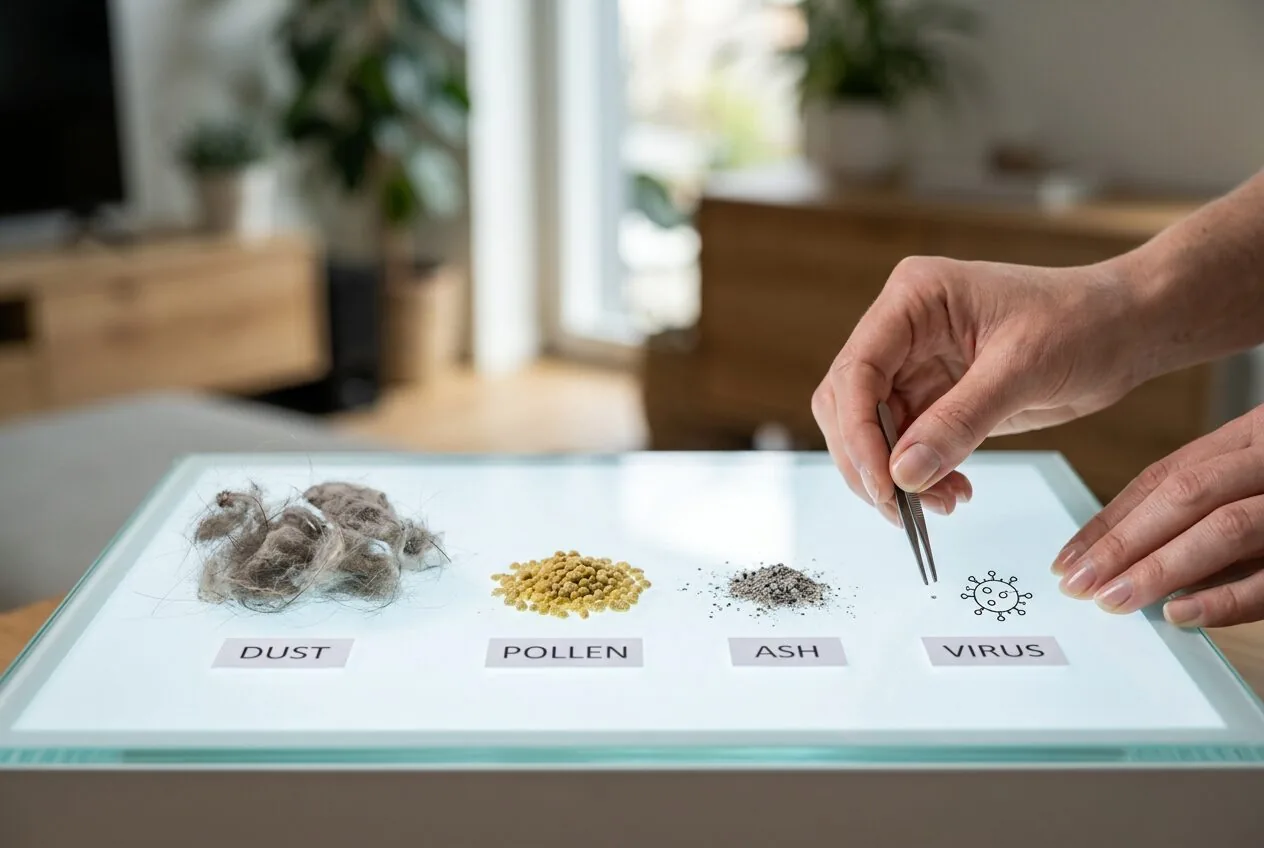
Not all particles are the same. Their size, source, and behavior determine how well an air purifier can remove them from your air.
Large Particles (Over 10 Microns)
These are the visible offenders. Dust, lint, pet hair, and large pollen grains fall into this category. They settle quickly on surfaces but can be stirred up by activity. A basic pre-filter or even a good vacuum with a HEPA filter can manage these well. Most air purifiers capture them with ease.
Medium Particles (1 to 10 Microns)
This is the primary battleground for air purifiers and allergy sufferers. It includes mold spores, smaller pollen, dust mite allergens, and some bacteria. These particles can stay suspended in the air for hours. A true HEPA filter is exceptionally effective at removing these, which can significantly reduce allergy and asthma triggers. For more on managing allergens, see our guide on indoor air quality tips for allergy sufferers.
Fine and Ultra-Fine Particles (Under 1 Micron)
This is where filtration gets challenging. This category includes:
- Viruses: Typically range from 0.02 to 0.3 microns. While individual virions are tiny, they often travel attached to larger respiratory droplets or aerosols, which HEPA filters can capture. Some studies show HEPA filters can reduce airborne virus concentrations.
- Bacteria: Generally between 0.5 and 5 microns, putting many within the high-efficiency range of HEPA filtration. You can learn more in our article on can air purifiers remove bacteria from the air.
- Combustion Particles & PM2.5: These fine particulate matter particles from smoke, vehicle exhaust, and cooking are 2.5 microns or smaller. They are a major health concern as they can penetrate deep into the lungs. HEPA filters are certified to capture them. Reducing PM2.5 is crucial, as detailed in PM2.5 and indoor air quality.
What Air Purifiers Don’t Remove (And What You Need Instead)
It’s just as important to know the limitations. Standard HEPA and carbon filters are not designed for:
- Gaseous Pollutants (VOCs): Volatile Organic Compounds from paints, cleaners, adhesives, and new furniture require a substantial amount of activated carbon or another specialized gas-phase filter. A thin carbon pad is often insufficient.
- Carbon Monoxide (CO) & Radon: These dangerous gases require dedicated detectors and mitigation systems, not an air purifier.
- Humidity: Air purifiers do not control moisture levels. For that, you need a dehumidifier. Conversely, some units, like the AIRTHEREAL 2-in-1 Air Purifier & Humidifier, combine both functions, adding moisture to dry air while cleaning it.
For challenges like lingering chemical smells, a purifier with a deep carbon bed is necessary. Our article explores can air purifiers remove paint fumes in more detail.
Key Factors in Choosing an Effective Air Purifier
Knowing the particle types is half the battle. The other half is matching that knowledge to the right machine.
1. Filter Type
Look for “True HEPA” or “HEPA-type” filters for particulate matter. For odors, smoke, and VOCs, ensure there is a legitimate activated carbon filter, not just a treated mesh. Be wary of purifiers that rely solely on ionizers or ozone generators, as these can produce harmful by-products.
2. Clean Air Delivery Rate (CADR)
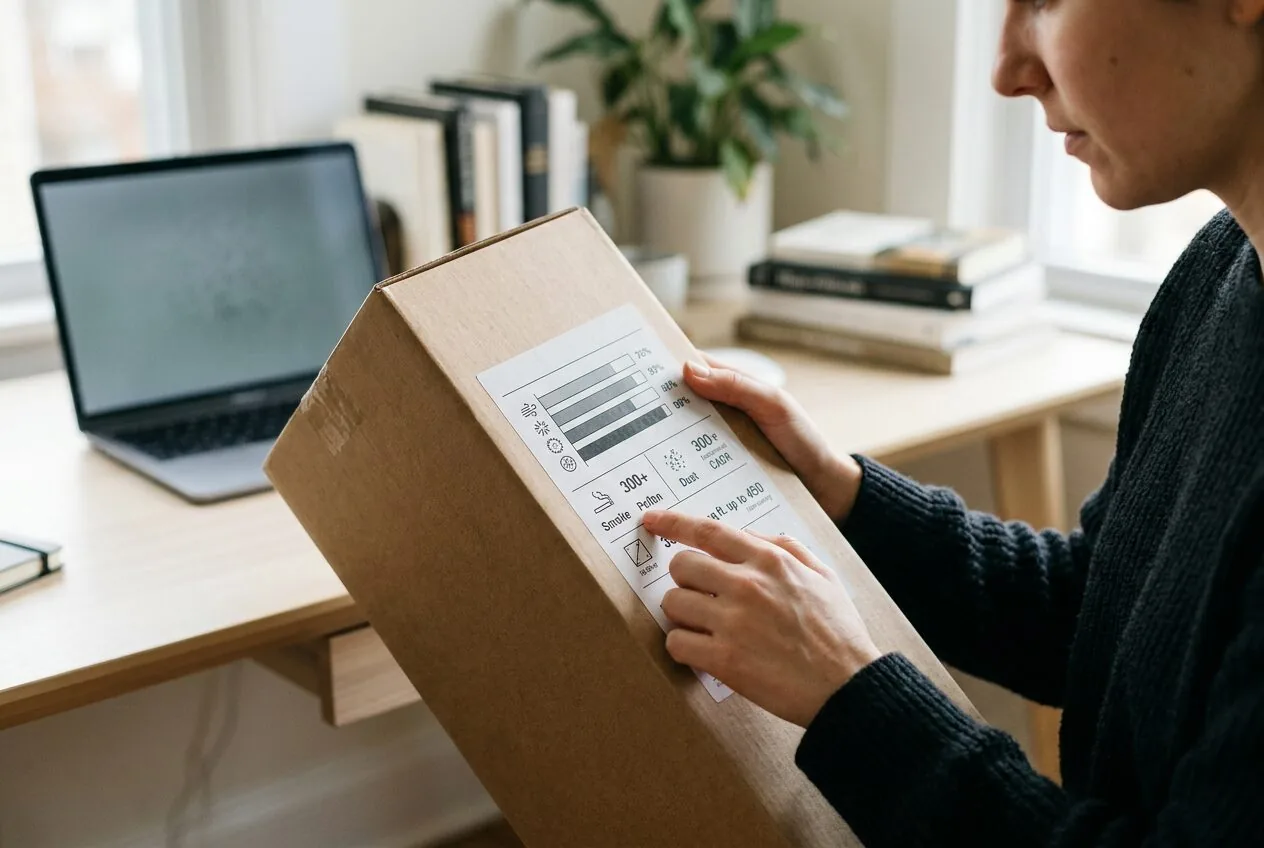
This number measures how quickly a purifier can deliver clean air. It’s tested for smoke (fine particles), dust (medium), and pollen (large). Match the CADR to your room size—AHAM recommends a CADR at least two-thirds of your room’s area in square feet. A higher CADR means faster air cleaning.
3. Room Size and Air Changes per Hour (ACH)
Choose a purifier rated for the square footage of your room. For optimal results, especially for allergy relief, you want an air purifier that can achieve 4-6 air changes per hour (ACH). This means the entire volume of air in the room passes through the filter 4-6 times every hour.
4. Maintenance and Filter Replacement
A clogged filter is ineffective and strains the motor. Check filter replacement costs and schedules. For example, the Sharper Image MD1-0043 True HEPA Replacement filter is designed for specific models and needs changing after a set number of hours. Regular maintenance is non-negotiable for performance.
Recommended Products
Choosing the right air purifier depends on your specific needs, whether it’s for a bedroom, tackling multiple pollutants, or adding fragrance. The following models illustrate different approaches to cleaning your air.


As an Amazon Associate we earn from qualifying purchases. Product prices and availability are accurate as of the date/time indicated.
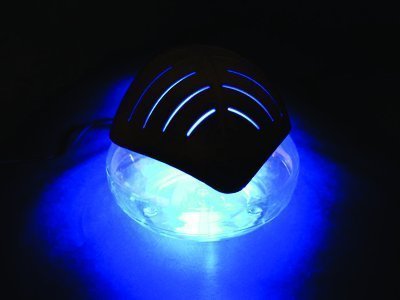
For instance, a basic model like the Air Purifiers for Home Bedroom offers a 3-in-1 filter and sleep mode for quiet operation in a smaller space. For a different method of adding freshness, devices like the GoodVac Air Revitalizer use water to trap dust and disperse scent, though they are not a substitute for HEPA filtration for allergens.
Frequently Asked Questions
Can an air purifier remove all airborne viruses?
While no device guarantees 100% removal, a HEPA filter can significantly reduce the concentration of airborne viruses by capturing the droplets and aerosols they travel on. It is a valuable layer of protection alongside ventilation and hygiene but should not be relied upon as the sole method of prevention.
Do I need to run my air purifier all the time?
Yes, for continuous clean air. Particles are constantly generated from activities, pets, and outdoor air infiltration. Running the purifier continuously on a low or automatic setting maintains a lower baseline level of pollutants. Modern energy-efficient models are designed for 24/7 operation.
How do I know if my air purifier is working?
You might notice less dust on surfaces, reduced allergy symptoms, or fresher-smelling air. The most objective sign is a dirty filter when you go to replace it, proving it has captured particles. Some models have particle sensors and indicator lights that show real-time air quality changes.
Can air purifiers help with fine particulate matter from wildfires?
Absolutely. HEPA filters are extremely effective at removing PM2.5, the primary pollutant in wildfire smoke. During smoke events, run your HEPA purifier on high in the rooms you occupy most, keep windows closed, and seal gaps. For more on this specific threat, see our resource on u003ca href=u0022https://airpurifierguides.com/can-air-purifiers-remove-fine-particulate-matter/u0022u003ecan air purifiers remove fine particulate matteru003c/au003e.
Where is the best place to put an air purifier?
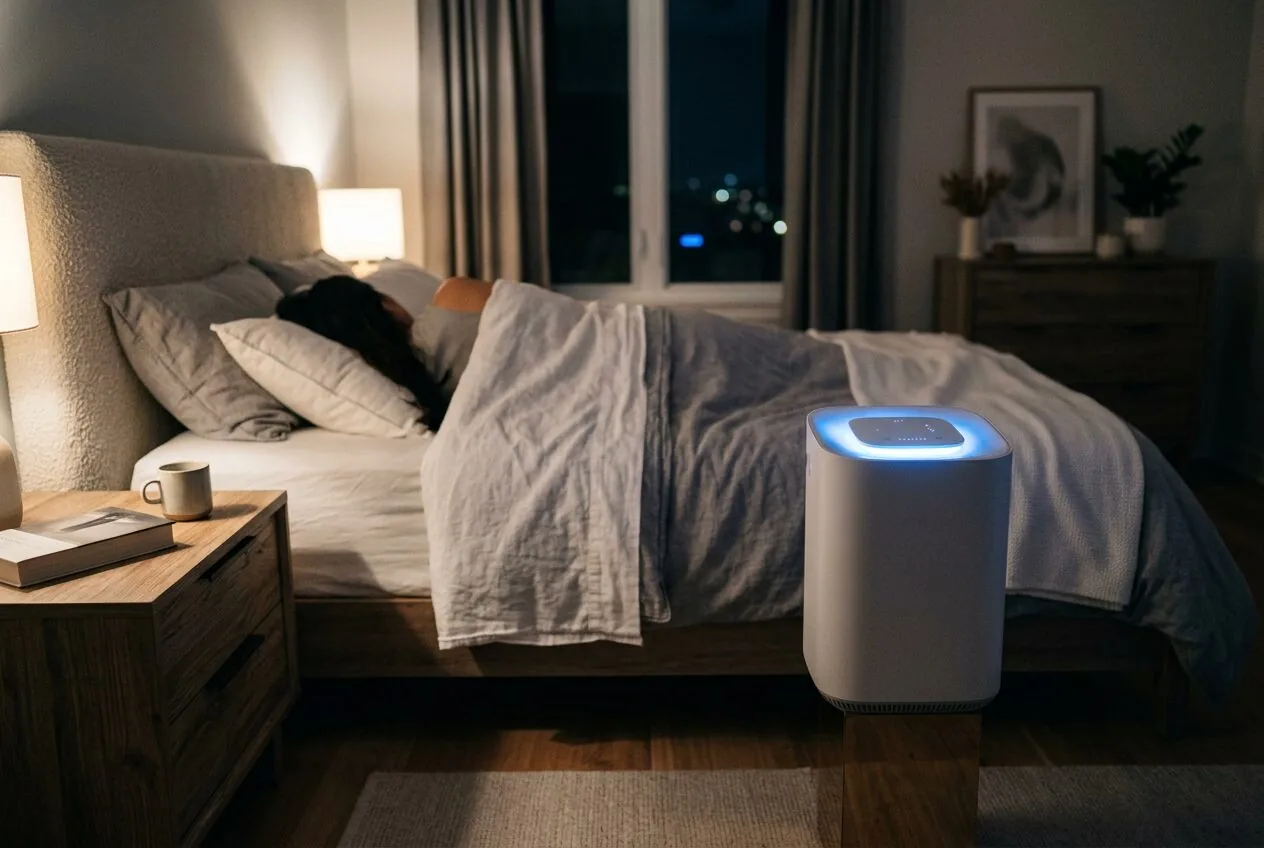
Place it in the room where you spend the most time, like a bedroom or living room. Keep it away from walls and large furniture (at least a few feet) for optimal airflow. Avoid corners. Place it near a known source of pollutants if possible, like near a litter box or in a smoking area.
Final Thoughts
Air purifiers are powerful tools for reducing a wide spectrum of airborne particles, from visible dust to invisible allergens and fine pollutants. Their effectiveness hinges on selecting the right filter technology for your concerns—primarily True HEPA for particles—and a unit properly sized for your space. Remember that an air purifier is part of a broader strategy for clean air, which includes source control (like reducing clutter and smoking outdoors) and adequate ventilation when outdoor air quality is good.
By understanding what floats in your air and how filtration works, you can make a confident choice that leads to genuinely cleaner, healthier indoor air for you and your family. For those with specific health concerns, such as air purifiers for sensitive lungs, selecting the right technology is especially important.
About the author
Founder of AirPurifierGuides.com. Ethan has a background in environmental science and started this site after years spent researching, testing, and tearing down air filtration systems to give readers real-world answers about indoor air quality.